
Plants
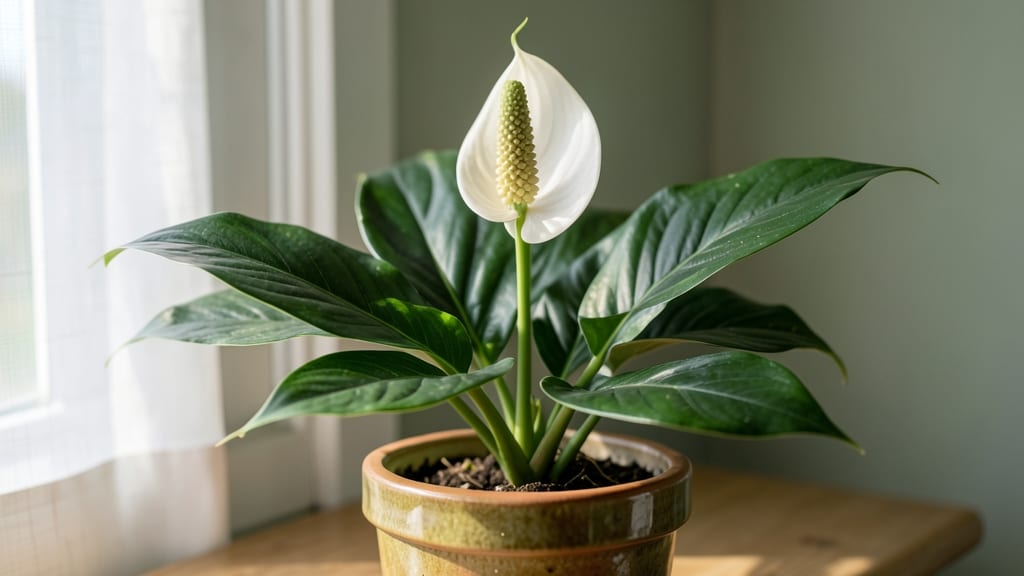
Peace lilies are primarily indoor plants that thrive in low-light conditions, though they can adapt to outdoor environments only in shaded, humid climates with consistent moisture. Their delicate tropical nature means they struggle with direct sunlight and temperature swings.
Peace lilies evolved in tropical rainforests where dappled sunlight and high humidity were the norm. 🌿 That's why they flourish indoors—most homes naturally provide the right balance of indirect light and moderate temperatures.
Outdoors, they'll only survive in protected spots like porches or under large trees, where they're shielded from harsh sun. I've found that even a small change in their environment, like a sudden cold draft or dry air, can trigger stress signals like yellowing leaves or drooping foliage.
What makes them such popular houseplants is their adaptability to indoor conditions. Unlike many tropical plants, peace lilies tolerate lower light levels than you might expect—even a north-facing window works.
The key is mimicking their natural habitat: keep soil consistently moist (but not soggy) and increase humidity with simple tricks like placing the pot on a tray of pebbles filled with water. This helps prevent those pesky brown leaf tips that signal dry air.
💡 In This Article
- Why Peace Lilies Excel Indoors Over Outdoors
- Optimal Indoor Peace Lily Care Guide
Why peace lilies excel indoors over outdoors
Peace lilies (Spathiphyllum) originated in the humid, shaded understories of tropical rainforests, where they evolved to thrive under indirect light and high moisture levels. Their leaves contain calcium oxalate crystals, which help them tolerate low-light conditions by reducing photosynthesis demands.
This adaptation explains why they flourish indoors—most homes naturally provide the dappled light and stable temperatures their ancestors enjoyed. 🌿 Outdoors, their delicate leaves burn under direct sunlight (even in partial shade), causing brown patches within hours.
Their tropical roots demand 70-80% humidity, a level most outdoor environments can't maintain consistently. Indoor air, especially in winter, often drops to 30-40% humidity, triggering stress responses like yellowing leaves or crispy brown tips.
Peace lilies also struggle with temperature fluctuations—outdoor swings between 50°F at night and 90°F during the day can shock their system, while indoor thermostats keep them in a safer 65-80°F range. Even a single night below 55°F can stunt growth or cause leaf drop.
Soil moisture plays a crucial role too. In their native habitat, peace lilies experience consistently damp but well-draining soil.
Indoors, you can mimic this by watering when the top 1-2 inches of soil feel dry, while outdoors, their roots may dry out faster in wind or bake in sun. The key difference? Indoor pots retain moisture longer, preventing the rapid dehydration that outdoor conditions often cause. 💧
Another critical factor is their root structure. Peace lilies develop a fibrous root system that spreads horizontally, ideal for absorbing moisture from humid air. This adaptation works perfectly indoors but struggles outdoors where roots can't access the same level of ground moisture.
In containers, their roots stay protected from temperature extremes and physical damage, while outdoor planting exposes them to soil compaction and pest risks.
Consider this comparison: A peace lily in a north-facing indoor window receives about 100-200 foot-candles of light (similar to forest floor conditions), while even partial outdoor shade can expose it to 500+ foot-candles—enough to scorch leaves.
The indoor environment essentially acts as a controlled greenhouse, shielding them from the harshest elements of nature. This is why 90% of peace lilies remain successful as houseplants rather than outdoor specimens.
What most people overlook is how peace lilies communicate stress. Their drooping leaves aren't just a sign of thirst—they're a survival mechanism to reduce water loss.
Indoors, this signal is easier to interpret and fix with proper care, while outdoors, these cues often go unnoticed until the plant is already damaged. 🌱