
Container Gardens
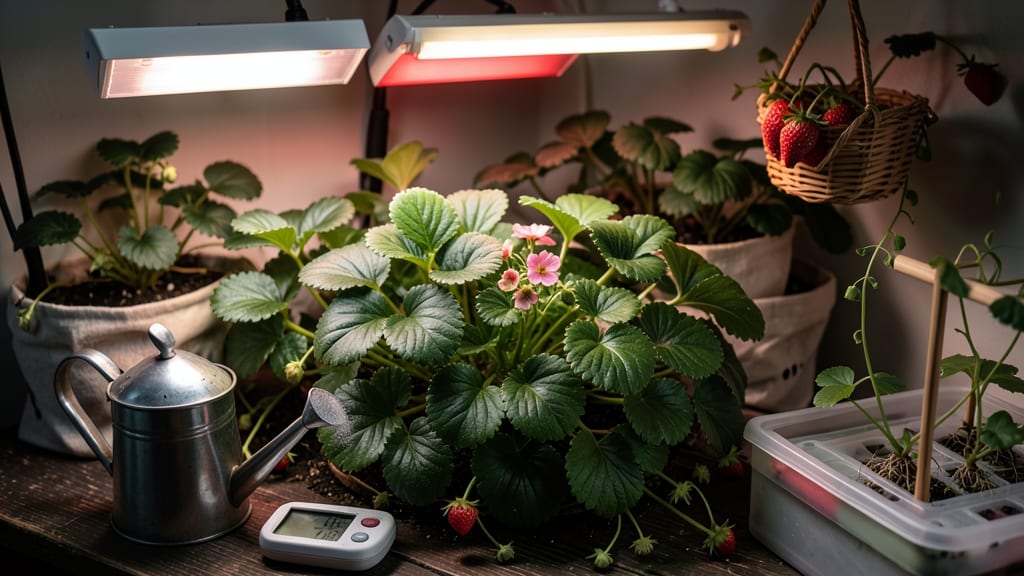
You can grow strawberries indoors all year round by selecting compact everbearing varieties, providing 12-16 hours of LED grow light daily, and implementing hand-pollination with a small fan or paintbrush. Maintain 60-70% humidity and temperatures between 60-75°F for optimal fruit development.
Indoor strawberry cultivation thrives when you mimic outdoor growing conditions as closely as possible. 🌱 The key lies in choosing dwarf everbearing varieties like 'Alpine' or 'Seascape,' which produce fruit continuously rather than seasonally.
These compact plants (12-18 inches tall) fit perfectly in 10-inch pots with excellent drainage - a critical factor for preventing root rot in container growing.
The grow lights must provide full-spectrum coverage (especially red and blue wavelengths) to compensate for the lack of natural sunlight, with 12-16 hours of exposure daily mimicking summer daylight conditions.
What often surprises beginners is the pollination challenge indoors.
Without bees, you'll need to become your plants' pollinators using a small handheld fan on low setting for 5 minutes daily or gently brushing flowers with a paintbrush. 🌸 This simple technique dramatically increases fruit set, leading to those sweet red berries we all love.
The right balance of light, air circulation, and temperature creates an environment where indoor strawberries can thrive year-round, producing fruit that rivals outdoor-grown varieties in both flavor and quantity.
💡 In This Article
- Best Strawberry Varieties for Indoor Year-Round Cultivation
- Indoor Strawberry Growing Setup: Light, Containers, and Pollination
Best strawberry varieties for indoor year-round cultivation
Indoor strawberry success starts with selecting varieties bred for compact growth and continuous fruiting. Everbearing types like 'Alpine' and 'Seascape' produce multiple harvests annually because their genetic makeup includes three distinct flowering cycles rather than one seasonal flush.
These varieties thrive in 12-18 inch height ranges, making them ideal for indoor planters where space is limited. Their smaller size also means less foliage to compete with fruit for energy, a critical advantage when light is artificially provided.
The key difference between everbearing and June-bearing varieties lies in their photoperiod sensitivity. Everbearing types have shorter daylight requirements (12-14 hours) to trigger flowering, while June-bearing varieties need 14-16 hours of light to set fruit.
This makes everbearers perfect for indoor growing where you control light exposure. 🌱 For example, 'Alpine' strawberries produce 2-3 harvests per year indoors with proper light conditions, while 'Chandler' (a June-bearer) might produce just one significant harvest annually.
The trade-off is flavor intensity - everbearing varieties tend to be slightly less sweet but more productive in controlled environments.
Disease resistance becomes particularly important indoors where air circulation is often limited. Look for varieties labeled 'disease-resistant' that can handle the 60-70% humidity typical of indoor growing spaces. 'Seascape' strawberries, for instance, resist common fungal issues like gray mold while maintaining their compact form.
Their red-pink fruit color develops more consistently indoors compared to some outdoor varieties that require specific sunlight conditions for full color development. This consistency is crucial when growing year-round where seasonal light variations don't exist.
Another important consideration is the root system development. Indoor varieties like 'Mignonette' develop shallow but dense root systems that thrive in 10-12 inch deep containers. This adaptation allows them to absorb nutrients efficiently from smaller soil volumes, which is essential when growing in limited indoor spaces.
The roots also grow faster in warmer indoor temperatures (65-75°F), allowing for quicker establishment compared to outdoor varieties that may take weeks longer to establish in cooler spring conditions.
For maximum productivity, consider the fruit size versus quantity trade-off. Compact varieties like 'Tristar' produce smaller berries (about 1/2 inch diameter) but in much greater numbers than larger outdoor varieties. Each berry contains 200-250 seeds on average, which is important to note when selecting seeds for indoor cultivation.
The smaller berries also ripen more uniformly indoors, making them ideal for container growing where space constraints limit the number of plants you can maintain. 🍓
When selecting your indoor strawberries, prioritize varieties with early maturity ratings (45-60 days to harvest). This allows you to see results sooner and adjust your growing conditions if needed.
The 'Ostara' variety, for example, matures in just 35 days from transplant, making it one of the fastest options for indoor cultivation. Its bright red fruit with excellent flavor makes it particularly rewarding for indoor gardeners who want to enjoy fresh strawberries year-round without the wait.