Propagation
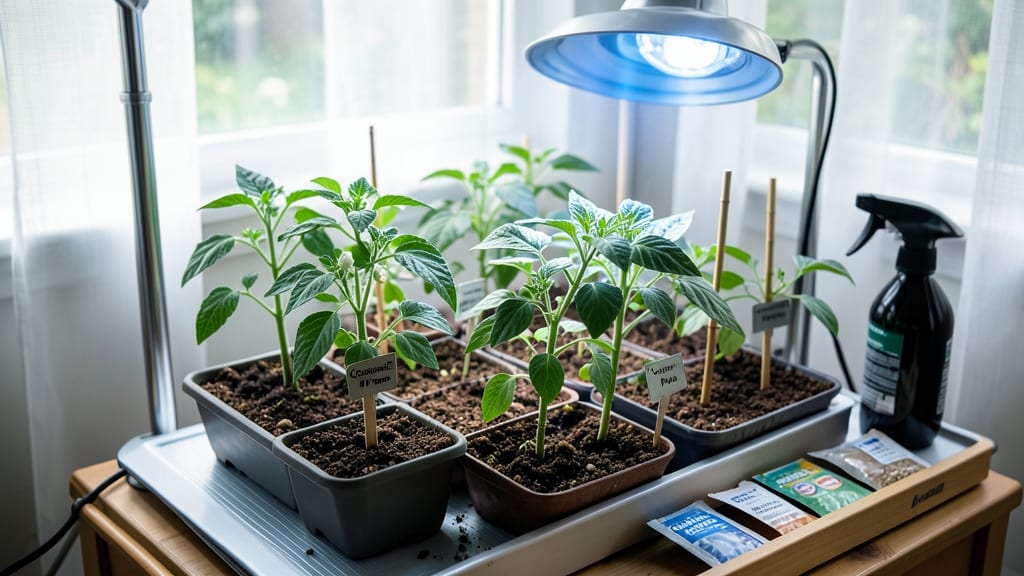
Starting hot pepper seeds indoors 8-10 weeks before your last frost date is the key to a fiery harvest that beats the heat.
Timing your hot pepper seeds indoors can mean the difference between a fiery harvest and wasted effort—get it wrong, and your plants might bolt or struggle in the heat. But with the right frost-date formula, you’ll give your peppers a head start that rivals professional growers.
In USDA Zone 6a, where most gardeners start seeds in February or March, that means planting 🌶️ hot pepper seeds by late January for a July harvest. Too early, and seedlings get leggy; too late, and the growing season cuts them short.
Below, I’ll break down the exact formula for your zone, plus how to adjust for fast- or slow-maturing varieties, so your seedlings hit the garden strong and ready to produce.
How to calculate your hot pepper seed starting date using frost dates
Getting your hot pepper seeds off to the right start means calculating your indoor seed-starting window based on your last frost date and pepper variety. Unlike fast-growing greens, peppers need 8-10 weeks indoors before transplanting, plus 60-120 days to mature.
Skip this step, and you’ll end up with leggy seedlings or a harvest too late for your climate.
First, find your average last frost date for your area—this is the golden number for planning. Check the USDA Plant Hardiness Zone Map or your local cooperative extension service for precise dates.
For example, Zone 7 gardeners typically see their last frost around April 15, while Zone 4 gardeners wait until May 15. This date marks the earliest safe time to transplant seedlings outdoors.
Next, work backward from your last frost date using the pepper’s days to maturity. A jalapeño might take 75 days to harvest, while a ghost pepper could need 120 days. Subtract 8-10 weeks (the time needed for strong seedlings) from the total days to maturity.
For a jalapeño in Zone 7, that’s 75 days - 56 days (8 weeks) = 19 days before your last frost date. Start seeds April 15 - 19 days = March 26.
Here’s the key formula to remember: Last Frost Date - Seedling Time (8-10 weeks) - Days to Maturity (minus 8-10 weeks) = Your Start Date.
For example, if your last frost date is May 1 and your carolina reaper needs 120 days, subtract 10 weeks (70 days) to get 50 days before transplant. Start seeds May 1 - 50 days = March 12.
| Step | Action | Example (Zone 7) |
|---|---|---|
| 1 | Find your last frost date | April 15 |
| 2 | Choose pepper days to maturity | 75 days (jalapeño) |
| 3 | Subtract seedling time (8-10 weeks) | 75 - 56 = 19 days |
| 4 | Calculate start date | April 15 - 19 = March 26 |
| 5 | Adjust for early varieties | Start habaneros (90 days) by March 10 |
Don’t forget to account for transplant shock by adding 1-2 extra weeks if your seedlings struggle after moving outdoors. For instance, if your last frost date is May 1 and your bell pepper needs 80 days, subtract 10 weeks (70 days) and add 14 days for safety.
Your start date becomes April 17 instead of April 3.
For slow-growing varieties like ghost peppers or ají charapita, consider starting seeds 4-6 weeks earlier than the formula suggests. These peppers often need 120+ days to mature, so an early start ensures you avoid a late-season harvest.
In Zone 5, where the last frost might be May 15, starting ghost pepper seeds by February 15 gives you a 10-week buffer before transplanting.
Pro tip: Use a seed-starting journal to track your progress. Note the date you sow, when seedlings emerge, and when they’re ready to transplant. Over time, you’ll refine your seed-starting schedule based on your specific climate and pepper varieties.
For example, if your jalapeños always bolt in July, you might need to start them 2 weeks earlier next year.
Finally, if you’re in a warmer climate (Zones 9-10), you can start seeds as early as January or even December. In these areas, peppers thrive year-round, but a winter start ensures you’re ready for spring planting without waiting for summer heat.
Just remember: peppers hate cold soil, so wait until temperatures stay above 50°F (10°C) before transplanting.
With this frost-date formula, you’ll avoid the heartbreak of underdeveloped seedlings or late-season failures. Soon, your hot pepper plants will be thriving, and your harvest will be spicier and more abundant than ever before. Happy growing! 🌱🌶️
Hot pepper seed starting timeline by US hardiness Zones (with adjustments for early varieties)
Starting hot pepper seeds indoors requires precise timing, especially since varieties like jalapeños and ghost peppers need 80-120 days to mature. Your USDA hardiness zone dictates when to begin—earlier in cold climates, later in warm ones.
For example, gardeners in Zone 3 should start seeds 10-12 weeks before the last frost, while those in Zone 10 can delay until February or March.
Fast-maturing varieties like jalapeños (60-75 days) offer flexibility, but slow growers like habaneros (100-120 days) demand earlier starts. Adjust your schedule by 1-2 weeks if using grow lights or a heated mat, which speeds up germination.
Always factor in transplant shock—seedlings need 4-6 weeks to harden off before outdoor planting.
In Zones 3-4, where frost lingers until mid-May, prioritize slow-maturing varieties like ghost peppers (120+ days). Start these indoors by March 1 to ensure they’re ready by June 1.
For Zones 5-6, shift your timeline 2-3 weeks earlier—begin by February 15 for habaneros and March 1 for jalapeños.
Gardeners in Zones 7-10 enjoy longer growing seasons, but even here, early starts prevent summer bolting. Begin jalapeño seeds by January 15 and habanero seeds by February 1 to harvest by July or August.
If your zone has mild winters, consider a second planting in late summer for fall harvests.
Pro tip: Use a seedling heat mat to germinate seeds 2-3 days faster, especially in cold zones. Keep seedlings under grow lights (14-16 hours/day) until they’re 4-6 inches tall—this prevents leggy, weak stems. Harden off seedlings for 7-10 days before transplanting to avoid shock.
Remember, local microclimates matter! If your garden sits in a frost pocket, err on the side of earlier starts. For coastal areas with milder winters, delay by 1-2 weeks to avoid overcrowded seedlings during peak indoor growing months. 🌱