
Succulent
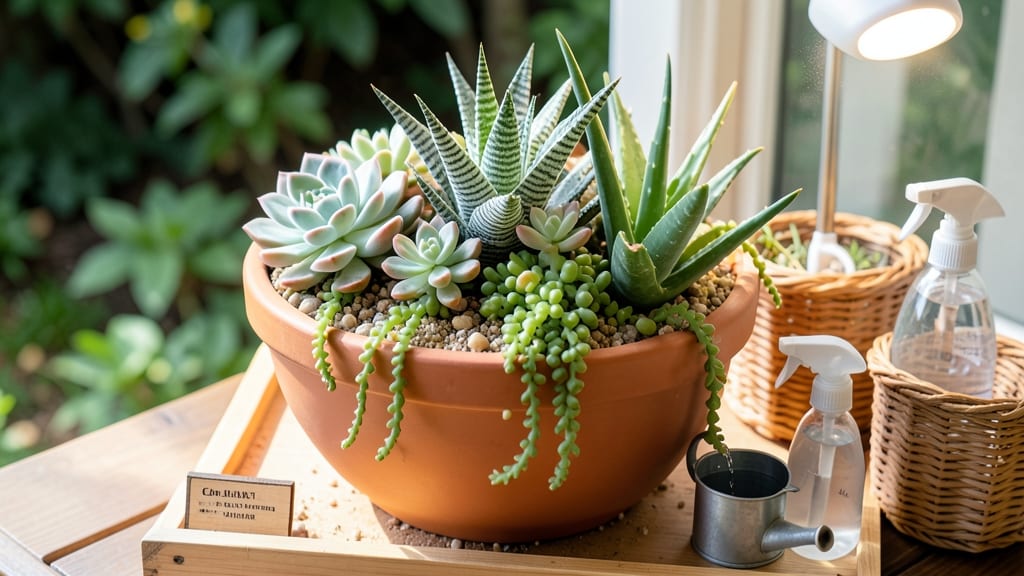
Your living room could look like a desert oasis with these indoor succulent arrangement ideas—no upkeep required. ✨ Indoor succulent arrangements turn any space into a low-maintenance masterpiece—just sunlight, a few containers, and a handful of hardy plants like Haworthia or Echeveria.
The key is mixing textures and colors: pair deep purple Sedum with bright green Sempervivum for contrast, or layer trailing String of Pearls in a hanging planter for movement. Terrariums keep humidity high for delicate varieties, while geometric ceramic pots add modern structure.
By the end, you’ll have a display that thrives on neglect—just a quick watering every 2-3 weeks—while adding organic elegance to shelves, tables, or walls. The best part? No green thumb required. Perfect for renters, small apartments, or anyone who wants beauty without the fuss. Let’s get arranging!
📚 In This Guide
- What you need
- Instructions
- Tips and common mistakes
- Wrapping up and next steps
What you need
- ● Succulents: 5–10 small to medium-sized varieties (e.g., Echeveria, Haworthia, Sedum, or String of Pearls). Choose plants with similar water needs!
- ● Vertical Planter: 1–2 options: Wall-mounted planter (12"–24" wide, with drainage holes)
- ● Hanging macramé basket or fabric pocket planter (10"–16" diameter)
- ● DIY pallet or crates (if you’re feeling crafty!)
- ● Potting Mix: 1 bag of cactus/succulent soil mix (avoid regular garden soil—it retains too much moisture!).
- ● Drainage Layer: Small pebbles, perlite, or pumice (1–2 cups).
- ● Tools: Trowel or small shovel
- ● Pruning shears (for trimming roots or dead leaves)
- ● Spray bottle (for misting, if needed)
- ● Decorative Elements: Moss sheets (for a lush, textured look)
- ● Miniature figurines, pebbles, or sand (for a Zen vibe)
- ● Fairy lights or solar-powered LED strips (for ambiance!)
- ● Plant Stands or Risers: To elevate your arrangement and add dimension.
- ● Self-Watering System: A wick or reservoir kit (for travel or forgetful waterers!).
- ● Labels: Chalkboard tags or wooden sticks to name your succulents.
Step-by-Step guide to designing low-maintenance vertical succulent arrangements
Transform any space with striking vertical designs that thrive with minimal care.
🪴 Step 1: Select the Right Vertical Structure
Choose a base that complements your space and succulent types. For beginner-friendly arrangements, I recommend geometric wall planters or hanging macramé pockets—both provide excellent drainage while adding visual interest. If you're working with tall, architectural succulents like Haworthia or Aloe, opt for slatted wood planters to showcase their height. Measure your space first: 6-12 inches between planters ensures airflow and prevents rot.
For modern aesthetics, sleek metal or ceramic planters work beautifully, while rustic charm comes from terracotta or woven baskets. Avoid deep containers—succulents hate soggy roots and need fast-draining soil. If using a pre-made vertical garden panel, ensure it has built-in drainage holes or modify it with a drill. I always test-fit my structure before planting to avoid awkward adjustments later.
🌱 Step 2: Choose Complementary Succulent Varieties
Group succulents by light needs, growth habits, and color to create harmony. For bright, sun-drenched spaces, pair sun-loving varieties like Echeveria (rosette shapes) with Sedum (trailing stems). In lower-light areas, opt for shade-tolerant types such as Haworthia attenuata or Gasteria. Mix textures—spiky Agave contrasts beautifully with soft Sempervivum—and heights to add dimension.
Stick to 3-5 varieties per arrangement to avoid overcrowding. I like to include one focal plant (like a striking Aloe vera) surrounded by filler varieties in complementary shades. Check each succulent’s mature size—some, like Kalanchoe, grow 12+ inches tall, while others stay under 3 inches. Arrange taller varieties at the back or center of your structure, with shorter ones cascading over edges.
✂️ Step 3: Prepare Soil and Plant Strategically
Use a fast-draining cactus/succulent mix (never regular potting soil—it compact and suffocates roots). I blend mine with 20% perlite or pumice to improve airflow. Fill your vertical structure ¾ full with soil, leaving room for roots to expand. For hanging arrangements, use coconut coir liners in macramé pockets to contain soil and prevent spills.
Plant succulents 1-2 inches apart, burying them just enough to stabilize (usually ½ inch deep). Press gently but don’t pack the soil—succulents need loose, aerated roots. Arrange them in odd-numbered clusters (3, 5, or 7 plants) for natural balance. If using a geometric grid, stagger plants so no two varieties touch directly—this prevents fungal spread and makes future maintenance easier.
☀️ Step 4: Position for Optimal Light and Care
Most succulents thrive in 4-6 hours of direct sunlight daily, but avoid harsh midday sun (10 AM–2 PM) in hot climates—it can scorch leaves. Place your arrangement near a south- or east-facing window for gentle morning light. If natural light is limited, supplement with a full-spectrum LED grow light kept 6-12 inches away for 12-14 hours daily. You’ll know light is sufficient when leaves stay plump and vibrant (not stretched or pale).
Water only when the top inch of soil is completely dry—stick your finger in the soil to check. For vertical setups, bottom-watering (placing the structure in a tray of water for 10 minutes) ensures even moisture without over-saturating. Mistakes happen here: overwatering causes root rot, while underwatering leads to shriveled leaves. I set a reminder every 2-3 weeks to inspect drainage—if water pools at the bottom, your setup needs better airflow.
🌿 Step 5: Maintain and Refresh Over Time
Succulents grow slowly, but prune leggy stems in early spring to encourage bushiness. Use sterilized scissors to trim just above a leaf node, then let the cutting dry for 2-3 days before propagating in fresh soil. Remove dead or yellowing leaves immediately—they attract pests and disease. Fertilize once in spring with a diluted succulent fertilizer (½ the recommended strength) to avoid burning roots.
Rotate your arrangement quarter-turn weekly so all sides get even light. Every 6-12 months, refresh the soil by top-dressing with new mix (remove top 1 inch of old soil and replace). For hanging designs, check for root-bound plants—if roots circle the pot, repot into a slightly larger container. The key to long-term success? Less is more—succulents reward patience with years of effortless beauty.
Tips & tricks for perfect indoor vertical succulent arrangements
Even the most beautiful vertical succulent displays can fail without these key insights—trust me, I’ve seen it all.
Structure Stability First: When testing your vertical planters in Step 1, pay special attention to weight distribution. Geometric wall planters should be mounted at least 6 inches above the floor to prevent accidental knocks, while hanging macramé pockets need sturdy hooks rated for 5+ pounds each. I’ve learned the hard way that cheap hooks can’t handle the weight after a few months—always double-check mounting hardware before planting. For extra security, add a small decorative plate behind each hook to distribute weight evenly.
Light Needs Are Non-Negotiable: The 4-6 hours of sunlight mentioned in Step 4 isn’t just a suggestion—it’s the difference between thriving plants and sad, stretched-out specimens. If your space only gets 2-3 hours of direct light, choose shade-tolerant varieties like Haworthia attenuata or Gasteria and supplement with a grow light placed 6 inches away for 12-14 hours daily. Pro tip: Rotate your arrangement quarter-turn weekly (as mentioned in Step 5) to prevent uneven growth toward the light source—this creates a more balanced, professional look.
Soil Science Matters: The 20% perlite or pumice addition in Step 3 isn’t just about drainage—it’s about creating the perfect air-to-soil ratio. I’ve found that mixing in a handful of coarse sand (not fine beach sand) further improves aeration, especially for hanging arrangements. When planting, tap the container gently after each succulent to settle the soil without compacting it. This ensures roots get the loose, aerated environment they crave while preventing future waterlogging.
Watering Wisdom: That 10-minute bottom-watering technique in Step 4 is brilliant, but here’s what nobody tells you—use room-temperature water. Cold water can shock the roots, while tap water left sitting overnight loses its chlorine, which can burn sensitive succulents. For extra insurance, let your water sit out for 24 hours before using it. And if you’re using a self-watering system, check the reservoir every 2-3 weeks to prevent algae growth, which can clog drainage holes and suffocate your plants.
Pro Tips for Indoor Succulent Arrangement Ideas
- Even the most beautiful vertical succulent displays can fail without these key insights—trust me, I’ve seen it all.
- Structure Stability First: When testing your vertical planters in Step 1, pay special attention to weight distribution.
- Light Needs Are Non-Negotiable: The 4-6 hours of sunlight mentioned in Step 4 isn’t just a suggestion—it’s the difference between thriving plants and sad, stretched-out specimens.
Frequently asked questions
Got questions about styling your indoor succulents? We’ve got answers! Here are some of the most common queries to help you create a stunning, low-maintenance display with confidence.
What’s the best way to arrange succulents in a vertical planter for maximum impact?
Start with the tallest varieties (like echeverias or haworthias) at the back, then layer medium-height plants (such as sedums) in the middle, and fill the front with trailing types (like string of pearls). This creates depth and draws the eye upward—perfect for small spaces!
How often should I water my vertical succulent arrangement?
Succulents thrive on neglect! Water only when the top 1–2 inches of soil are completely dry—usually every 2–3 weeks (less in winter). Overwatering is the #1 killer, so drainage (use a pot with holes!) and well-draining soil are a must. Stick your finger in the soil to test!
Can I mix succulents with other low-maintenance plants, like air plants or cacti?
Pair succulents with air plants (tillandsias) for a modern look or add small cacti (like mammillarias) for texture. Just ensure they all have similar light and water needs. Avoid moisture-loving plants—they’ll compete with your succulents’ drought tolerance!
My succulents are leaning or falling over—how do I fix this?
Leaning usually means they’re stretching for light. Rotate your planter quarter-turn weekly to ensure even growth. If they’re top-heavy, tuck trailing varieties into the soil or add a small pebble or decorative pin to anchor them. For severe cases, prune leggy stems and propagate them!
What’s a budget-friendly way to style a vertical succulent arrangement without buying a fancy planter?
Get creative! Use:
- A wooden crate or mason jar with holes drilled in the bottom.
- A hanging shoe organizer (poke drainage holes and line with moss).
- A repurposed ladder or floating shelf with small pots.
Wrapping up and next steps
Transforming your space with indoor succulent arrangements doesn’t have to be complicated—just creative and intentional!
From minimalist vertical gardens to whimsical terrariums, these low-maintenance ideas bring natural beauty into any corner. Whether you’re a beginner or a plant enthusiast, the key is to play with textures, heights, and containers while keeping care simple. Start small, experiment fearlessly, and let your green thumb shine!
Ready to elevate your space? Pick one arrangement that speaks to you and gather your supplies—your future succulent sanctuary awaits! 🌿✨