
Succulent
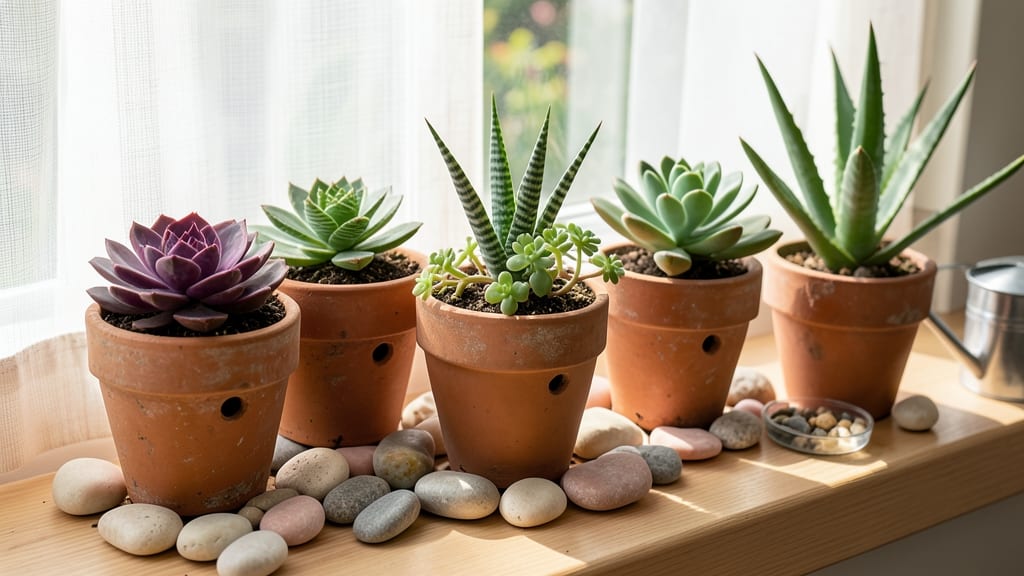
Succulents can grow indoors successfully with the right conditions: place them near a south- or east-facing window for bright, indirect light (4-6 hours daily), use fast-draining soil mixes, and water only when the top inch feels completely dry (typically every 2-3 weeks). Snake plants and jade plants are particularly resilient for indoor environments.
Indoor succulents actually thrive better than you might think—they're designed to handle dry conditions and low humidity, which makes them perfect for most homes. 💫 The key is mimicking their natural desert environment: bright light prevents that dreaded "leggy" growth where stems stretch toward windows, while well-draining soil prevents root rot from overwatering.
I've found that placing them on a sunny windowsill or under a grow light can transform a struggling plant into a lush, healthy specimen within weeks.
What many beginners overlook is that different varieties have unique tolerances. For example, snake plants can survive in dimmer corners, while haworthias need more direct light to maintain their vibrant colors.
The secret to long-term success is matching the plant to your home's natural light conditions rather than forcing one-size-fits-all care routines.
💡 In This Article
- Indoor Light Requirements for Succulent Growth
- Top 5 Low-Maintenance Succulents for Indoor Gardens
Indoor light requirements for succulent growth
Succulents evolved in arid environments where sunlight is intense but often indirect, bouncing off desert rocks and sand. Indoors, they need bright, indirect light for 4-6 hours daily—think of it as their version of morning sun without the harsh midday glare.
Without enough light, they'll stretch toward windows (a condition called etiolation), growing tall and leggy with sparse leaves.
This happens because the plant prioritizes reaching light over forming compact, energy-dense leaves. 🌞 The ideal spot is near an east- or south-facing window where the light is strong but filtered through curtains.
Most homes don't have perfect natural light, so understanding light intensity zones helps. Place succulents 1-3 feet from a window for medium light (like a kitchen counter), where they'll grow steadily.
For low-light areas (like north-facing rooms), use a grow light with a 12-14 hour photoperiod—LED grow lights with full-spectrum bulbs (red/blue spectrum) are most effective. I've seen snake plants thrive under a 10W LED grow light placed 6-12 inches away, mimicking their natural daylight exposure.
The key is consistency: erratic light causes stress, while steady exposure prevents those unsightly stretched stems.
Watch for visual cues to adjust care. Yellowing leaves or brown, crispy edges signal too much direct sun (like a south-facing window without shade), while pale, rubbery leaves mean insufficient light.
A healthy succulent has vibrant, firm leaves with no signs of stretching. 🌱 For example, a haworthia left in low light will lose its striking patterns and develop weak, elongated growth. The solution? Rotate the plant every few weeks so all sides receive even light exposure, preventing uneven growth.
Seasonal adjustments are crucial too. During winter, when daylight hours drop, supplement with grow lights or move plants closer to windows. In summer, watch for leaves turning translucent—a sign of sunburn.
A simple trick is to place a sheer curtain between the plant and the window to diffuse harsh afternoon rays while still allowing plenty of light through. This balance is what keeps succulents thriving year-round in indoor settings.
Consider the photosynthesis efficiency of different succulents. Varieties like echeveria and sedum need more light to maintain their vibrant colors and compact shapes, while zz plants can photosynthesize efficiently in lower light due to their unique crassulacean acid metabolism (CAM) pathway.
This adaptation lets them store CO₂ at night and process it during the day, making them more flexible for indoor environments. 💡 Understanding these differences helps you choose the right plants for your home's lighting conditions.