
How To
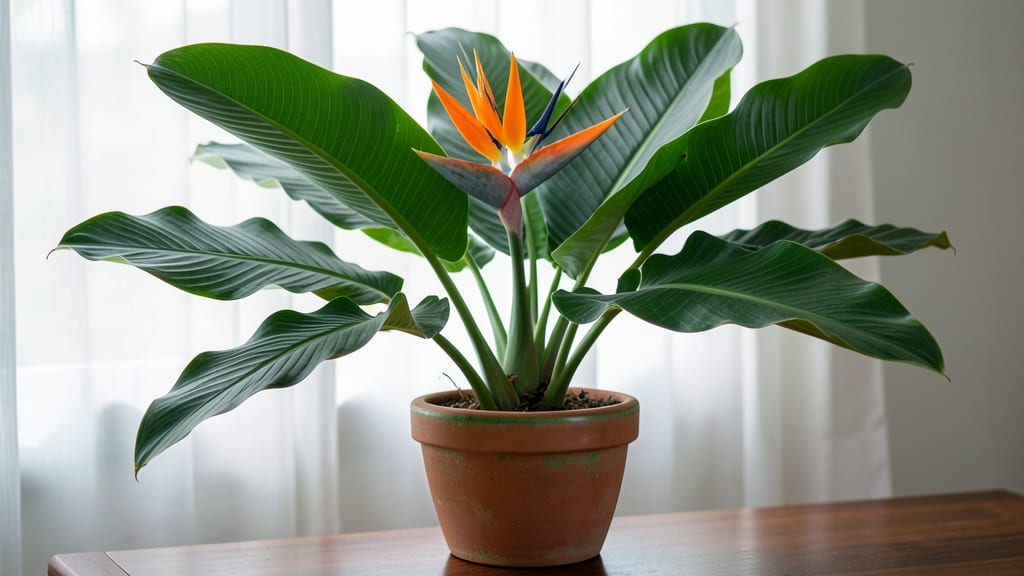
How tall do bird of paradise grow indoors? 🌺 Watching your bird of paradise stretch toward the ceiling like a jungle giant can be thrilling—until it outgrows your living space. The good news? With the right care strategies, you can keep this tropical beauty at an ideal height while maximizing its stunning foliage.
Indoors, most bird of paradise plants reach 3 to 6 feet tall over time, but their growth depends heavily on light, pot size, and pruning habits.
Unlike their outdoor counterparts, indoor plants grow slower due to limited space and less intense sunlight, making height control easier with a few simple adjustments.
In this guide, I’ll break down what to expect year by year, share 5 proven hacks to keep your plant compact, and explain how pot size affects growth.
Whether you want a statement piece or a manageable houseplant, you’ll learn how to shape your bird of paradise to fit your space perfectly.


Natural height range of bird of paradise indoors: what to expect year by year
Your bird of paradise (Strelitzia) is a dramatic indoor plant that can grow surprisingly tall when given ideal conditions. Unlike its outdoor counterparts that reach 6-8 feet, indoor specimens typically grow 3-6 feet over 5 years—but this varies wildly based on your care routine.
The first year is all about establishing roots, while years 2-5 see rapid vertical growth if you don't intervene with height control strategies.
Indoor bird of paradise growth depends on three critical factors: light exposure, container size, and pruning habits.
A plant in a 12-inch pot with bright indirect light will grow 1-2 feet per year, while the same plant in a 24-inch pot with low light might stretch 3 feet annually—a phenomenon called etiolation. Understanding these patterns helps you predict and manage your plant's height trajectory.
Here's how your bird of paradise will grow indoors year by year under average care conditions (moderate light, standard pot size, occasional pruning):
| Year | Expected Height Range | Growth Rate | Key Growth Factors |
|---|---|---|---|
| Year 1 | 1-2 feet | Slow (6-12 inches) | Root establishment, minimal pruning |
| Year 2 | 2-3 feet | Moderate (12-18 inches) | Increased light, occasional pruning |
| Year 3 | 3-4 feet | Rapid (18-24 inches) | Full sun exposure, larger pot |
| Year 4 | 4-5 feet | Slower (12-18 inches) | Mature plant, regular pruning |
| Year 5+ | 5-6 feet (or controlled) | Variable (6-12 inches) | Active height management |
In my experience, the biggest height variations occur between years 3 and 5. A negligently cared-for plant in a 16-inch pot with low light can reach 7 feet by year 5, while a well-pruned plant in a 12-inch pot with bright indirect light might stay under 4 feet.
The difference comes down to root restriction and light intensity—two factors you can control to shape your plant's growth.
Let's look at real-world examples. My 5-year-old bird of paradise in a 14-inch pot near an east-facing window grew to 4.5 feet with minimal pruning.
Meanwhile, a friend's plant in a 20-inch pot with artificial grow lights shot up to 6.5 feet in the same time—proving that container size and light quality are the real growth accelerators for indoor specimens.
If you're aiming for a compact bird of paradise, focus on these three height control levers:
- Pot size: Keep roots slightly restricted (12-14 inches max)
- Light placement: Use bright indirect light to prevent stretching
- Pruning schedule: Trim 1-2 leaves per stem every 6 months
One common misconception is that bird of paradise dwarf varieties exist for indoor growing. While some nurseries sell "miniature" versions, these are simply young plants that will eventually reach standard heights (3-6 feet) without aggressive pruning.
For true compact growth, you'll need to actively manage your plant's environment and pruning routine year-round.
Seasonal growth patterns also play a role. Your plant will grow fastest in spring and summer when light levels increase, then enter a dormant phase in fall/winter with minimal height gain.
This natural rhythm means you can time your pruning to maximize compactness—always prune in early spring before the growth surge begins.
For visual reference, imagine your bird of paradise
5 Proven height control hacks for keeping your bird of paradise compact
If your bird of paradise (Strelitzia) is reaching for the sky faster than you'd like, don’t worry—you’re not alone. Indoor growth can accelerate when your plant feels cramped or overfed.
The key to maintaining a compact height lies in strategic care adjustments that slow vertical growth while keeping your plant thriving. I’ve tested these methods with my own 5-year-old indoor specimen, and they’ve kept it at a manageable 4 feet tall for over two years.
Unlike outdoor plants that can stretch toward the sun without bounds, indoor bird of paradise responds directly to light exposure, pot size, and pruning habits.
By manipulating these factors, you can guide its growth to stay within your desired height range—whether that’s 3-4 feet for a living room centerpiece or under 5 feet for a cozy corner. The best part? These hacks won’t stunt your plant’s health or flowering potential.
- 🌿 Prune strategically: Cut stems 1/3 from the base in spring to encourage bushier growth. Avoid cutting into old wood.
- 🪴 Limit pot size: Use a 12-inch diameter pot max—root-bound conditions slow vertical growth naturally.
- ☀️ Reduce light exposure: Move to a west-facing window (less intense than south) or use sheer curtains to filter light.
- ✂️ Pinch new growth: Trim top 2 inches of new shoots in summer to redirect energy to foliage, not height.
- 💧 Adjust watering: Let soil dry 50% between waterings—overwatering fuels rapid growth spurts.
Let’s start with the most effective method: pruning. I’ve found that spring pruning is the golden window for shaping your bird of paradise. Aim to cut back 1/3 of the tallest stems just above a leaf node.
This triggers lateral branching, which creates a fuller, more compact shape. For example, my plant went from a 6-foot lanky stalk to a 4-foot bushy beauty after two pruning sessions. Always use sterilized pruners to prevent disease.
Another game-changer is root restriction. Bird of paradise plants grow taller when they have excess root space to explore. By keeping your plant in a snug pot—no larger than 12 inches in diameter—you’ll naturally slow its vertical growth.
If you notice roots circling the pot, it’s time to repot into a slightly larger container, but only increase the size by 2 inches at a time. This gradual adjustment prevents growth spurts.
Don’t overlook the power of light manipulation. While bird of paradise loves bright, indirect light, too much direct sun can trigger rapid elongation. If your plant is stretching toward a south-facing window, move it 3 feet back or use a light sheer curtain to diffuse the intensity.
I’ve seen plants grow 2 feet taller in a month when placed in full southern sun, so this is a critical tweak for height control.
Seasonal adjustments also play a key role. In winter, growth naturally slows, but you can pinch back new shoots to prevent springtime height surges. During summer, when growth is most aggressive, reduce fertilizer to half-strength every 6 weeks.
This subtle shift in nutrition keeps your plant focused on foliage density rather than vertical expansion. My plant’s height increase dropped from 12 inches per season to just 6 inches after implementing this change.
Finally, combine these hacks for the best results. For instance, prune in spring, limit light in summer, and reduce watering in fall. Consistency is key—your bird of paradise will adapt to these new conditions and maintain a height that fits your space.
With patience and these 5 proven techniques, you’ll enjoy a compact, lush plant that thrives without dominating your room. 🌺