
Container Gardens
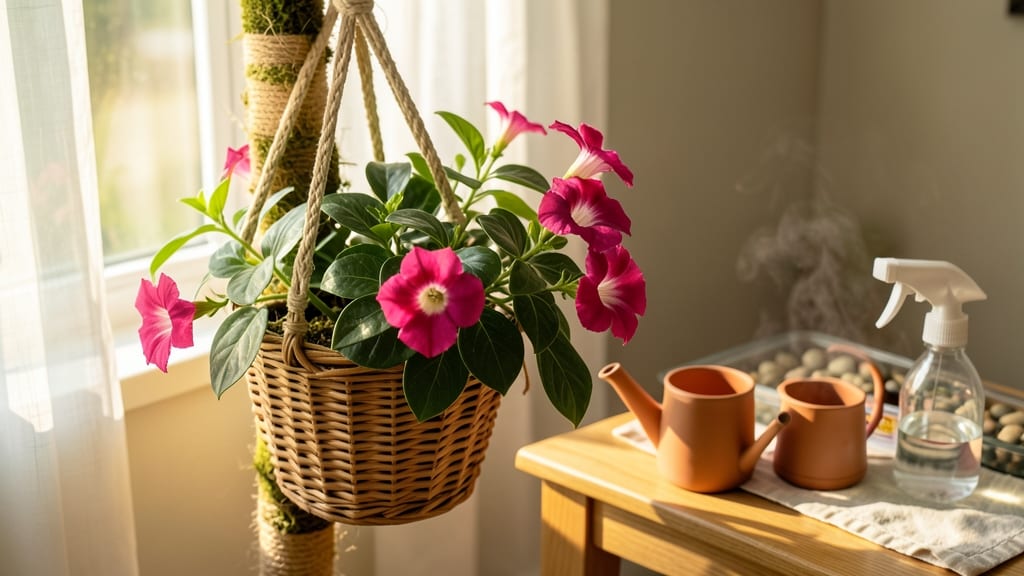
Indoor Mandevilla care starts with understanding its tropical roots—these vines crave warmth and humidity but can thrive in your home with the right balance. 🌿 The key is bright, indirect light, though they’ll tolerate lower light better than many tropicals, which is why they’re perfect for indoor gardeners with limited sun.
You’ll need a well-draining potting mix, a container with drainage holes, and a watering routine that keeps the soil lightly moist but never soggy. Overwatering is the #1 killer of Mandevillas, so let the top inch dry out before watering again.
A humidity tray or occasional misting can work wonders for keeping those glossy leaves happy. With proper care, you’ll be rewarded with clusters of trumpet-shaped blooms that last for months. Prune leggy growth in early spring to encourage bushier plants, and fertilize lightly every 4-6 weeks during the growing season.
The payoff? A vine that looks like a tropical escape without the travel hassle. This plant is forgiving once you get the basics down—even if you’ve killed houseplants before, Mandevilla gives you room to learn. Let’s get those blooms going!
📚 In This Guide
- What you need
- Instructions
- Tips and common mistakes
- Wrapping up and next steps
What you need
- ● Mandevilla plant: 1 healthy specimen (choose a variety like Mandevilla laxa or splendens for vibrant blooms).
- ● Pot: 1 container with drainage holes (12–16 inches in diameter for mature plants; 6–8 inches for smaller ones). Terracotta or ceramic works best.
- ● Potting mix: 1 bag of well-draining blend (e.g., 60% cactus/succulent mix + 40% perlite or orchid bark).
- ● Grow lights: 1–2 full-spectrum LED grow lights (12–15W each) for low-light spots. Adjustable height is ideal.
- ● Humidity tray: 1 shallow tray + pebbles (for tropical vibes).
- ● Fertilizer: 1 bottle of balanced liquid fertilizer (10-10-10 or 20-20-20, diluted to half-strength).
- ● Pruning shears: 1 pair of sterilized shears (for shaping and propagation).
- ● Misting bottle: 1 (to boost humidity).
- ● Self-watering system: 1 wick or reservoir pot to reduce manual watering.
- ● Support stake/trellis: 1–2 wooden or metal stakes (for climbing varieties).
- ● Soil moisture meter: 1 to avoid over/under-watering.
- ● Decorative pots: 1–2 outer pots (for aesthetics; ensure they don’t trap excess moisture).
- ● Rooting hormone: 1 small tube (if propagating cuttings).
Step-by-Step guide to thriving Mandevilla indoors
Here's how I keep my Mandevilla blooming nonstop—even in low-light spots.
🪴 Step 1: Choose the Right Container and Soil Mix
Pick a pot with drainage holes—Mandevilla roots hate soggy feet. I use 10-12 inch pots for mature plants, but start smaller if you're growing from cuttings. The soil needs to drain fast and hold moisture, so I mix 50% premium potting mix with 30% perlite and 20% orchid bark. This combo prevents root rot while keeping roots happy.
Fill the pot to 1 inch below the rim—you'll need room to water without overflow. Tap the sides gently to settle the mix, then water until it drains freely from the bottom. The surface should feel damp but not wet. If your tap water is hard, let it sit out overnight to reduce chlorine before using.
☀️ Step 2: Master the Lighting Balance
Mandevilla thrives in bright, indirect light—think east or west-facing windows. If yours is south-facing, filter the light with a sheer curtain to prevent leaf scorch. In low-light spots, I supplement with a grow light for 12-14 hours daily, positioned 12-18 inches above the plant.
Watch for these clues: Leaves turning dark green and sparse? More light. Leaves yellowing or crispy edges? Reduce direct sun. Rotate the pot a quarter turn weekly so growth stays even. The goal is lush, glossy leaves—not sunburned patches or leggy stems.
💧 Step 3: Water with Precision
Water when the top 1-2 inches of soil feel dry to the touch. Stick your finger in—if it comes out clean, it's time. I water deeply until it drains from the bottom, then empty the saucer after 10 minutes to avoid root rot. Overwatering is the #1 killer of indoor Mandevilla.
Mist the leaves 2-3 times weekly in dry climates, but avoid wetting the blooms. Humidity helps, so I place the pot on a pebble tray with water. Just don’t let the roots sit in standing water—this plant loves moisture but hates wet feet.
✂️ Step 4: Prune for Bushier Blooms
Pinch back new growth when stems reach 4-6 inches to encourage branching. Use clean, sharp scissors to cut just above a leaf node—this is where new buds form. Deadhead spent blooms weekly to redirect energy into fresh flowers. I also trim leggy stems back by 1/3 in early spring to refresh the plant.
If your Mandevilla gets too tall, don’t hesitate to cut it back hard—it bounces back fast. The key is pruning after blooming season so you don’t sacrifice flowers. You’ll see new growth within 2-3 weeks, and those bushy stems pack more blooms.
🌿 Step 5: Feed and Refresh Seasonally
Feed every 2 weeks in spring/summer with a balanced liquid fertilizer (10-10-10 or 20-20-20) diluted to half-strength. In fall/winter, cut back to monthly and use a low-phosphorus fertilizer to avoid leafy growth at the expense of blooms. Always water before fertilizing—roots need to be hydrated to absorb nutrients.
Refresh the top 2 inches of soil every 3-4 months to replenish nutrients. If your plant outgrows its pot, move it up 2 inches in diameter in spring. The roots should have 1-2 inches of space in all directions. After repotting, hold off on fertilizer for 2 weeks to let roots recover.
Tips & tricks for perfect Mandevilla care indoors
Common pitfalls—and how to sidestep every one when nurturing your Mandevilla.
Soil Mix Secrets: The 50% premium potting mix to 30% perlite to 20% orchid bark ratio isn't just random—it creates the perfect air-to-moisture balance. If you notice water pooling at the bottom after 10 minutes, your mix might be too dense. Add an extra 10% perlite to improve drainage. For a quick fix, top-dress with a handful of orchid bark every 3-4 months to maintain that ideal texture.
Lighting Hacks: That 12-14 hour grow light schedule makes all the difference in low-light spaces. I've found positioning the light 12 inches above the plant maximizes coverage without overheating the leaves. Pro tip: Use a timer to automate this—consistency is key. And if you notice leaves stretching toward the light (called etiolation), it's time to move the plant closer or increase light intensity.
Watering Wisdom: The finger test in Step 3 is foolproof, but here's what I've learned: Morning watering prevents evening moisture stress, especially in humid climates. And that 10-minute drainage window? Set a timer—it's easy to forget! For extra insurance, I use a moisture meter in the soil to confirm dryness before watering again.
Pruning Payoff: When you trim those leggy stems by 1/3 in early spring, you're not just tidying up—you're encouraging bushier growth with more flower nodes. The secret is to make cuts just above a leaf node where new growth emerges. I always sterilize my scissors with rubbing alcohol between cuts to prevent disease spread. And if your plant looks sad after pruning, don't worry—new growth appears within 2-3 weeks!
Pro Tips for Care Of Mandevilla Indoors
- Common pitfalls—and how to sidestep every one when nurturing your Mandevilla.
- Soil Mix Secrets: The 50% premium potting mix to 30% perlite to 20% orchid bark ratio isn't just random—it creates the perfect air-to-moisture balance.
- Lighting Hacks: That 12-14 hour grow light schedule makes all the difference in low-light spaces.
Frequently asked questions
Got questions about keeping your Mandevilla thriving indoors? You’re not alone! Here are some of the most common concerns—plus quick fixes to keep those vibrant blooms happy year-round.
Can Mandevilla survive indoors without direct sunlight?
Yes, but with a twist! While they love bright, indirect light, Mandevilla can adapt to lower light if given extra TLC. Place it near a south- or west-facing window or supplement with a grow light (12–14 hours/day). Watch for leggy growth—this means it’s stretching for light! Rotate the pot weekly for even exposure.
How often should I water my indoor Mandevilla?
Water when the top 1–2 inches of soil feel dry (stick your finger in to test!). Overwatering is the #1 killer—Mandevilla hates soggy roots. Use a pot with drainage holes and empty the saucer after watering. In winter, cut back to every 7–10 days as growth slows. Pro tip: Mist leaves occasionally in dry climates to mimic humidity!
Why isn’t my Mandevilla blooming indoors?
Blooms need three things: light, nutrients, and a little stress. First, ensure it gets 6+ hours of bright light daily. Next, fertilize monthly in spring/summer with a balanced, water-soluble fertilizer (like 20-20-20). Finally, reduce water slightly in fall/winter—this mimics dormancy and can trigger buds!
What pests should I watch for, and how do I treat them?
Indoor Mandevilla can attract spider mites, aphids, or mealybugs. Check leaves regularly for sticky residue, webs, or cottony spots. Treat with:
- Neem oil spray (mix 1 tsp neem oil + 1 tsp mild soap in 1 quart water; spray weekly).
- Insecticidal soap (spray directly on pests).
- Isolate the plant to prevent spreading.
What’s the best temperature range for indoor Mandevilla?
Mandevilla thrives in 65–80°F (18–27°C) during the day and 55–60°F (13–16°C) at night. Avoid drafts (like AC vents or heaters) and never let temps drop below 50°F (10°C)—this can cause leaf drop. If your home gets chilly, move it away from windows at night or use a space heater on low nearby.
Wrapping up and next steps
Caring for Mandevilla indoors is totally doable—even in low-light spaces—with the right balance of sunlight, water, and a little TLC. 🌿 Whether you’re a seasoned plant parent or a beginner, these sun-kissed blooms will reward you with vibrant flowers if you meet their simple needs.
Now that you’ve got the know-how, grab your Mandevilla, pick a sunny spot, and watch it thrive! Ready for more? Try propagating a cutting or styling it in a hanging basket for next-level flair.