
Plants
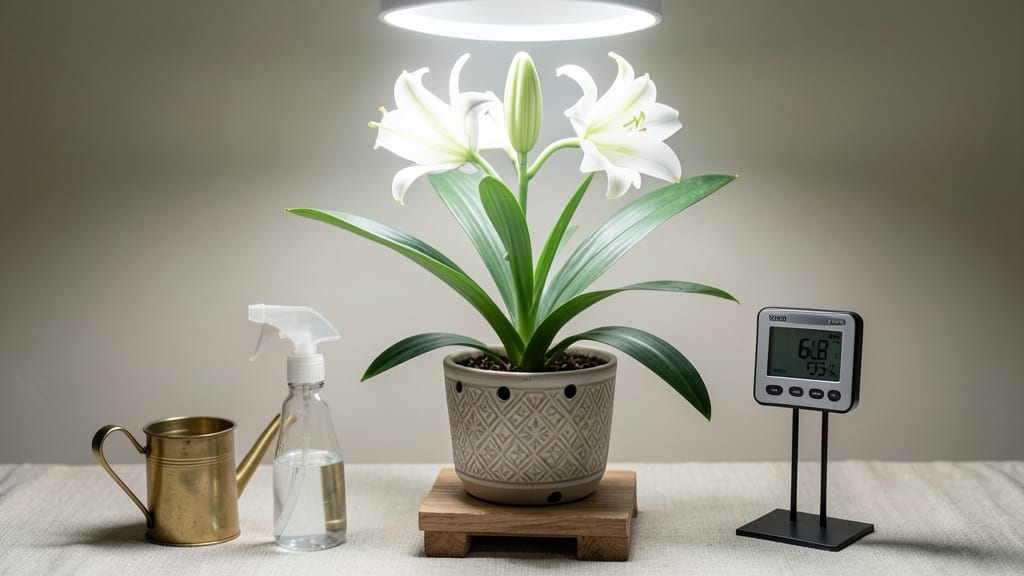
You can grow lilies indoors successfully by selecting dwarf varieties like Asiatic or Martagon lilies, placing them near bright, indirect light sources, and keeping the soil consistently moist without overwatering. Maintaining a cool environment (60–70°F) and occasional misting will boost your chances of thriving blooms.
Indoor lilies thrive when you mimic their natural habitat as closely as possible. 🌱 The key is selecting smaller varieties that won't outgrow your space—Asiatic lilies stay compact, while Martagon types handle lower light better.
Unlike outdoor lilies, indoor plants need consistent moisture but dread soggy roots, so I always check soil moisture with my finger before watering. A south-facing window provides ideal light, but if that's not available, supplement with a grow light for 12–14 hours daily to prevent leggy growth.
What many gardeners overlook is the importance of seasonal adjustments. During winter, reduce watering slightly as indoor environments tend to dry out less, and consider moving your lilies to a cooler spot if your home gets too warm.
With the right variety and care, you can enjoy fragrant blooms indoors that rival outdoor plants!
💡 In This Article
- Indoor Lily Light Requirements and Growth Challenges
- Best Low-Maintenance Lily Varieties for Indoor Pots
Indoor lily light requirements and growth challenges
Lilies rely on specific light wavelengths to fuel photosynthesis efficiently, particularly in the blue (400-500nm) and red (600-700nm) spectrums, which drive chlorophyll production. Indoors, natural sunlight through a south-facing window provides the ideal balance, delivering about 10,000-15,000 lux of light intensity—similar to what lilies experience in partial shade outdoors.
However, direct midday sun can create a major challenge: the high UV index causes leaf burn, manifesting as crispy brown edges on foliage within days. 🔥
The key is diffused light—think of it like filtering sunlight through a sheer curtain. Artificial grow lights can bridge gaps when natural light falls short, especially in winter.
LED grow lights with a 2700K-6500K color temperature spectrum mimic full-spectrum sunlight, and positioning them 6-12 inches above the plant ensures even coverage. For example, a 12-14 hour daily light cycle with grow lights prevents the leggy growth (elongated stems) that occurs when lilies stretch toward weak light sources.
What most gardeners miss is how light quality affects blooming. Lilies need consistent light exposure to trigger flowering—without it, they'll focus energy on leafy growth instead.
I've found that supplementing with a timer-controlled grow light (like a 10W LED bulb) for 4-6 hours in early morning or evening can make the difference between blooms and bare stems. The trade-off?
Too much artificial light at night can disrupt the plant's natural circadian rhythm, so keep lights off during darkness periods.
Another challenge is humidity. Indoor air, especially with central heating, often drops below the 40-60% relative humidity lilies prefer. Low humidity causes leaf edges to brown and buds to dry out before opening.
Misting leaves twice daily or placing the pot on a pebble tray with water creates a microclimate that mimics outdoor conditions. The pebble method works because evaporation from the water raises ambient humidity around the plant without overwatering the soil.
Seasonal light changes also impact growth. During winter, when daylight hours shrink to 8-10 hours, lilies may enter a dormant-like state indoors. This is why I reduce watering by 20-30% and avoid fertilizing—both can stress the plant when light is scarce.
The goal is to help lilies conserve energy until spring's longer days return. For those with limited natural light, a full-spectrum grow light on a timer becomes essential for year-round care.
One common mistake is assuming all indoor spaces are equal. North-facing windows provide cool, indirect light but only about 5,000 lux, which is too weak for lilies. In these cases, a grow light becomes non-negotiable. The payoff? Healthy foliage and the potential for blooms even in low-light rooms.
I've successfully grown Martagon lilies in a north-facing office by combining a 12-hour grow light cycle with weekly misting—proof that with the right setup, indoor lilies can thrive anywhere.