
Container Gardens
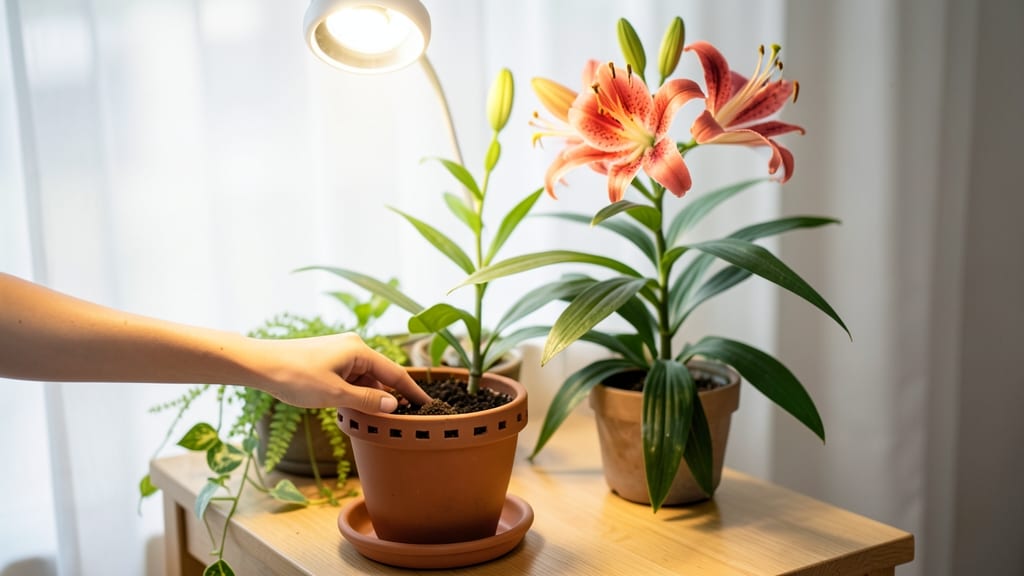
You can grow lilies indoors with the right approach: choose compact varieties like Lilium regale or Lilium longiflorum, position them near bright indirect light for at least 6 hours daily, and use a deep container with fast-draining potting mix. Simulating cooler winter conditions helps trigger reblooming each season.
Indoor lily cultivation succeeds when you account for their natural growing habits. 🌱 Smaller varieties like Lilium regale thrive in pots because their roots don't spread as aggressively as outdoor types, while their delicate blooms benefit from consistent humidity levels you can maintain indoors.
The key is replicating their outdoor environment—bright light prevents leggy growth, and well-draining soil prevents root rot. Many growers swear by placing pots near east-facing windows or using grow lights for 12 hours daily during winter months when natural light diminishes.
What often trips up beginners is the balance between moisture and airflow. Lilies hate soggy roots but need consistent dampness—think of them like thirsty houseplants that need their top inch of soil to dry slightly between waterings.
I've found that adding a layer of perlite or orchid bark to the potting mix improves drainage while maintaining moisture retention. For winter dormancy, moving your lilies to a cooler spot (around 50-55°F) and reducing watering triggers the plant's natural rest period, setting the stage for next year's blooms.
💡 In This Article
- Best Indoor Lily Varieties for Pots and Light Needs
- Indoor Lily Care: Watering, Soil, and Seasonal Adjustments
Best indoor lily varieties for pots and light needs
Indoor lilies need compact growth habits to thrive in containers, which is why dwarf varieties like Lilium regale (regal lily) and Lilium longiflorum (Madonna lily) excel. These species typically reach 24-36 inches tall, making them ideal for indoor spaces where height becomes a limiting factor.
Their smaller bulbs (about 3-4 inches in diameter) also require less root space than their outdoor counterparts, which can spread aggressively in garden beds.
The fragrant blooms of Lilium regale, with their creamy white petals and subtle lemon scent, are particularly well-suited for indoor environments where their aroma can be fully appreciated.
The light spectrum requirements for indoor lilies are critical because they influence photosynthesis and bloom quality.
Lilies need bright, indirect light for at least 6-8 hours daily, with a preference for light in the 400-700 nm range (blue to red spectrum), which is ideal for chlorophyll production. 🌿 South- or west-facing windows provide the best natural light, but grow lights (LED or fluorescent) can supplement during winter months when daylight is scarce.
For example, a 12-hour photoperiod using a full-spectrum LED grow light placed 12-18 inches above the plant can mimic summer conditions and encourage robust growth. Without adequate light, lilies become leggy and produce fewer blooms.
One common misconception is that all lilies thrive indoors, but taller varieties like Lilium asiatic or Lilium oriental often struggle due to their height and heavy flower heads, which can topple over in indoor spaces. These types are better suited for outdoor gardens where they can grow unobstructed.
Instead, focus on varieties that naturally grow in shaded or woodland environments, as they've adapted to lower light conditions. For instance, Lilium candidum (Madonna lily) tolerates partial shade and produces elegant white flowers that add a touch of elegance to indoor settings.
When selecting a variety, consider the bloom size and fragrance intensity, as these factors directly impact your indoor experience. Lilium regale produces 4-6 inch blooms with a sweet, citrusy fragrance that fills a room, while Lilium longiflorum offers slender, trumpet-shaped flowers with a lighter, more delicate scent.
Both varieties are less prone to pests and diseases that plague outdoor lilies, making them a low-maintenance choice for indoor growers. 🌸 The key is to match the plant's natural growing conditions—whether it's partial shade or bright indirect light—to ensure it thrives in your home.
For those with limited natural light, consider using a combination of south-facing windows and supplemental grow lights. Place your lily near a window during the day and supplement with a grow light in the evening to extend the light exposure.
This hybrid approach can help maintain the plant's health and encourage blooming, even in darker indoor spaces. The goal is to replicate the light conditions lilies would experience in their native habitats, where they often grow under the canopy of trees or in partially shaded areas.
Finally, pay attention to the light quality rather than just the duration. Lilies benefit from a mix of direct and indirect light, which helps prevent sunburn on the leaves while still providing enough energy for growth.
If you notice the leaves turning yellow or the plant stretching toward the light source, it's a sign that the light conditions need adjustment. In such cases, moving the plant slightly closer to the light source or increasing the duration of artificial lighting can help restore balance.