
Companion Plants
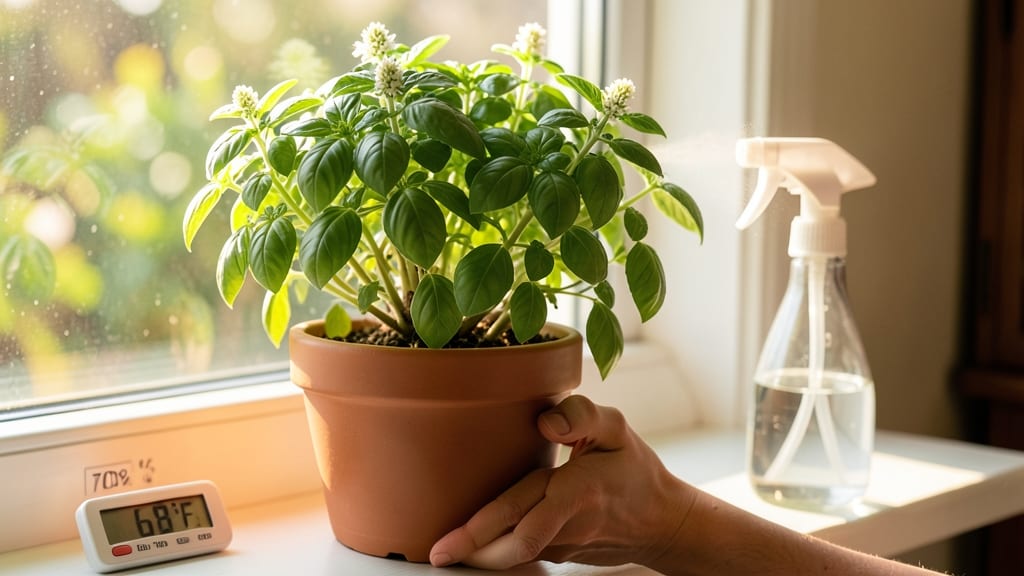
You can bring your basil plant indoors for winter with the right setup: position it near a south-facing window for 6+ hours of sunlight daily, keep indoor temperatures steady between 60–70°F, and shield it from cold drafts. Regular pruning will help it stay healthy and bushy.
Basil thrives outdoors in warm weather, but it can adapt to indoor living with careful attention to its needs. 🌿 The biggest challenge indoors is replicating its natural sunlight exposure—without enough light, your plant may grow leggy or lose flavor.
I’ve found that supplementing with a grow light (especially LED bulbs designed for herbs) can make all the difference when natural light falls short. Even with proper lighting, avoid placing your basil near heating vents or AC units, as sudden temperature swings can shock the plant.
Another key factor is humidity. Indoor air tends to be dry, especially with central heating running, which can cause basil leaves to crisp at the edges. A simple pebble tray with water beneath the pot or a nearby humidifier works wonders.
Watch for signs of stress like yellowing leaves or slow growth—these are your cues to adjust conditions. With these adjustments, your basil can survive (and even thrive) through winter, ready to return to outdoor pots come spring.
💡 In This Article
- Indoor Light Requirements for Winter Basil Survival
- Temperature and Humidity Adjustments for Potted Basil
Indoor light requirements for winter basil survival
Basil is a sun-worshipper, and its survival indoors hinges on replicating its natural 12+ hours of sunlight exposure it gets outdoors. Without enough light, the plant’s chlorophyll production slows dramatically—this is why leaves turn pale or stretch unnaturally toward the light source (a condition called etiolation).
The ideal indoor setup mimics full-spectrum sunlight, particularly the blue light spectrum (400-500nm wavelength) which basil needs for robust growth and flavor development. A south-facing window provides the closest match, but even there, light intensity drops significantly in winter due to shorter daylight hours.
If natural light isn’t sufficient, supplement with a grow light placed 6-12 inches above the plant for 12-16 hours daily. LED grow lights with a 2700K-6500K color temperature range work best—they’re energy-efficient and emit the full spectrum basil craves.
Position the light perpendicular to the plant (not directly overhead) to prevent leaf burn, and rotate the pot every 2-3 days for even growth.
I’ve seen basil plants under proper grow lights maintain their vibrant green color and even produce new leaves during winter, whereas plants with insufficient light become weak and flavorless.
Here’s what happens when light conditions are off: Without enough blue light, basil’s stems grow long and spindly (a sign of light deprivation), and the leaves develop a dull, almost grayish hue. 🌱 The plant’s natural defense mechanism kicks in—it prioritizes survival over flavor production, which is why your indoor basil might taste bland compared to its summer counterpart.
The good news? With the right lighting, you can maintain that fresh, aromatic basil flavor all winter long, even if you’re limited to indoor growing space.
For those without grow lights, consider placing your basil on a sunny windowsill with reflective surfaces (like aluminum foil or a white board) beneath the pot. This simple trick can increase light exposure by up to 30% by bouncing extra sunlight onto the leaves.
Just avoid glass surfaces that might trap heat and create uneven temperature zones. The goal is consistency—basil thrives on predictable light cycles, so stick to a routine and watch your plant respond with vigorous, healthy growth.
Pro tip: If you notice your basil’s leaves curling or developing brown spots, it’s often a sign of too much direct sunlight (especially from west-facing windows in the afternoon). Move it slightly back or use a sheer curtain to diffuse the light.
Basil is delicate in this regard—it needs bright light but not scorching intensity. Think of it like Goldilocks: the light should be just right—not too dim, not too harsh.