Buying guide: how to choose the right indoor living wall garden
1. Plant Type Compatibility 💡
Not all indoor living wall systems play well with every plant type. Succulents and herbs thrive in hydroponic or modular systems with self-watering reservoirs, while ferns and ivy prefer felt pockets or moss panels that retain moisture without drowning roots.
Counterintuitively, air plants (tillandsias) often do best in minimalist felt pockets—they don’t need soil or frequent watering! If you’re growing edibles like basil or mint, prioritize systems with adjustable LED grow lights to prevent leggy growth.
For purely decorative walls (e.g., moss or ferns), low-light tolerance is key—avoid systems that require intense artificial lighting.
2. Watering System ⚡
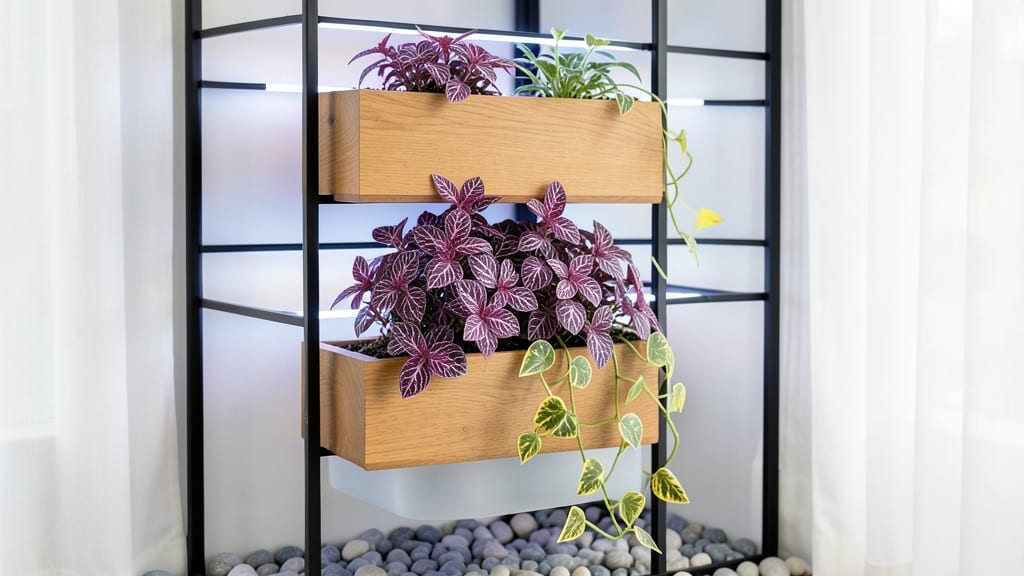
The watering system makes or breaks your living wall’s success. Self-watering hydroponic kits (like the modular systems) are ideal for beginners—they automate moisture delivery, but they’re pricier and require occasional reservoir refills. Manual systems (e.g., wooden shelves with trays) need frequent checks but are budget-friendly. Moss panels use wicking irrigation, soaking up water like a sponge—perfect for low-maintenance decor.
Pro tip: If you travel often, hydroponic or felt-pocket systems with reservoirs are the most forgiving. Avoid systems that rely solely on misting; they dry out too quickly for most indoor environments.
3. Lighting Requirements ✅
Lighting is the #1 overlooked factor—and it dictates whether your living wall thrives or wilts. Systems with built-in LED grow lights (like the mid-range modular kits) are best for low-light spaces (e.g., bathrooms, north-facing rooms).
If your wall gets direct sunlight, opt for natural-light-only systems (e.g., wooden shelves or moss panels) to save energy. Full-spectrum LEDs (found in premium systems) are overkill for succulents but essential for herbs.
A surprising trick: Place a reflective surface (like a mirror) behind your wall to amplify natural light—this can cut electricity costs by 30%. Skip systems that require 24/7 lighting; most plants need 12–14 hours of light daily, not constant illumination.
4. Installation Complexity 🔍
Not all living walls are equal in assembly—plug-and-play kits (like the modular hydroponic system) take under 30 minutes to install, while DIY panels (e.g., moss sheets) might require measuring, leveling, and securing mounts.
Renters should avoid permanent wall anchors and opt for hanging systems or freestanding frames. If you’re not handy, look for kits with pre-drilled holes and included hardware. Counterintuitively, heavier systems (like wooden shelves) are often easier to mount than lightweight panels, which can warp over time.
Always check your wall’s stud locations—skipping this step can turn your living wall into a falling hazard.
5. Budget vs. Long-Term Value 💰
Budget-friendly options (e.g., moss panels or wooden shelves) start under $50 but may require replacing plants or moss annually. Mid-range hydroponic kits (around $150–$250) offer 3–5 years of use with minimal upkeep, while premium smart systems (starting at $300+) include app controls, expandability, and warranties. I recommend prioritizing modularity—systems you can expand vertically or horizontally save money in the long run. For example, a $200 hydroponic kit can grow to 100+ plants over time, whereas a $100 moss panel will need replacing every 1–2 years. If you’re unsure, start with a small-scale system (e.g., a 6–12 plant panel) to test your commitment before investing in a full wall.
Frequently asked questions
Q: What types of plants work best in an indoor living wall garden?
1
Succulents, herbs (like basil or mint), and ferns
are the easiest to grow in most indoor living wall systems. For hydroponic or self-watering kits, choose plants that thrive in moist conditions without drowning, such as herbs or small leafy greens. If you prefer a decorative look, moss panels or air plants (tillandsias) require minimal care and add a lush, low-maintenance aesthetic. Avoid large, heavy plants like monstera or snake plants—they need more space and support than most vertical systems provide.
Q: How much light does an indoor living wall garden need?
Most indoor living wall gardens require 6–8 hours of indirect sunlight daily or 12–14 hours of artificial grow light if placed in low-light areas. Systems with built-in LED grow lights (like the mid-range modular kits) are ideal for dim spaces, while moss panels or wooden shelves work well near windows. If your wall lacks natural light, opt for a system with adjustable spectrum LEDs—these mimic sunlight and prevent leggy growth. Pro tip: Place a reflective surface (like a mirror) behind your wall to amplify light and reduce energy costs.
Q: How difficult is it to install an indoor living wall garden?
Installation varies by system. Modular hydroponic kits and pre-mossed panels are the easiest—most take under 30 minutes with no tools required. Wooden shelf systems need secure mounting to wall studs (use a stud finder for safety), while DIY felt-pocket walls require precise leveling and hanging hardware. Renters should avoid permanent anchors and choose freestanding frames or hanging mounts. Always check weight limits—heavier systems (like wooden shelves) are often easier to mount securely than lightweight panels.
Q: What’s the difference between a hydroponic living wall and a moss panel?
A hydroponic living wall uses a water-based nutrient system with plant pockets, ideal for growing edibles like herbs or succulents. These systems often include LED grow lights and require occasional reservoir refills. A moss panel, on the other hand, is decorative—it mimics a natural moss wall with minimal upkeep (just misting or wicking irrigation). Moss panels thrive in low to medium light and are perfect for renters or those who want a maintenance-free aesthetic. Hydroponic systems are better for active gardeners, while moss panels suit decorative purposes.
Q: How often do I need to water an indoor living wall garden?
Watering needs depend on the system. Self-watering hydroponic kits only need a reservoir refill every 2–4 weeks, while felt-pocket or moss panels require weekly misting or occasional soaking. Wooden shelf systems with trays may need water every 5–7 days. Overwatering is the #1 killer of indoor living walls—always check moisture levels before adding water. For travel, hydroponic systems with reservoirs are the most forgiving, while moss panels dry out quickly if neglected.
Q: Is an indoor living wall garden worth the investment?
if you prioritize space-saving greenery with low maintenance. A budget-friendly moss panel adds instant decor for under $50, while a mid-range hydroponic kit offers 3–5 years of edible plants for a one-time setup. Premium smart systems justify their cost with app-controlled automation and expandability. Even renters benefit—most systems are removable and reusable. The long-term value comes from improved air quality, stress relief, and a stunning focal point—not just the plants themselves.
Q: Can I expand my indoor living wall garden later?
Yes! Most modular systems (like hydroponic kits or wooden shelves) allow vertical or horizontal expansion. Start with a small panel (6–12 plants) and add more as you gain confidence. Premium smart systems even let you scale up to 100+ plants over time. Moss panels are trickier to expand—opt for multiple panels from the start. Always check the manufacturer’s guidelines for weight limits and mounting compatibility before adding extra sections. A phased approach lets you test commitment without over-investing upfront.
★★★★★4.8(1 review)