
Container Gardens
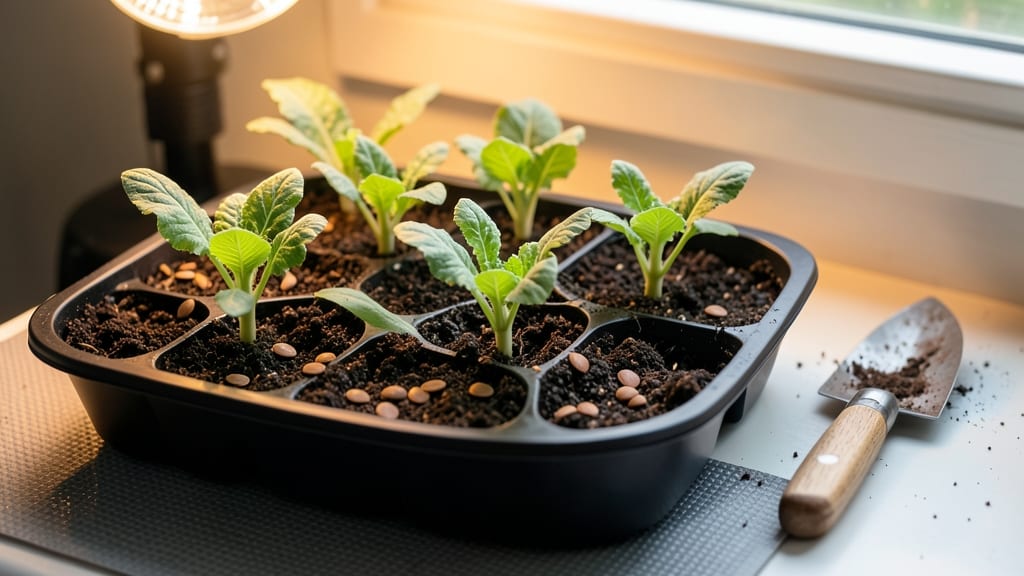
To start cauliflower seeds indoors at the perfect time, use your last frost date as the anchor — then count backward 6 to 8 weeks for the ideal window in most USDA Zone 6a areas.
Picture this: you’ve got healthy, stocky seedlings 🥬 ready to transplant, not leggy shadows fighting for light. The difference between those two outcomes? Timing.
Cauliflower is finicky about temperature swings, and starting too early or too late can send your plants bolting before they form heads—or worse, leaving you with stunted, bitter curds.
This isn’t just about memorizing a date—it’s about matching your seed-starting schedule to your climate. In the Northern Hemisphere, that means February or early March for most gardeners, but if you’re in a warmer zone or the Southern Hemisphere, you’ll adjust for shorter days and earlier frosts.
Below, I’ll break down the exact formula, including how to handle short-season challenges and when to tweak for transplant readiness.
You’ll walk away with a customized seed-starting plan that accounts for your frost dates, variety maturity, and even how to spot when seedlings are truly ready to move outdoors. No more guesswork—just dense, uniform heads and a garden you can count on.
Cauliflower seed starting timeline: frost-date formula for perfect transplants
Timing your cauliflower seeds indoors is all about math—specifically, the 4-6 week rule combined with your last frost date. Get this wrong, and you’ll either have bolting seedlings or stunted plants that never produce those perfect heads.
The key? Count backward from your frost date using your variety’s maturity days and transplant readiness.
For example, if your last frost date is April 15 (like in USDA Zone 6a), and you’re growing a 75-day variety, you’ll need to start seeds indoors by February 15.
But this varies by region—southern gardeners might start in January, while northern gardeners could wait until March. Let’s break it down step by step.
Why this matters: Cauliflower seedlings need 4-6 weeks indoors to develop 4-6 true leaves and a sturdy root system before transplanting. Start too early, and they’ll get leggy and weak from stretching for light. Start too late, and they won’t mature before frost.
| Stage | Action | Timeframe | Notes |
|---|---|---|---|
| Find Last Frost Date | Check USDA Zone or local almanac | Varies by region (e.g., March 15 in Zone 5, Feb 1 in Zone 8) | Use USDA Zone Map if unsure |
| Determine Maturity Days | Check seed packet (e.g., 60-100 days) | Most cauliflower: 70-85 days | Subtract 4-6 weeks for transplant readiness |
| Calculate Start Date | Subtract maturity days from frost date | Example: April 15 - 75 days = Feb 15 | Add 2 weeks for slow starters |
| Adjust for Seedlings | Start 4-6 weeks before transplant | Ideal: 4-6 true leaves, 3-4 inches tall | Use grow lights if natural light is weak |
| Transplant Ready | Hardening off for 7-10 days | Soil temp: 45°F+ | Avoid transplant shock with shade cloth |
Let’s say you’re in Zone 7a with a last frost date of March 20 and growing ‘Snowball Y Improved’ (80 days to maturity). Here’s how to calculate your start date:
- Subtract maturity days from frost date: March 20 - 80 days = December 22. But starting in December risks leggy seedlings due to short winter days. Instead, use the 4-6 week rule to adjust: March 20 - 6 weeks = February 5.
This gives you a 10-week window (6 weeks indoors + 4 weeks outdoors), which is ideal for most varieties.
For northern climates (Zones 3-5), start seeds 8-10 weeks before frost to account for cooler soil. In Zone 4, with a frost date of May 10, aim for March 1-15. Use a heat mat to speed germination in cold basements.
In southern regions (Zones 8-10), delay starts until January-February to avoid bolting from heat stress. For example, in Zone 9 (frost date: January 10), start seeds by November 15 for a 60-day variety, but monitor heat—cauliflower prefers 60-70°F days.
Pro tip: Use a frost-date calculator like the one below to plug in your numbers. Download this free template (Google Sheets/Excel) to automate your timeline:
| Input | Your Value | Result | ||||||||
|---|---|---|---|---|---|---|---|---|---|---|
Signs your cauliflower seedlings are ready for transplant (and what to do if they’re not)Transplanting cauliflower seedlings at the right stage is everything—too early, and they’ll struggle; too late, and you risk bolting or stunted heads. Look for these 3 key signs of readiness: 4-6 true leaves, a thick stem (¼-inch diameter), and robust root systems filling the seedling pot. These milestones mean your seedlings have the strength to handle outdoor conditions without shock. First, count those true leaves—not the tiny seed leaves. Cauliflower seedlings should have 4-6 large, mature leaves before transplanting. If they’ve only got 2-3, they’re not ready yet. Leggy seedlings with long, thin stems and small leaves? That’s a red flag. They’ve likely stretched for light and need immediate hardening off or supplemental grow lights to recover. Next, check the stem thickness. Pinch the stem gently—it should feel firm and thick (about ¼-inch wide). Thin stems mean weak plants that’ll flop in wind or struggle to support heavy heads. If yours are pencil-thin, delay transplanting and boost light or fertilizer to encourage thicker growth. Now, the root test: Gently remove the seedling from its pot and inspect the roots. Healthy roots should be white, dense, and filling the root ball. If roots are sparse or circling the pot, they’re not ready. Root-bound seedlings transplant poorly—prune tangled roots before planting to encourage outward growth. ✅ Ready for Transplant vs. ❌ Not Ready
Pro Tip: If seedlings are bolting (sending up tall flower stalks), they’re too old. Delay planting or harvest leaves for greens instead of heads. If your seedlings are leggy or weak, don’t rush them outside. Instead, harden them off for 7-10 days by placing them in a shaded outdoor spot for increasing durations (start with 1 hour, then 2, etc.). Use a grow light to encourage thicker stems if natural light is insufficient. For slow-growing seedlings, check soil moisture—cauliflower loves consistent moisture but hates soggy soil. Finally, time your transplant for cool evenings (50-60°F) and mild days (60-70°F). If your seedlings meet all the readiness signs but the weather’s still too hot or cold, hold off and use shade cloth or row covers to protect them. A well-timed transplant gives your cauliflower the best shot at plump, flavorful heads all season. |