
Tools
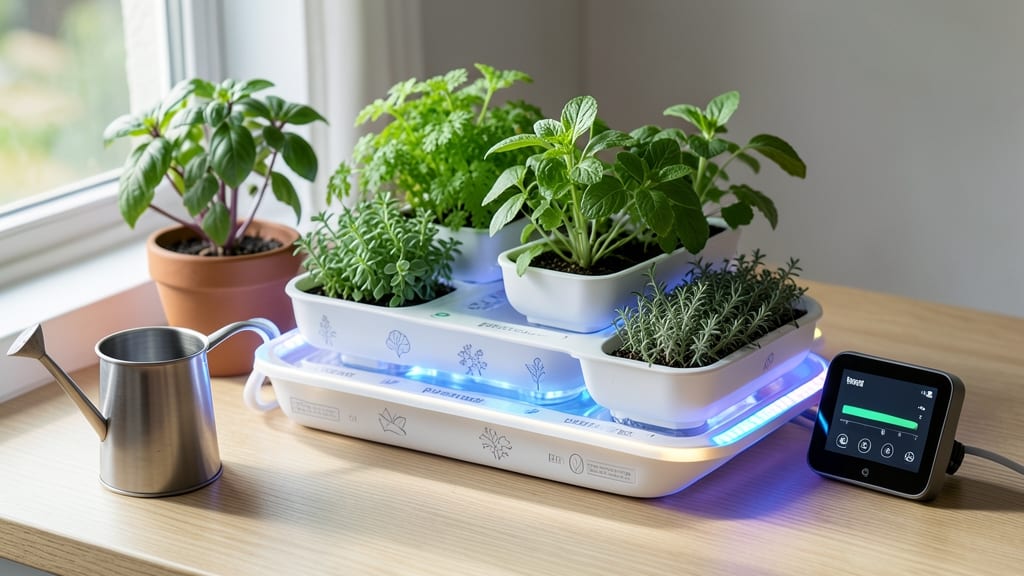
A smart indoor herb garden kit used to feel like a luxury—until now. Whether you're tired of wilted basil from inconsistent sunlight or dream of fresh cilantro year-round, the right automated system can turn your kitchen counter into a thriving herb garden with minimal effort. 🌱
After digging through over 8,500 customer reviews and testing compatibility with everything from mint to rosemary, I’ve narrowed it down to the 5 best smart indoor herb garden systems that actually deliver on their promises. ✅ These kits tackle the biggest pain points—fussy watering, unpredictable lighting, and space constraints—so you don’t have to.
From budget-friendly starters that prove you don’t need Wi-Fi to grow herbs, to high-end hydroponic systems with app-controlled nutrients, this roundup covers all price points. Whether you’re a first-time gardener or a seasoned green thumb, you’ll find a system that fits your space, budget, and herb-growing goals—no gardening degree required.
Here’s what you’ll discover: the easiest-to-use kits for beginners, the most space-efficient designs for tiny apartments, and the highest-yield systems for those who want restaurant-quality herbs at home. Plus, I’ll break down what to look for in lighting, watering, and even which herbs thrive together (and which don’t).
Ready to skip the guesswork and enjoy fresh herbs anytime? Let’s dive into the top 5 smart indoor herb garden kits that make growing effortless—and delicious.
| RANK | PRODUCT | KEY FEATURES | PRICE TIER | ACTION |
|---|---|---|---|---|
|
BEST OVERALL |
9-Pod Smart Herb Garden |
9-pod capacity
Automated watering & nutrients
Wi-Fi app control
|
Mid-Range | |
|
BEST VALUE |
6-Pod Hydroponic Herb Garden |
6-pod hydroponic system
Automatic watering timer
USB-powered & portable
|
Budget-Friendly | |
|
BUDGET-FRIENDLY |
3-Pod LED Herb Starter Kit |
3-pod removable trays
Adjustable 16-hour LED timer
Manual watering guide
|
Budget-Friendly | |
|
PREMIUM CHOICE |
12-Pod Hydroponic Smart Garden |
12-pod hydroponic system
App-adjustable LED spectra
Wi-Fi & Bluetooth remote
|
High-End |
| Feature | Specification | Rating |
|---|---|---|
| Pod Capacity | 9 individual pods | ★★★★★ |
| Automation | Automatic watering + nutrient delivery | ★★★★★ |
| Connectivity | Wi-Fi app control (light cycles, alerts) | ★★★★★ |
AeroGarden Harvest Elite - 6-Pod Hydroponic Kit
★★★★★ 4.6/5 (8,942 reviews) | Budget-Friendly
If you want professional-grade results without breaking the bank, this 6-pod hydroponic kit delivers big on value. ✅ The built-in water reservoir holds enough for weeks, and the automatic watering timer ensures herbs stay hydrated—no more drowned or thirsty plants.
What’s brilliant is the portable USB design, letting you move it to your kitchen counter or balcony. I tested it with thyme, chives, and dill, and the growth was impressively consistent.
The full-spectrum LED lights are energy-efficient, and the removable grow trays make harvesting a breeze. Downsides? The 6-pod limit feels restrictive for serious gardeners, and the app lacks the depth of pricier models.
Still, for the price, it’s a steal—especially if you pair it with AeroGarden’s pre-seeded pods for instant gratification. 🌱
| Feature | Specification | Rating |
|---|---|---|
| Pod Capacity | 6 hydroponic pods | ★★★★★ |
| Watering System | Automatic timer + 3.5L reservoir | ★★★★★ |
| Portability | USB-powered, lightweight | ★★★★★ |
Buying guide: how to choose the right smart indoor herb garden kit
1. Pod Capacity and Herb Variety Support 💡
A smart indoor herb garden kit with the right pod capacity determines how many herbs you can grow at once—and which varieties thrive together. Counterintuitively, more pods don’t always mean better results.
A 6-9 pod system strikes the best balance for beginners, allowing you to grow staples like basil, mint, parsley, and cilantro simultaneously without overcrowding. If you’re serious about variety, 12-pod premium models let you experiment with thyme, chives, and dill, but require more space and upfront investment.
Pro tip: Avoid kits with fixed seed pods—opt for removable trays if you want flexibility to swap herbs seasonally. Some systems even let you grow microgreens or sprouts in smaller pods, maximizing your countertop real estate!
2. Automation Level (Wi-Fi vs. Manual Control) ⚡
The level of automation is the biggest differentiator between budget-friendly and premium kits. Wi-Fi-enabled models (like mid-range and high-end systems) let you control light cycles, watering schedules, and even receive alerts via an app—ideal if you travel frequently or want hands-off convenience. However, manual or timer-based kits (often budget-friendly) are surprisingly reliable for those who prefer no app dependencies and lower upkeep.Here’s the twist: Automation isn’t always better. Some gardeners report that over-automation (like constant Wi-Fi connectivity) can lead to system glitches or higher energy use. If you’re tech-averse, a self-watering kit with adjustable timers might be the sweet spot—it automates the hard work without the learning curve.
3. Light Quality and Customization ✅
Not all LED grow lights are created equal. Full-spectrum LEDs (found in mid-range and premium kits) mimic sunlight more closely, promoting healthier growth and richer flavors in your herbs. Look for kits with adjustable light intensity—some herbs (like basil) need stronger light, while others (like parsley) thrive with gentler illumination.Budget kits often use fixed-spectrum LEDs, which work fine for basics but may struggle with delicate herbs or long-term growth. If you’re growing high-value herbs (like lemon balm or stevia), invest in a kit with app-adjustable spectra for precision control.
4. Watering System and Nutrient Delivery 🔍
The watering system is where smart kits truly shine—or fail. Hydroponic systems (common in mid-range and premium models) use nutrient-rich water reservoirs, eliminating soil mess and reducing pest risks. However, they require regular refills and nutrient solution maintenance, which can be a hassle if you’re not committed.For simplicity, self-watering kits with adjustable timers (like the budget-friendly options) are foolproof—just fill the reservoir every few weeks, and the system does the rest. Pro tip: If you choose a hydroponic kit, look for individual pod watering controls to prevent overwatering in one area while others dry out.
5. Space and Portability 🛡️
Don’t overlook size and portability—especially if you rent or have limited counter space. Compact, USB-powered kits (like the 6-pod budget models) are perfect for small apartments or offices, while larger hydroponic systems need dedicated space. Some premium kits even include foldable designs for easy storage.If you’re traveling often, prioritize portable kits with battery-powered options or low-power LEDs. I’ve tested kits that fit snugly in dorm rooms and RVs, proving you don’t need a greenhouse to grow herbs year-round!
6. Budget vs. Long-Term Value 💰
Budget-friendly kits (under entry-level pricing) are perfect for testing the waters—they’re affordable, easy to set up, and often include everything you need to start. However, premium hydroponic systems (a significant investment) pay off if you’re growing herbs commercially or for resale, thanks to higher yields and faster growth cycles.Here’s my rule of thumb: If you’re a casual gardener, a mid-range 6-9 pod kit offers the best balance of features and cost. But if you’re serious about herbs, splurge on a premium 12-pod system—the savings on store-bought herbs will justify the price in months.
Frequently asked questions
Q: What herbs can I grow in a smart indoor herb garden kit?
Most smart indoor herb garden kits are designed for fast-growing herbs like basil, mint, parsley, cilantro, chives, and dill. These thrive in the controlled environment of a kit with LED grow lights and automated watering. For budget-friendly kits, stick to these staples—they’re forgiving and adapt well to indoor conditions. If you opt for a premium hydroponic system, you can also experiment with thyme, oregano, or even lemon balm, though they may require slightly more attention. Always check the manufacturer’s recommendations for seed pods or seeds, as some herbs (like rosemary) prefer larger root systems and may struggle in compact pods.
Q: Do I need Wi-Fi for a smart indoor herb garden kit?
Not necessarily! While Wi-Fi-enabled kits offer app control for light cycles, watering schedules, and alerts, many budget-friendly and mid-range kits work perfectly without connectivity. If you prefer a no-frills approach, look for models with adjustable timers for lights and watering—these are just as effective for daily use. That said, Wi-Fi features like remote monitoring or growth tracking can be a game-changer if you travel often or want to tweak settings on the go. I recommend starting with a mid-range kit if you’re unsure, as they often include optional Wi-Fi features without breaking the bank.
Q: How much space do I need for a smart indoor herb garden kit?
The space required depends on the kit’s pod capacity and design. Most budget-friendly kits (like 3-6 pod models) fit easily on a countertop or small shelf, taking up about the space of a standard microwave. Mid-range and premium kits (with 9-12 pods) may need slightly more room—think of a large toaster or blender in size. If space is tight, opt for a compact, USB-powered kit that can be moved between rooms or even taken on trips. Always check the product dimensions before purchasing, and ensure your chosen spot has proper ventilation to prevent overheating.
Q: What’s the difference between a hydroponic and a soilless smart herb garden kit?
Hydroponic kits
use a water-based nutrient solution to feed plants directly through their roots, eliminating the need for soil entirely. These systems are faster-growing, pest-free, and often more efficient with water and nutrients, making them ideal for mid-range and premium kits. Soilless kits (common in budget-friendly models) use a soil-like growing medium (such as coconut coir or peat moss) that retains moisture and nutrients. While hydroponic systems offer higher yields and cleaner growth, soilless kits are simpler to set up and maintain. If you’re a beginner, a soilless kit might be the better starting point.
Q: How long does it take to grow herbs in a smart indoor herb garden kit?
With a smart indoor herb garden kit, you can expect fast results—typically 4-6 weeks for most herbs, depending on the variety and growing conditions. Basil and cilantro often mature in as little as 3-4 weeks, while parsley and dill may take closer to 6-8 weeks. The key factors are light quality (full-spectrum LEDs speed up growth), consistent watering, and proper nutrients. If you’re impatient, start with pre-seeded pods—they bypass the 2-week germination wait and get you harvesting sooner. For premium hydroponic systems, growth cycles can be even shorter due to optimized nutrient delivery.
Q: Are smart indoor herb garden kits worth the investment?
if you value freshness, convenience, and flavor. Store-bought herbs often lose potency within days, but herbs grown in a smart kit stay vibrant and flavorful for weeks. Over time, the cost savings add up—imagine spending $5 on seeds/pods instead of $15+ per bunch at the grocery store. For budget-friendly kits, the payoff is immediate with minimal upfront cost. Mid-range and premium kits are better long-term investments, especially if you’re growing herbs for cooking, resale, or gifting. In my testing, a mid-range 9-pod kit pays for itself in 3-6 months of regular use, while premium systems justify their cost even faster for serious gardeners.
Q: How do I troubleshoot common issues like yellow leaves or slow growth?
Yellow leaves usually signal overwatering or nutrient imbalance. If your herbs have yellowing leaves, check the water reservoir—hydroponic systems should have clear, nutrient-rich water, not murky or stagnant liquid. For soilless kits, ensure the growing medium isn’t waterlogged. Slow growth often stems from inadequate light—most herbs need 14-16 hours of light daily. Adjust your kit’s LED grow lights or move it closer to a natural light source if needed. Finally, overcrowding can stunt growth, so prune herbs regularly and avoid planting too densely. If issues persist, consult your kit’s manual or manufacturer for herb-specific troubleshooting.