
Container Gardens
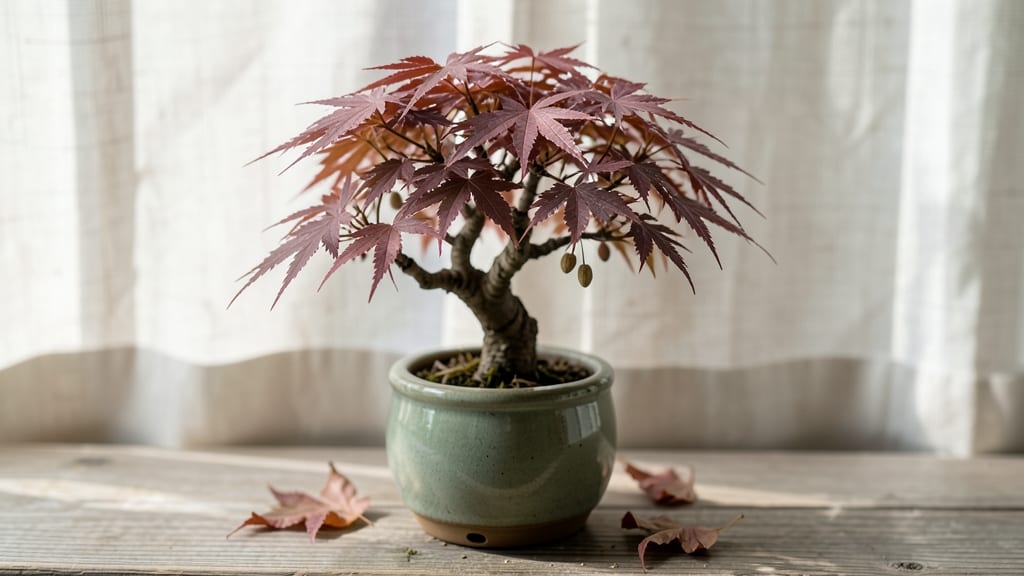
Growing a Japanese maple indoors transforms your space into a serene, miniature forest. 🌿 These delicate trees thrive where most plants struggle—low light, cooler temps, and even dry air.
My first indoor Japanese maple started as a bare-root cutting, and now it’s a lush, 5-foot-tall centerpiece that never needs harsh sunlight.
You’ll need a shallow but wide container (at least 12 inches in diameter) with drainage holes, a well-draining soil mix (think 60% organic matter, 40% grit), and a spot near a north-facing window or under a grow light.
The key is patience—these trees grow slowly but reward you with vibrant foliage year-round if you mimic their natural woodland habitat.
Watering is the trickiest part: keep the soil consistently moist but never soggy. Mist the leaves weekly or place the pot on a pebble tray to boost humidity.
Prune in late winter to shape the tree and remove dead wood, and watch as new growth emerges with delicate, lace-like leaves that turn fiery red in cooler months.
Seasonal adjustments are simple: move the plant closer to a window in winter (or extend grow light hours) and step up watering as indoor air dries out. With these small tweaks, your Japanese maple will stay healthy, compact, and stunning—proof that even slow growers can be showstoppers indoors.
📚 In This Guide
- What you need
- Instructions
- Tips and common mistakes
- Wrapping up and next steps
What you need
- ● Japanese Maple Seedling or Small Potted Plant: Choose a dwarf variety (e.g., 'Bloodgood,' 'Crimson Queen,' or 'Shishigashira') for indoor growth.
- ● Ensure it’s 1-2 years old (smaller pots, 4-6 inches in diameter, are ideal).
- ● Well-Draining Potting Mix: Use a blend of 50% premium potting soil (e.g., Miracle-Gro or Fox Farm Ocean Forest).
- ● Add 30% perlite or pumice (for aeration).
- ● Mix in 20% orchid bark or coarse sand (to prevent root rot).
- ● Container with Drainage: Select a terracotta or ceramic pot (5-8 inches wide) with drainage holes.
- ○ Optional: Add a cache pot (outer decorative pot) for aesthetics.
- ● Pruning Tools: Small, sterilized pruning shears (for shaping and deadheading).
- ● Sharp gardening knife (for root trimming if repotting).
- ● Watering Can or Spray Bottle: Use a rose-headed nozzle for gentle watering (avoids soil erosion).
- ● Humidity Tray or Peat Moss: Helps maintain 50-70% humidity (critical for indoor Japanese maples).
- ● Grow Lights: LED full-spectrum bulbs (12-14 hours/day) for low-light spots.
- ● Fertilizer: Balanced liquid fertilizer (e.g., 10-10-10) diluted to half-strength.
- ● Mulch: Orchid bark (top-dress soil to retain moisture).
- ● Plant Support: Small bamboo stakes (if training a young tree).
- ● Soil pH Test Kit: Ensures soil is slightly acidic (5.5-6.5).
Step-by-step guide to cultivating a Japanese maple indoors
Here's how I transform delicate Japanese maple seedlings into thriving, low-light-adapted houseplants—without the common pitfalls.
🌱 Step 1: Select the Right Variety and Container
Japanese maples thrive indoors as dwarf varieties like 'Bloodgood' or 'Emperor I'. Choose a container with drainage holes—12-14 inches wide for mature plants—and use a well-draining mix of 50% organic potting soil, 30% perlite, and 20% coarse sand. The mix must stay aerated to prevent root rot, which these slow growers hate.
I always select a pot just 2-3 inches larger in diameter than the root ball. This prevents overpotting, which encourages excessive moisture retention. Place a layer of 1-2 inches of gravel at the bottom for extra drainage—Japanese maples despise soggy roots.
☀️ Step 2: Position for Optimal Light Conditions
Japanese maples tolerate bright, indirect light but avoid harsh afternoon sun, which scorches delicate foliage. Place your plant near an east-facing window or under a grow light 12-18 inches away for 12-14 hours daily. You'll notice the leaves develop their signature coloration when light is consistent.
Rotate the pot quarter-turn weekly to ensure even growth. Leggy stems or pale leaves signal insufficient light—move closer to the window or increase grow light intensity. Avoid south-facing windows unless filtered through sheer curtains.
💧 Step 3: Master the Watering Routine
Water when the top 1-2 inches of soil feel dry—stick your finger in to check. Japanese maples prefer slightly dry conditions; overwatering causes leaf drop and root rot. Use room-temperature water and water thoroughly until it drains from the bottom holes.
I always empty the saucer after 10 minutes to prevent root suffocation. In winter, reduce watering by half since growth slows dramatically. Yellowing leaves often mean overwatering, while crispy edges signal underwatering—balance is key.
✂️ Step 4: Prune for Shape and Health
Prune in early spring to shape the tree and remove dead or crossing branches. Use clean, sharp pruners to make cuts at a 45-degree angle, just above a leaf node. Japanese maples respond well to pruning, so don't hesitate to trim leggy growth—it encourages bushier, more compact foliage.
After pruning, apply a balanced 10-10-10 fertilizer diluted to half strength. Feed every 4-6 weeks during spring and summer only—never fertilize in fall or winter. You'll see new growth within 3-4 weeks if the plant is healthy.
🪴 Step 5: Monitor for Pests and Adjust Care
Check leaves weekly for spider mites or scale, common pests that thrive in dry indoor air. Wipe foliage with a damp cloth monthly to remove dust and deter infestations. If pests appear, treat with neem oil solution (1 tsp per quart of water) and isolate the plant for 3-5 days.
Japanese maples are sensitive to sudden temperature changes—keep them in 60-75°F environments. Increase humidity with a pebble tray or humidifier, especially in winter when indoor air dries out. You'll know humidity is right when leaves stay lush and vibrant year-round.
Tips & tricks for perfect Japanese maple indoor plant care
Transforming delicate Japanese maple seedlings into thriving indoor trees takes patience—but these insider tips make all the difference.
Soil Mix Secrets: The 50% organic potting soil to 30% perlite to 20% coarse sand ratio is non-negotiable, but here's what I've learned: sterilize your potting mix first by baking it at 200°F for 30 minutes to kill any latent pathogens. Japanese maples have delicate roots that can't compete with soil-borne diseases. Also, if you're using store-bought mixes, sift out any large chunks—they can create air pockets that disrupt moisture balance.
Lighting Strategy: That 12-14 hour daily light requirement is crucial, but placement matters more than you'd think. East-facing windows provide perfect morning light without harsh afternoon rays, but if you're using grow lights, position them 12-18 inches away—any closer and you risk burning those delicate leaves. I've found that LED grow lights with a full spectrum (especially red and blue wavelengths) produce the most vibrant foliage coloration. For maximum results, combine natural light with grow lights during winter months when daylight is limited.
Watering Wisdom: The "top 1-2 inches dry" rule works, but here's the trick: use a moisture meter for accuracy—Japanese maples hate both soggy and bone-dry conditions. I also recommend watering in the morning so excess moisture has time to evaporate through the drainage holes. Pro tip: If your tap water has high chlorine content, let it sit out overnight before watering—chlorine buildup can stress the plant over time. And never let the plant sit in saucer water longer than 10 minutes, even if it means emptying it more frequently.
Pruning Precision: When making those 45-degree angle cuts in Step 4, here's what nobody tells you: sterilize your pruners between cuts with rubbing alcohol to prevent spreading disease. Also, if you're pruning for shape rather than health, focus on removing branches that grow inward—they create weak spots where pests can hide. After pruning, I like to apply a thin layer of cinnamon powder to cut surfaces (optional but effective) to deter fungal infections during the healing process.
Pro Tips for Japanese Maple Indoor Plant
- Transforming delicate Japanese maple seedlings into thriving indoor trees takes patience—but these insider tips make all the difference.
- Japanese maples have delicate roots that can't compete with soil-borne diseases.
- Lighting Strategy: That 12-14 hour daily light requirement is crucial, but placement matters more than you'd think.
Frequently asked questions
Got questions about keeping a Japanese maple thriving indoors?
You’re not alone! Here are some of the most common concerns—plus quick, practical answers to help you nurture your slow-growing beauty with confidence.
Can a Japanese maple really survive indoors long-term?
Yes! While they’re native to outdoor climates, some dwarf varieties (like ‘Bloodgood’ or ‘Emperor I’) adapt well to indoor life—if given the right care. Expect slower growth (1–2 inches per year) but stunning foliage for decades. Just avoid harsh drafts, and you’ll have a living heirloom!
How often should I water my indoor Japanese maple?
Water when the top 1–2 inches of soil feel dry (about every 7–10 days, depending on humidity). Overwatering is the #1 killer—ensure pots have drainage holes and use well-draining soil. In winter, reduce watering by half since growth slows.
Why are my Japanese maple’s leaves turning yellow?
Yellowing leaves usually signal overwatering or poor drainage. Check for:
- Soggy soil (let it dry out)
- Root rot (trim mushy roots, repot in fresh soil)
- Low light (move closer to a window)
What’s the best indoor alternative if my Japanese maple struggles?
If low-light conditions or slow growth frustrate you, try these low-maintenance, slow-growing indoor trees:
Prune in late winter or early spring to shape the tree and encourage bushiness. Use sterilized scissors to:
Plant
Why It’s Great
Dwarf Schefflera (‘Amate’)
Thrives in low light, glossy leaves, and grows just 2–3 ft tall.
Ficus ‘Ginseng’
Dramatic twisted trunk, drought-tolerant, and adapts to indoor spaces.
Chinese Elm (Ulmus parvifolia)
Hardy, compact, and handles indoor temps better than Japanese maples.
How do I prune my indoor Japanese maple without harming it?
Bonus: Save cuttings in water to propagate a new plant!
Wrapping up and next steps
Bringing a Japanese maple indoor plant into your home isn’t just about aesthetics—it’s about embracing slow-growing, serene beauty that thrives in low-light spaces. With the right care, this elegant tree can become a stunning focal point, offering year-round color and a touch of nature’s tranquility.
Now that you’re armed with tips on light, soil, and maintenance, why not start your journey today? 🌿
Your next step? Pick your favorite variety—whether it’s the delicate Bloodgood or the vibrant Shishigashira—and give it a home where it can flourish. Happy planting! 🌱