
Container Gardens
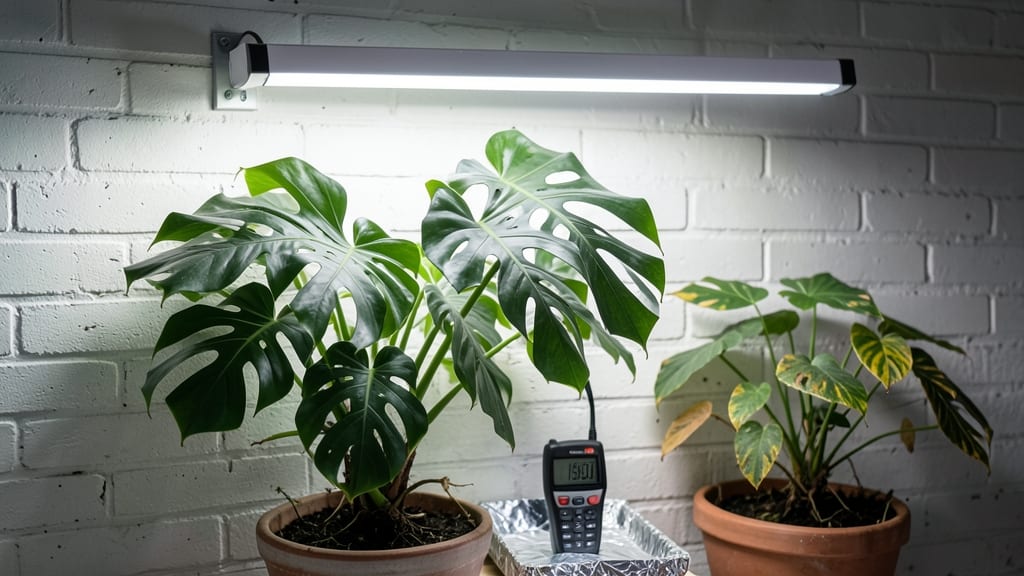
Your indoor plants need the right lighting requirements to grow strong and healthy, and it’s not just about how bright your space is—it’s about the exact lumens each species craves.
Struggling to keep your 🌱 thriving? You’re not alone. Too little light and they stretch toward the window like they’re begging for help. Too much, and those crispy brown edges tell the story.
The secret? Matching your plants’ needs—whether it’s the 100 lumens a snake plant tolerates or the 2,000 lumens a fern demands.
Here’s the game-changer: most indoor plants fall into three light zones, and knowing which one yours belongs to can save you from guesswork. We’ll break down the lumens, the best light sources (natural or artificial), and how to troubleshoot when your plants still look like they’re fighting for their lives.
Ready to turn your home into the perfect indoor jungle? Discover the exact light levels your plants need—and how to measure them—so you can finally stop playing guesswork and start growing.


How many lumens do different indoor plants actually need?
If you’ve ever watched your snake plant thrive in dim corners while your pothos stretches toward the window like a sunflower, you’ve experienced the power of lumens firsthand. Lumens measure light output, and each plant species has a specific range that determines its health.
Too little? Yellow leaves and slow growth. Too much? Scorched foliage and crispy edges. Let’s break down the exact lumen requirements for your favorite indoor plants so you can finally stop guessing.
Most indoor gardeners assume bright light means more light, but that’s not always true. Plants like ZZ plants and cast iron plants can survive with as little as 100 lumens, while peace lilies and calatheas need 1,000 lumens or more to flourish.
The key is matching your plant’s natural habitat to your home’s lighting conditions. Below, you’ll find a species-specific lumen chart to help you dial in the perfect light for every leafy friend on your shelf.
Notice how succulents and fiddle leaf figs have a wider lumen range? That’s because they’re adaptable, but calatheas and peace lilies are finicky—they’ll drop leaves if light drops below 1,000 lumens. Pro tip: If your plant is stretching toward light
Best lighting solutions based on your plant’s lumens needs
Choosing the right lighting for your indoor plants isn’t just about buying the brightest bulb—it’s about matching the lumens output to your plant’s specific needs. A snake plant thrives under 100–500 lumens, while a calathea demands 1,500–2,500 lumens.
Let’s break down the best solutions to meet these requirements without breaking the bank or overwhelming your space.
Natural light is ideal, but most homes lack the perfect east- or north-facing windows for every plant. That’s where grow lights come in—whether you opt for energy-efficient LEDs, budget-friendly fluorescents, or full-spectrum HID bulbs.
Each has pros and cons, from cost to heat output, so let’s compare them based on your plant’s needs.