
Container Gardens
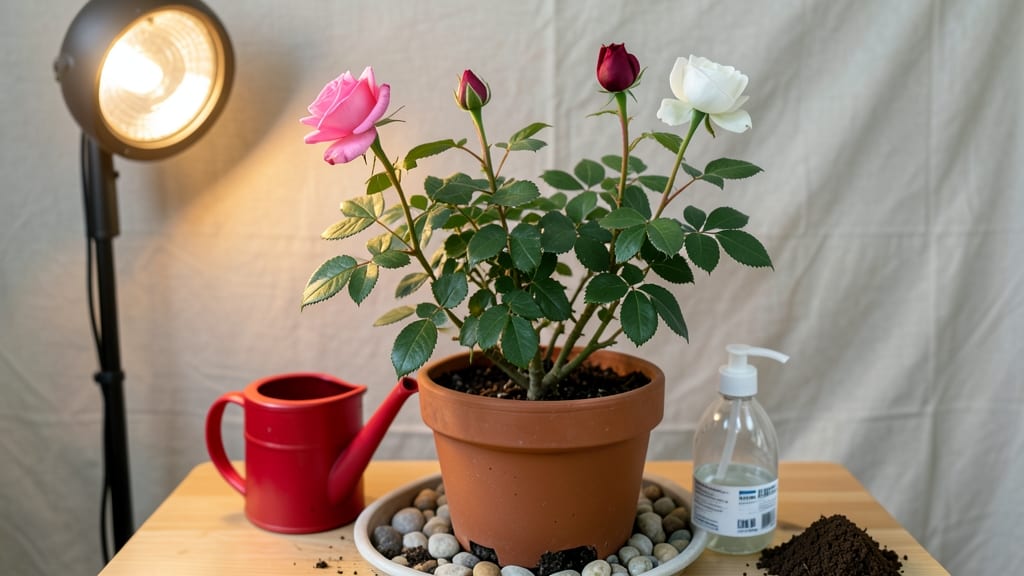
Taking care of roses indoors transforms your living space into a fragrant, blooming sanctuary—but only if you nail light, water, and pruning. 🌹 I’ve turned my sunroom into a year-round rose garden by mimicking their natural habitat, and the secret isn’t complicated: bright indirect light, precise watering, and strategic cuts to encourage blooms.
Most people overwater or under-prune, which is why their roses stay leggy and sparse. Let’s fix that.
The right setup starts with a south-facing window (or a strong grow light) and well-draining potting mix—no soggy roots here. Roses need 1-2 inches of water weekly, but let the top inch of soil dry between waterings to avoid root rot.
Humidity is key too: mist leaves or place a tray of pebbles under the pot to keep the air moist, especially in winter when indoor heat dries things out.
Pruning is where the magic happens. Cut back one-third of the plant in early spring, and trim spent blooms down to the first healthy leaf. This isn’t just about looks—it forces the plant to focus energy on new growth and more flowers.
With this routine, you’ll see continuous blooms from spring through winter, and the fragrance will make your home smell like a cottage garden.
Even the fussiest roses adapt with patience. Watch for aphids or black spot (common indoor issues) and treat them early with neem oil. The payoff? A plant that thrives indoors, not just survives. Ready to turn your roses into the star of your home?
📚 In This Guide
- What you need
- Instructions
- Tips and common mistakes
- Wrapping up and next steps
What you need
- ● Rose Variety: Choose dwarf or miniature roses (e.g., 'Fairy' or 'Patio' series) or climbing roses in containers (e.g., 'New Dawn'). Avoid large hybrid teas—they’re too demanding!
- ○ Container: A 5–10 gallon pot with drainage holes (terracotta or ceramic works best). Optional: Self-watering pots for convenience.
- ● Potting Mix: Well-draining, aerated soil (e.g., 50% potting soil + 30% perlite + 20% compost). Avoid garden soil—it compacts and suffocates roots!
- ● Drainage Layer: 1–2 inches of gravel or expanded clay pebbles at the pot’s bottom.
- ● Support: A small trellis, bamboo stake, or decorative cage (for climbing varieties).
- ● Fertilizer: Balanced liquid fertilizer (10-10-10 or 20-20-20), diluted to half-strength every 2–4 weeks during growing season.
- ● Slow-release granules (e.g., Osmocote) for steady nutrients.
- ● Watering Tools: Spray bottle (for misting leaves).
- ● Watering can with a narrow spout (to avoid disturbing soil).
- ● Grow Lights: Full-spectrum LED grow lights (12–16 hours/day) if natural light is <12 hours/day.
- ● Humidity Tray: A pebble tray with water to boost humidity (especially in dry climates).
- ● Pruning Tools: Sharp bypass pruners (sterilized with rubbing alcohol).
- ● Pest Control: Neem oil or insecticidal soap (for aphids/spider mites).
- ● Decorative Accents: Mulch (orchid bark) to retain moisture and add aesthetics.
Step-by-Step guide to caring for indoor roses
Here's how I keep my indoor roses blooming like crazy—no green thumb required.
🪴 Step 1: Choose the Right Light and Location
Roses need 6-8 hours of bright, indirect light daily. A south-facing window is ideal, but east or west works too. I place my roses near the glass but not in direct midday sun, which scorches delicate petals. If natural light is weak, supplement with a grow light placed 12-18 inches away for 14-16 hours daily.
Rotate your plant a quarter turn weekly so it grows evenly. You'll notice leaves stretching toward the light? That's a sign it needs more brightness. If leaves yellow or drop, the plant is getting too much direct sun—move it back 6 inches.
💧 Step 2: Master the Watering Routine
Water when the top 1-2 inches of soil feel dry—stick your finger in to check. Overwatering is the #1 killer of indoor roses. I use room-temperature water to avoid shocking roots, and I water until it runs out the drainage hole. Empty the saucer 15 minutes later to prevent root rot.
Mist the leaves lightly 2-3 times weekly to boost humidity, especially in dry winter air. You'll see the difference in 2 weeks—fewer brown leaf edges and healthier blooms. In summer, I place a tray of pebbles and water under the pot to add extra moisture without soggy soil.
✂️ Step 3: Prune for Health and More Blooms
Prune in early spring and after each flush of blooms. Use clean, sharp pruners to cut just above a leaf node at a 45-degree angle. Remove any dead, diseased, or crossing branches first. I cut back one-third of the plant's height to encourage bushier growth and more flowers.
Never prune more than 30% of the plant at once—this stresses roses. After pruning, wipe the cuts with a 1:10 hydrogen peroxide solution to prevent infection. You'll notice new buds forming within 4-6 weeks if you prune at the right time.
🌿 Step 4: Feed and Fertilize for Vibrant Growth
Use a balanced rose fertilizer (10-10-10 or 20-20-20) every 4-6 weeks during growing season. I dilute it to half-strength to avoid burning roots. In winter, cut back to once every 8 weeks since growth slows. Always water before fertilizing to prevent root damage.
Add compost or worm castings to the topsoil every 3 months for natural nutrients. You'll see richer green leaves and bigger blooms within 2-3 weeks of feeding. If your roses bloom weakly, they might need more phosphorus—switch to a 5-10-5 fertilizer for a month to encourage flowers.
⏰ Step 5: Watch for Pests and Diseases
Inspect leaves weekly for aphids, spider mites, or powdery mildew. Wipe leaves with a damp cloth to remove dust, which blocks light. If you spot pests, spray with neem oil solution (1 tsp neem oil + 1 quart water) or insecticidal soap. Repeat every 3 days until pests disappear.
Keep air circulating with a small fan on low setting to prevent fungal diseases. If leaves develop black spots, prune affected areas immediately and treat with copper fungicide. Yellow leaves often mean overwatering—let the soil dry out more between waterings.
Tips & tricks for perfect indoor rose care
Took me years to figure out these secrets—your roses will thank you for these small but mighty adjustments.
Lighting Strategy: In Step 1, when you're setting up your grow light, position it so it's 12-18 inches away but angled slightly—this mimics natural sunlight distribution. I've found that moving the light 6 inches closer in winter helps compensate for shorter daylight hours. The key is to avoid hotspots where leaves get scorched.
Pruning Precision: During Step 3, when you're cutting back one-third of the plant's height, look for the first set of healthy leaves below your cut—this is your leaf node. Making your cuts just above this point ensures new growth will sprout exactly where you want it. I always sterilize my pruners with rubbing alcohol between cuts to prevent spreading any hidden pathogens.
Fertilizer Timing: In Step 4, when you're fertilizing every 4-6 weeks, I've noticed the biggest difference comes from fertilizing right after watering on a cloudy day. The roots absorb nutrients more efficiently when they're not stressed by direct sunlight. Also, if your roses aren't blooming well after 4-6 weeks, try switching to that 5-10-5 fertilizer for a month—it's like giving them a phosphorus boost for flowers.
Pest Prevention: For Step 5's weekly inspections, I've added a preventive measure: once a month, I spray the leaves with a diluted neem oil solution (even when no pests are visible). This creates a protective barrier that deters aphids and spider mites before they become a problem. The solution is the same as what you'd use for treatment—just apply it more frequently as prevention.
Pro Tips for Take Care Of Roses Indoors
- Took me years to figure out these secrets—your roses will thank you for these small but mighty adjustments.
- Lighting Strategy: In Step 1, when you're setting up your grow light, position it so it's 12-18 inches away but angle...
- Pruning Precision: During Step 3, when you're cutting back one-third of the plant's height, look for the first set of...
Frequently asked questions
Got questions about keeping roses thriving indoors? You’re not alone—many gardeners face the same challenges! Here are answers to the most common concerns to help you grow lush, blooming roses year-round.
Can I keep roses indoors all year, or do they need outdoor time?
Roses can thrive indoors, but they do best with occasional outdoor exposure—especially in bright, indirect sunlight. Aim for 4–6 hours of natural light near a south- or west-facing window. If your space lacks sunlight, supplement with a grow light (12–16 hours/day) to mimic seasonal cycles. Without outdoor time, roses may grow leggy or produce fewer blooms.
How often should I water indoor roses, and what’s the best method?
Water indoor roses when the top 1–2 inches of soil feel dry (usually every 5–7 days, but adjust for humidity). Use room-temperature water and water deeply until it drains from the bottom—this prevents root rot. Avoid soggy soil, and empty saucers after watering to mimic natural drainage. Morning watering is ideal to reduce humidity-related issues like fungal diseases.
Do indoor roses need pruning, and how is it different from outdoor roses?
Yes! Prune indoor roses after blooming to encourage new growth and shape the plant. Focus on dead, diseased, or crossing branches, and trim back by ⅓ to promote bushiness. Unlike outdoor roses, avoid heavy pruning in winter—stick to light maintenance. Use sterilized shears and seal cuts with pruning paste to prevent infections in the cozy indoor environment.
What pests should I watch for, and how do I treat them naturally?
Indoor roses may attract spider mites, aphids, or mealybugs due to dry air. Check leaves regularly for sticky residue, webbing, or tiny bugs. Treat mild infestations with a neem oil spray (1 tsp neem oil + 1 tsp mild soap per quart of water) or rinse pests off with water. Increase humidity (via a pebble tray) to deter mites and isolate affected plants to prevent spread.
Why are my indoor roses dropping buds, and how can I fix it?
Bud drop often signals stress from low humidity, drafts, or sudden temperature changes. Keep roses in a consistent 60–75°F range and avoid placing them near vents or AC units. Boost humidity with a humidifier or group plants together. Also, ensure they’re not overwatered or underwatered—buds drop when roots struggle. A light fertilizer (half-strength) during blooming can also help!
Wrapping up and next steps
Caring for roses indoors is a rewarding journey that brings beauty and joy into your home—and you’ve got all the tools to succeed! 🌸 With the right light, pruning, and a little patience, your indoor roses can thrive year-round.
Start small, experiment with what works best for your space, and soon you’ll be enjoying lush blooms without stepping outside.
Ready to take the next step? Grab those shears, brighten up a corner, and watch your indoor garden flourish! 🌱