
Planting
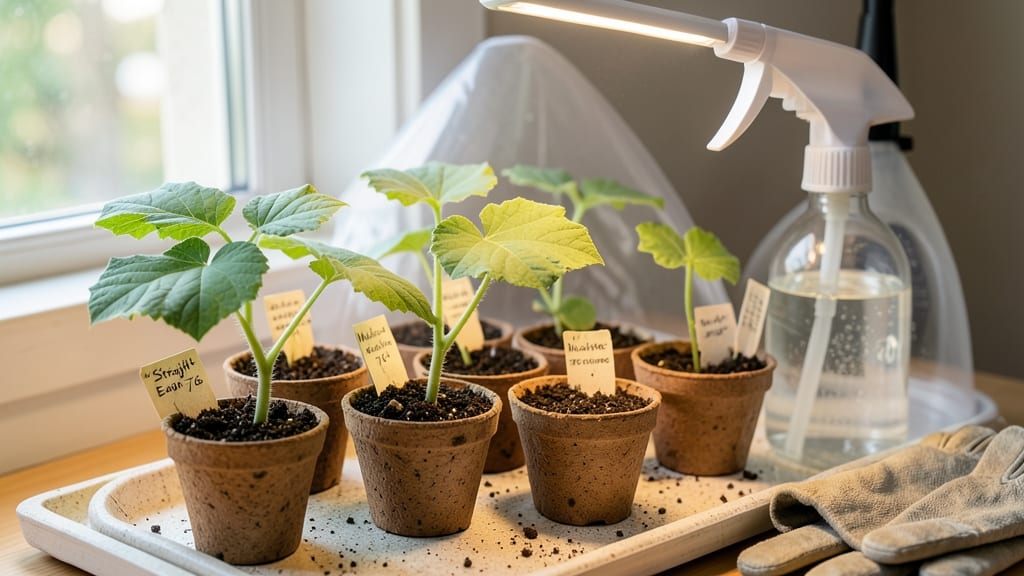
To plant cucumber seeds indoors 🥒, start them 4-6 weeks before your last frost date using warm soil and bright light to jumpstart growth.
Struggling to get your cucumber seeds to sprout indoors? Cold soil and weak light can stall germination—but with the right warmth tricks and timing, you can have vigorous seedlings ready for transplanting in just 5-7 days.
Most gardeners assume a sunny windowsill is enough, but cucumbers need soil temperatures between 85-95°F to germinate quickly. A simple heat mat or even a repurposed microwaveable heating pad can make all the difference.
Below, I’ll walk you through the exact steps—from container prep to moisture control—plus 5 proven warmth hacks to ensure your seeds sprout fast and strong, even in a cool basement or dim apartment.
Optimal indoor cucumber seed germination conditions: temperature, light, and soil secrets
Cucumber seeds need warmth and consistent moisture to break dormancy indoors. Without the right conditions, germination can take 10-14 days instead of the ideal 5-7 days.
The key factors—soil temperature, light exposure, and humidity balance—work together to create the perfect environment for those first tiny sprouts to push through the soil.
Most cucumber varieties thrive when soil stays between 85-95°F during germination. Your home’s ambient temperature is usually too cool, which is why bottom heat becomes your secret weapon.
I’ve found that a simple seedling heat mat (available for under $20) can cut germination time in half while preventing the dreaded "damping off" from fungal overgrowth.
Light plays a secondary but critical role during germination. While seeds don’t need light to sprout, 12-14 hours of indirect light afterward strengthens seedlings.
A grow light placed 6 inches above your seedlings provides the right spectrum, but even a south-facing window with sheer curtains works for partial light needs during early stages.
Here’s the golden rule for moisture: Keep soil consistently damp (not soggy) by misting daily or using a spray bottle. Overwatering suffocates seeds, while underwatering halts growth. I’ve had the most success with a humidity dome or clear plastic wrap to trap moisture while allowing airflow.
For soil temperature, I recommend pre-warming your seed-starting mix in the microwave for 30 seconds before planting. This jumpstarts the process, especially in cooler climates. Place your seed trays on a seedling heat mat (like the VIVOSUN model) to maintain that critical 85-95°F range.
Pro tip: Use a soil thermometer to monitor—fluctuations below 75°F can stall germination completely.
Natural light works for seedling growth after sprouting, but grow lights are non-negotiable if you’re in a north-facing apartment. LED grow lights with a full-spectrum bulb (like the Spectrum Basics T5) provide the blue and red wavelengths cucumbers crave.
Position it 6 inches above seedlings for 14 hours daily once they’ve sprouted.
One common mistake I see is overcrowding seeds in small containers. Plant cucumber seeds 1 inch apart and ½ inch deep in individual cells or biodegradable pots. This prevents competition for nutrients and makes transplanting easier later.
After planting, cover the tray with plastic wrap to create a mini greenhouse effect—just remember to remove it once sprouts appear.
Watch for mold or rot, which signals overwatering. If you see fuzzy white growth, increase airflow immediately by lifting the humidity dome for a few hours daily.
For extra insurance, sprinkle a pinch of cinnamon (natural antifungal) on the soil surface before covering. This trick has saved multiple batches of seedlings for me!
Once your seedlings have 2-3 true leaves (not just the initial seed leaves), they’re ready for 12+ hours of light daily. At this stage, you can gradually harden them off by moving them closer to your south-facing window or under grow lights for longer periods.
This transition prepares them for outdoor transplanting in 4-6 weeks.
Step-by-step guide: planting cucumber seeds indoors for fast germination
Planting cucumber seeds indoors gives you a head start on the growing season, but success depends on precise techniques. Cold soil and poor moisture control are the biggest culprits behind failed germination.
By following these steps—from container prep to warmth application—you’ll see sprouts in just 5-7 days instead of weeks. Let’s start with the right setup to avoid common pitfalls like mold or rot.
First, gather your supplies: biodegradable pots (2-3 inches deep), seed-starting mix, cucumber seeds, a spray bottle, and a heat source like a seedling mat. The key is keeping the soil consistently warm (85-95°F) and moist without overwatering.
If your home stays cool, a DIY paper towel method can work wonders for faster results.
How to Plant Cucumber Seeds Indoors
- 1 Choose containers with drainage holes and fill with moist seed-starting mix. Press lightly to settle.
- 2 Plant 2 seeds per pot, ½ inch deep, and 1 inch apart. Label pots to track varieties.
- 3 Mist the soil with water until evenly moist (not soggy). Use a spray bottle to avoid disturbing seeds.
- 4 Cover pots with clear plastic wrap or a humidity dome to retain warmth and moisture. Place on a seedling mat or near a warm spot (like above the fridge).
- 5 Check daily for condensation. Remove plastic wrap if mold appears (white fuzzy spots). Keep soil moist but never waterlogged.
- 6 Once sprouts emerge (5-7 days), remove the weaker seedling, leaving the strongest sprout per pot. Move pots to a sunny windowsill or under grow lights for 12+ hours daily.
- 7 After 2-3 true leaves appear, harden off seedlings by placing them outdoors in partial shade for 1-2 hours daily before transplanting.
If your home stays below 70°F, try the paper towel method for faster germination. Place seeds between damp paper towels in a sealed plastic bag on top of a warm appliance (like the fridge).
Check daily—sprouts should appear in 3-5 days. Once roots form, transplant into soil as directed above.
Watch for mold or rot, which signals overwatering or poor airflow. If you see fuzzy white growth, remove affected pots immediately and reduce moisture. For extra warmth, place pots on a microwaveable heat pad (set to low) or under a grow light on a 16-hour cycle.
Consistency is key—cucumbers thrive with warmth, light, and patience.
With these steps, your cucumber seedlings will be ready for transplanting in just a few weeks, giving you a jumpstart on a bountiful harvest. Keep an eye on soil moisture and light exposure, and soon you’ll be enjoying homegrown cucumbers straight from your windowsill to the table! 🌱