
Container Gardens
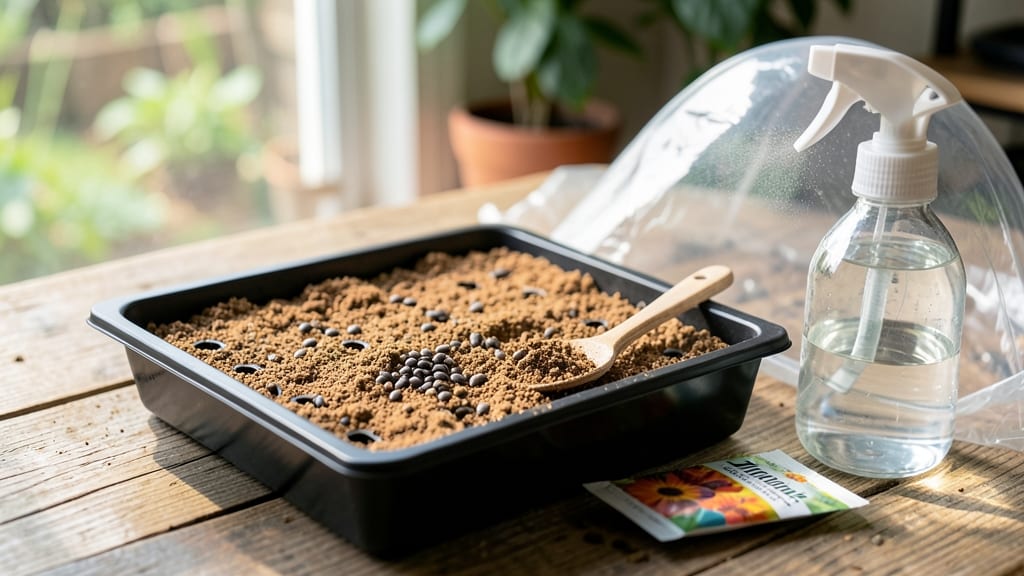
Planting zinnia seeds indoors 6-8 weeks before your last frost guarantees those bold, papery blooms by summer. ✨ I’ve turned my kitchen windowsill into a zinnia factory by mastering the warmth and humidity these finicky seeds crave—no greenhouse needed.
You’ll need basic supplies: seed-starting mix, small pots or a tray, a spray bottle, and a heat mat or sunny windowsill. The key is keeping soil consistently moist (not soggy) and warm (70-75°F), which speeds germination from 7-14 days instead of the usual wait.
A clear plastic dome or plastic wrap creates the humidity zinnia seeds love without fuss. Once those first green shoots appear, you’ll watch them grow into sturdy seedlings ready for transplanting. The payoff?
A garden bursting with vibrant blooms that attract butterflies and last until frost—all from seeds you started indoors. Avoid overwatering (zinnia seeds rot faster than they sprout) and keep them in bright light from day one. With these tricks, even my black thumb can’t kill these cheerful flowers.
Ready to get started?
📚 In This Guide
- What you need
- Instructions
- Tips and common mistakes
- Wrapping up and next steps
What you need
- ● Zinnia seeds: Choose heirloom or hybrid varieties (e.g., 'Benary’s Giant,' 'Profusion'). Aim for 3–5 seeds per 2–3 inch pot or 10–12 seeds per 6-inch tray.
- ● Seed-starting mix: Lightweight, sterile peat-based or coconut coir blend (avoid garden soil—it’s too dense!). Need 1–2 cups per pot or tray.
- ● Seed trays or small pots: Cell packs (2–3 inch cells) for individual seedlings, or
- ● 6-inch plastic trays with drainage holes for bulk starts.
- ● Grow lights or sunny windowsill: Zinnias need 12–16 hours of light daily. A full-spectrum LED grow light (10–12 inches above seedlings) works best.
- ● Spray bottle with water: For gentle hydration—avoid overhead watering to prevent mold.
- ● Humidity dome or plastic wrap: Keeps moisture in until germination (usually 5–10 days).
- ○ Heating mat (optional but helpful): Maintains 70–75°F soil temp for faster germination (not required but speeds up sprouts!).
- ● Fertilizer: Balanced liquid fertilizer (5-5-5 or 10-10-10) diluted to half-strength after true leaves appear.
- ● Fungicide (preventative): A natural spray like neem oil to ward off damping-off disease.
- ● Plant labels: Mark varieties if growing multiple types.
- ● Heat gun or hairdryer: For quick seed stratification (warm air blast to soften seed coats).
Step-by-step instructions for planting zinnia seeds indoors
Here’s how I get zinnia seeds sprouting in just 5-7 days—no fancy equipment needed.
🌱 Step 1: Prepare Containers and Warmth Setup
Use 4-inch diameter pots or a seed tray with drainage holes—zinnia roots need room to spread without crowding. Fill them with a light, sterile seed-starting mix (never garden soil—it’s too dense). I press the mix down gently until it’s firm but not compacted, then moisten it with warm water until damp but not soggy.
Here’s the trick for fast germination: place your containers on a seedling heat mat set to 75-80°F. Without this, seeds can take twice as long to sprout. If you don’t have a heat mat, set the pots on top of your refrigerator (the warm compressor area works in a pinch). Warmth speeds up metabolism, so you’ll see sprouts 2-3 days faster.
🌱 Step 2: Sow Seeds at the Right Depth
Zinnia seeds are tiny but easy to handle. I plant 2 seeds per pot at a depth of just ¼ inch—any deeper and they’ll struggle to break through. Use your finger or a pencil to make a tiny hole, drop the seeds in, then cover lightly with a sprinkle of mix. Don’t press down—just let the soil settle naturally around them.
Mist the surface with a spray bottle until the soil looks evenly damp. Avoid heavy watering now—you want the seeds to stay in contact with the soil but not get buried or displaced. Place a clear plastic dome or plastic wrap over the pots to trap humidity. Check daily for condensation; if it’s foggy inside, you’ve got the moisture balance right.
💧 Step 3: Monitor Germination and Adjust Conditions
Keep the heat mat running and the humidity dome in place. You’ll see the first sprouts in 5-7 days—watch for tiny green hooks pushing through the soil. As soon as 50% of seeds sprout, remove the dome immediately. Trapped humidity after germination invites damping-off, a fungal disease that collapses seedlings overnight.
Move the pots under a grow light or to a south-facing window within 2 inches of the seedlings. Zinnias need 14-16 hours of light daily to stay stocky and strong. If they stretch toward the light with pale stems, they’re not getting enough intensity—adjust the light height or duration. Strong seedlings will have thick stems and dark green leaves within 10-14 days.
✂️ Step 4: Thin and Harden Off Seedlings
Once seedlings have 2 sets of true leaves (the first pair are cotyledons), it’s time to thin. Use scissors to snip the weaker seedling at soil level—don’t pull, or you’ll disturb the roots of the one you’re keeping. This prevents competition for nutrients and gives your zinnias room to grow.
Start hardening off 2 weeks before your last frost date. Place the pots outside in a sheltered spot for 1 hour the first day, then gradually increase time by 1 hour daily until they’re out all day. Watch for wilting or leaf burn—if you see either, they’re not ready yet. Hardened-off zinnias will be sturdier and recover faster when transplanted outdoors.
🪴 Step 5: Transplant to Garden or Larger Containers
Transplant after all danger of frost has passed and soil temperatures reach 60°F. Dig holes twice as wide as the root ball but no deeper—zinnia roots need room to spread horizontally. Place the seedling in, firm the soil gently around the base, and water deeply to settle everything.
Space zinnias 8-12 inches apart in full sun for the best blooms. If you’re keeping them in containers, upgrade to 5-7 gallon pots with fresh potting mix. Mulch around the base with 1 inch of organic mulch to retain moisture and suppress weeds. You’ll see flowers in as little as 60 days from sowing—worth the wait!
Tips & tricks for fast zinnia seed germination
Here's what I've learned after years of impatiently waiting for seeds to sprout—these tricks cut your waiting time in half.
Warmth is Non-Negotiable: That 75-80°F heat mat temperature isn't arbitrary—it's the sweet spot where zinnia seeds activate their germination enzymes. If your kitchen stays below 70°F, consider a small greenhouse setup with a built-in heat source. I've even used a heating pad set to low under my seed trays in winter months. The difference between 5-7 days and 10+ days is dramatic—trust me on this.
Lighting Strategy for Strong Stems: Those 14-16 hours of daily light are crucial, but quality matters more than quantity. If your seedlings stretch toward the light with pale, leggy stems, you're either too far away or using the wrong bulb. LED grow lights are ideal—they emit the full spectrum plants need. Position them just 2-3 inches above the seedlings and adjust as they grow. You'll notice the difference in just 3-4 days with thicker stems and darker green leaves.
Humidity Control Secrets: The plastic dome works, but here's the pro move: use a spray bottle to create a microclimate. Lightly mist the inside of the dome daily to maintain consistent humidity. Watch for condensation on the inside—this is your visual cue that moisture levels are perfect. Once you see 50% of seeds sprouting, remove the dome immediately to prevent damping-off. I've lost entire trays to this fungal disease when I ignored this step.
Thinning Technique That Prevents Shock: When you're ready to thin those 2 seeds per pot to 1, use sharp scissors to snip at soil level rather than pulling. This prevents disturbing the roots of your remaining seedling. I also recommend thinning on a cloudy day—less direct sunlight means less stress on the plant. The seedling you keep will thank you with faster growth and stronger stems.
Pro Tips for Planting Zinnia Seeds Indoors
- Here's what I've learned after years of impatiently waiting for seeds to sprout—these tricks cut your waiting time in half.
- Warmth is Non-Negotiable: That 75-80°F heat mat temperature isn't arbitrary—it's the sweet spot where zinnia seeds activate their germination enzymes.
- Lighting Strategy for Strong Stems: Those 14-16 hours of daily light are crucial, but quality matters more than quantity.
Frequently asked questions
Got questions about starting zinnia seeds indoors? You’re not alone!
Here are answers to the most common concerns—from timing to troubleshooting—to help you grow vibrant zinnias with confidence.
How soon can I expect zinnia seeds to germinate indoors?
With consistent warmth (70–75°F) and humidity, zinnia seeds typically sprout in 7–14 days. If your seeds take longer, check moisture levels—keep soil damp (not soggy) and avoid cold drafts. Pro tip: Use a heat mat if your home runs cool!
When is the best time to start zinnia seeds indoors?
Start seeds 6–8 weeks before your last frost date for strong seedlings. For most climates, this means mid-March to early April. If you’re in a warm zone (Zone 9+), you can direct-sow later—but indoor starts give you a head start for blooms!
Why are my zinnia seedlings leggy or weak?
Leggy seedlings usually mean too little light. Move trays to a sunny windowsill (south-facing) or use grow lights 12–16 hours daily. Overcrowding or uneven watering can also weaken stems. Fix it: Thin seedlings to 1 inch apart and fertilize lightly with diluted fish emulsion.
Can I use regular potting mix, or do zinnias need something special?
Zinnias thrive in well-draining, seed-starting mix—no fancy amendments needed! Avoid garden soil (it’s too dense). For extra vigor, mix in perlite or vermiculite (20%) to prevent damping-off. Bonus: Add a pinch of compost for nutrients.
What if my zinnia seeds don’t sprout at all?
First, check seed viability—zinnias last 1–2 years if stored in a cool, dry place. If seeds are fresh, try stratification: chill moist seeds in the fridge for 24 hours before replanting. Last resort: Test a few seeds in warm water—if they sink, they’re likely viable!
Are there easy alternatives to zinnias for indoor starts?
Yes! Try marigolds (fast-growing, pest-repellent) or sunflowers (bold and beginner-friendly). For delicate blooms, cosmos or bachelor’s buttons germinate quickly too. All love warmth and indirect light—just adjust spacing!
Wrapping up and next steps
Planting zinnia seeds indoors is a rewarding way to jumpstart your garden—especially when you harness the power of warmth and humidity! 🌱 With the right setup, you’ll enjoy vibrant blooms in no time. Whether you’re a seasoned gardener or just starting, these tips make the process simple and fun.
Now that you’re ready to grow zinnia seedlings, take the next step: Transplant them outdoors once temperatures rise and frost is out of the picture. Watch your garden transform with these cheerful, low-maintenance flowers! 🌸