
Flowers
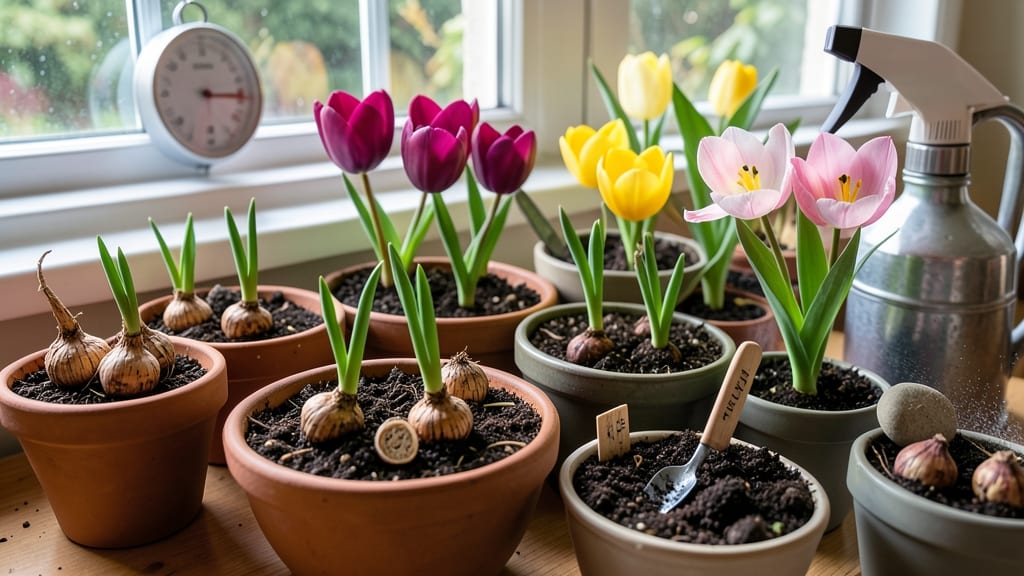
Growing tulips indoors transforms your winter home into a burst of spring color—without needing a sunny window. 🌱 I’ve forced tulips in dim offices and bright kitchens alike, and the secret lies in choosing the right bulbs, containers, and timing.
These aren’t just pretty faces; they’re nature’s mood lifters that bloom reliably when you need them most.
The key starts with pre-chilled bulbs (available at garden centers) and a well-draining mix—think 50% potting soil and 50% perlite or sand.
Place them in shallow containers (like a decorative bowl) with the pointed end up, and keep them in a dark, cool spot (40-50°F) for 10-12 weeks before bringing them into light. This mimics the winter dormancy tulips need to bloom.
By the time you move them to a sunny spot, you’ll see sturdy green shoots breaking through the soil, followed by bold blooms in just 2-3 weeks. The best part?
You can repeat this cycle every fall for year-round color. Just don’t toss those bulbs after they bloom—give them a break in the fridge for another round next season.
Perfect for small spaces, offices, or anyone who wants instant spring vibes without stepping outside. Here’s how to make it work—no green thumb required.
📚 In This Guide
- What you need
- Instructions
- Tips and common mistakes
- Wrapping up and next steps
What you need
- ● Tulip bulbs: Choose indoor-friendly varieties like Parrot tulips or Darwin Hybrid (3–5 bulbs per container). Ensure they’re firm, plump, and free of soft spots.
- ● Well-draining potting mix: Use a blend of 50% peat moss or coconut coir and 50% perlite or sand (1–2 gallons per container). Avoid garden soil—it’s too dense!
- ● Containers: Pots with drainage holes (6–8 inches deep) or a shallow tray for bulb forcing (e.g., a forcing pot or glass jar).
- ● Watering can or spray bottle: For gentle hydration without over-saturating bulbs.
- ○ Grow lights (optional but recommended): A full-spectrum LED bulb (10W–20W) or a fluorescent grow light to supplement low light.
- ● Chilling period setup: A cool, dark space (35–45°F) (e.g., a fridge with a veggie drawer or basement). Pro tip: Use a paper bag with holes to protect bulbs from fridge odors!
- ● Fertilizer: A balanced, water-soluble fertilizer (10-10-10) or bulb-specific food (diluted to half-strength).
- ● Humidity tray: A shallow tray with pebbles and water to boost moisture (especially for glass jars).
- ● Thermometer/hygrometer: To monitor temperature (60–65°F) and humidity (40–50%).
Step-by-Step instructions for growing tulips indoors
Here’s how to coax vibrant tulips indoors—no greenhouse needed.
🌱 Step 1: Select and Prep Your Bulbs
Choose firm, plump tulip bulbs (size 12/14 for best blooms) from a garden center or catalog. Avoid bulbs that feel soft or have sprouts—those won’t last long indoors. I like to soak the bulbs in lukewarm water for 1 hour before planting to wake them up. This jumpstarts root growth and ensures they’ll bloom faster.
Plant each bulb 6 inches deep in a 6-8 inch pot (one bulb per pot works best). Use well-draining potting mix—tulips hate soggy roots. Tap the pot gently after filling to settle the soil without compacting it. The bulb’s base should sit 1-2 inches below the soil surface, leaving the pointed end exposed.
💧 Step 2: Water and Place in a Cool, Dark Spot
Water the pot until water drains freely from the bottom, then place it in a spot with 50-60°F temperatures (a basement, garage, or unheated room works). Keep the soil moist but not soggy—stick your finger in the top inch; if it’s dry, water lightly. Tulips need 12-16 weeks of cool darkness to form roots and flower stems.
I set a reminder to check the soil every 7-10 days—overwatering now will rot the bulbs before they bloom. If you forget, don’t worry: tulips are forgiving, but consistency is key. Once you see green shoots poking through the soil, it’s time to move them to light.
☀️ Step 3: Move to Bright, Indirect Light
When 2-3 inch stems appear, transfer the pot to a bright, indirect light spot (like a north-facing window or under a grow light). Tulips need 12-14 hours of light daily to prevent leggy growth. If stems stretch too tall or lean, your light isn’t strong enough—move the pot closer to the window or add a full-spectrum LED grow light.
Water once a week after this move, letting the top inch of soil dry out between waterings. You’ll notice buds forming at the stem’s base after 4-6 weeks of light exposure. This is the exciting part—patience pays off with bold, showy blooms!
⏰ Step 4: Enjoy Blooms and Plan for Next Year
Tulips typically bloom 4-6 weeks after moving to light, depending on the variety. Cut stems when buds are just opening for the longest vase life—place them in cool water immediately. After blooming, let the foliage die back naturally (even if it looks ugly). This feeds the bulb for next year’s growth.
Once leaves turn brown, stop watering and store the pot in a cool, dry place until fall. Next year, replant outdoors in well-draining soil and full sun for a repeat performance. Indoor tulips are a one-time showstopper, but their bulbs can rebloom outside with care.
Tips & tricks for perfect indoor tulip blooms
Here's what nobody tells you about getting those showstopping indoor tulips—lessons learned from years of happy (and not-so-happy) bulb experiments.
Bulb Selection Matters: The size 12/14 bulbs mentioned in Step 1 are your best bet for reliable blooms, but don't overlook the variety. Darwin Hybrid tulips and Parrot tulips tend to perform best indoors—their sturdy stems handle the transition from cool dark to bright light better than delicate varieties. I've found that bulbs with papery skins (not plastic-coated) breathe better during the rooting phase.
Temperature Consistency is Key: Those 50-60°F temperatures in Step 2 aren't just suggestions—they're critical. Use a thermometer if your basement or garage fluctuates. I've seen bulbs fail when temperatures crept above 65°F during their 12-16 week dark period. If your space runs warm, try a cool closet with a small fan for circulation. The goal is to mimic winter conditions that trigger blooming.
Light Transition Timing: The moment you see those 2-3 inch stems in Step 3, move them to light immediately—don't wait another day! I learned this the hard way when a batch of tulips got "stretched" (tall and leggy) because we delayed moving them. Once they're in light, rotate the pot daily so all sides get even exposure. This prevents stems from leaning toward one light source and creates more balanced blooms.
Post-Bloom Care Pays Off: That ugly brown foliage after blooming? Don't trim it! Let it die back naturally—it's feeding the bulb for next year's potential rebloom. I've had tulips surprise me with second blooms when I resisted the urge to clean up. After leaves turn completely brown, you can cut the stems back to the bulb, but leave the pot in its cool, dry storage spot until fall planting.
Pro Tips for Grow Tulips Indoors
- Here's what nobody tells you about getting those showstopping indoor tulips—lessons learned from years of happy (and not-so-happy) bulb experiments.
- Bulb Selection Matters: The size 12/14 bulbs mentioned in Step 1 are your best bet for reliable blooms, but don't overlook the variety.
- Temperature Consistency is Key: Those 50-60°F temperatures in Step 2 aren't just suggestions—they're critical.
Frequently asked questions
Got questions about growing tulips indoors? You’re not alone! Here are answers to the most common queries to help you cultivate stunning blooms without the fuss.
Can I grow tulips indoors from store-bought bulbs?
Yes, but with a twist! Store-bought tulips are often treated to prevent sprouting, so they may not bloom. For guaranteed success, use dormant bulbs (sold in fall) or pre-sprouted bulbs from specialty nurseries. If you’re set on store-bought, try forcing them by chilling the bulb for 12–16 weeks before planting.
How long does it take for indoor tulips to bloom?
With patience, you’ll see blooms in 4–6 weeks after planting! The key is the cold treatment (chilling). Skip this step, and your tulips may take months—or never bloom at all. Pro tip: Use a refrigerator (not the freezer!) for consistent temperatures.
Why aren’t my indoor tulips blooming?
No blooms? Check these fixes:
- Lack of chill time: Tulips need 12–16 weeks below 45°F (7°C). Use a cool basement or fridge.
- Too much light: Bright, indirect light is ideal. Direct sun can scorch leaves.
- Overwatering: Keep soil moist but not soggy—root rot is a silent killer.
- Small pots: Use containers at least 6 inches deep to avoid crowding.
Can I reuse indoor tulip bulbs after they bloom?
Probably not! Indoor tulips are often grown as one-and-done plants. After blooming, their energy is spent. For repeats, plant new bulbs each season. Papery white bulbs (like Darwin Hybrid varieties) are your best bet for reliability.
What’s the best indoor location for tulips?
Place your tulips in a bright, cool spot away from drafts—think east-facing windows or a well-lit bathroom. Avoid heating vents or dark corners. Once buds form, move them to a cooler room (like a basement) to extend their vase life!
Wrapping up and next steps
Growing tulips indoors is a rewarding way to bring vibrant color and fresh blooms into your space—even with limited light! 🌱 With the right bulbs, containers, and care, you can enjoy stunning flowers year-round. Whether you’re a beginner or a seasoned plant parent, these tips make it simple and fun.
Now that you’re ready to start, pick your favorite tulip bulbs and get planting! Share your progress or ask questions in gardening communities—your indoor garden will be the talk of the room. Happy growing! 🌸