
Propagation
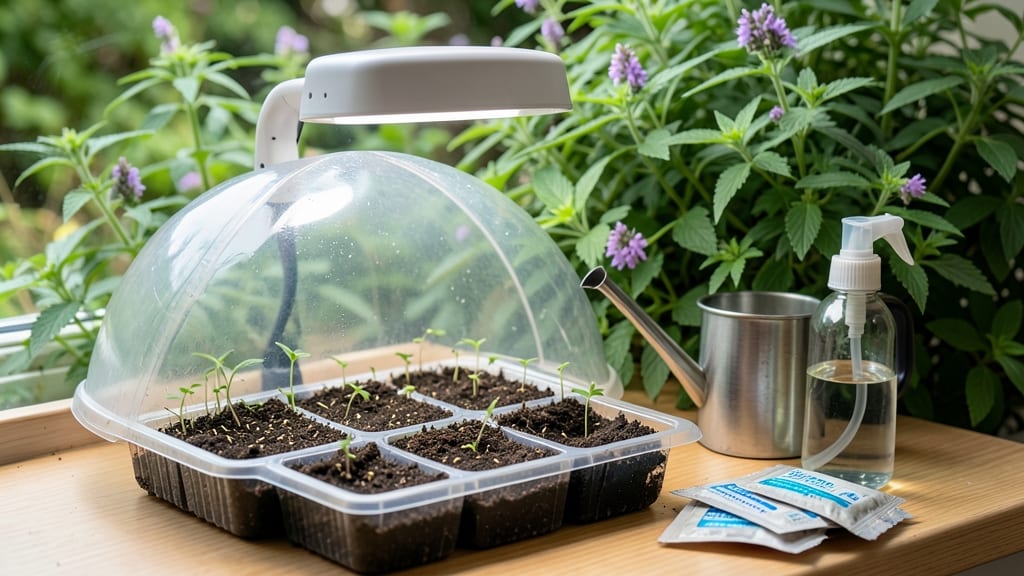
Growing catnip from seed indoors is the fastest way to get fluffy, fragrant plants your cat will love in just 4 weeks—no waiting for nursery starts. 🌱 I’ve grown catnip from seed every year, and the key to speed is keeping the soil consistently warm and moist, which tricks the tiny seeds into sprouting within 5-7 days instead of the usual two weeks.
The secret isn’t fancy equipment—just a warm spot (like on top of your fridge), a shallow tray with dampened seed-starting mix, and a clear plastic lid to trap humidity. Light can wait until the first true leaves appear, but warmth is non-negotiable.
Too cool, and you’ll stare at bare soil for weeks; too hot, and the seeds rot. By week 3, you’ll have 4-inch-tall seedlings ready for transplanting, their square stems and aromatic leaves already hinting at the catnip to come.
The plants stay compact and bushy if you pinch back the tips early, and they’ll keep producing fresh growth all season long. This method works year-round, whether you’re prepping for spring or giving your cat a winter treat.
Here’s how to avoid the pitfalls and get results faster than you’d expect!
📚 In This Guide
- What you need
- Instructions
- Tips and common mistakes
- Wrapping up and next steps
What you need
- ● Catnip seeds: 1–2 teaspoons (about 100–200 seeds). Look for Nepeta cataria seeds from a reputable supplier.
- ● Seed-starting trays or containers: 2–4 small pots (3–4 inches deep) or a seed tray with drainage holes. Plastic or biodegradable works great!
- ● High-quality seed-starting mix: 1–2 cups of sterile, well-draining potting soil (avoid garden soil—it’s too dense!).
- ● Spray bottle: For gentle watering (a 16-ounce misting bottle is ideal).
- ● Clear plastic dome or plastic wrap: To create a mini greenhouse and retain humidity.
- ● Grow lights or sunny windowsill: A full-spectrum LED grow light (12–16 hours/day) or a south-facing window (6+ hours of sunlight).
- ○ Small fan (optional but helpful): A mini desk fan on low to prevent damping-off disease.
- ● Heat mat: Keeps soil warm (70–75°F) for faster germination. Budget pick: A small seedling mat.
- ● Fertilizer: A balanced liquid fertilizer (5-5-5 or 10-10-10) diluted to half-strength for seedlings.
- ● Humidity tray: A shallow tray with water and pebbles to boost moisture levels.
- ● Pruning shears or scissors: For snipping leggy stems later.
- ● Label markers: To track planting dates (catnip grows fast—you’ll want to remember when it’s ready!).
Step-by-step instructions for growing catnip from seed indoors
Here's how to get fluffy catnip growth in just four weeks—no green thumb required.
🌱 Step 1: Prepare Containers and Seed Starting Mix
Use small 2-3 inch deep pots or a seed tray with drainage holes. I like to use peat pellets because they expand perfectly and make transplanting easier later. Fill your containers with a light, sterile seed-starting mix—never garden soil, as it's too dense and can harbor diseases that kill delicate seedlings.
Moisten the mix until it feels like a damp sponge—squeeze it gently, and it should hold together without dripping. Press it down lightly so the surface is firm but not packed. This helps seeds stay in place and ensures roots can push through easily. I like to tap the container gently on the table once to settle everything evenly.
🌱 Step 2: Sow Seeds and Create Ideal Germination Conditions
Sprinkle 2-3 seeds per pot on the soil surface—catnip seeds are tiny, so I use a toothpick to space them evenly. Press them lightly into the mix, just enough to cover them with 1/8 inch of soil. Mist the surface gently with a spray bottle until the soil looks evenly damp but not soggy.
Cover the pots with a clear plastic dome or plastic wrap to trap warmth and moisture. Catnip seeds germinate best at 70-75°F, so place the tray on a seedling heat mat if your home runs cooler. You'll see sprouts in 7-14 days—watch for tiny green leaves peeking through the soil.
💧 Step 3: Provide Light and Water for Strong Seedlings
Once the seeds sprout, remove the plastic cover immediately—too much humidity invites damping-off, a fungal disease that collapses stems overnight. Place the seedlings under a grow light or in a south-facing window where they get 12-14 hours of light daily. You'll notice leggy growth if the light is too far away—keep it within 2-3 inches of the plants.
Water gently from the bottom by placing the pots in 1 inch of water for 10-15 minutes. This prevents disturbing the roots and ensures even moisture. Let the top inch of soil dry out between waterings—seedlings rot faster than they wilt, so it's better to underwater slightly.
🌿 Step 4: Thin and Encourage Bushy Growth
When seedlings have 2-3 sets of true leaves (about 3-4 weeks in), thin the weakest plant in each pot, leaving the strongest. Use clean scissors to snip at soil level—pulling can damage roots. This gives remaining plants more space to grow sturdy and fluffy.
Pinch back the tips of the remaining seedlings when they reach 3-4 inches tall. This encourages bushier growth by prompting side shoots to form. You'll see new leaves sprouting from the sides within a week—that's your signal everything is working. Keep the light strong and water consistently to maintain healthy, vigorous plants.
⏰ Step 5: Harvest and Maintain for Continuous Growth
Harvest catnip leaves when they're 3-4 inches long by snipping just above a leaf node with clean scissors. This encourages more growth at the base. I like to harvest in the morning after dew has dried, as the oils are most concentrated then. Your cats will go wild for the fresh leaves!
Continue pinching back new growth regularly to keep the plant bushy. Catnip grows quickly, so you'll have plenty of fresh leaves for your feline friends in just a few weeks. With proper care, your indoor catnip plant will thrive and provide endless entertainment for your pets.
Tips & tricks for fast catnip germination & fluffy growth
Here's the thing about catnip—it's one of the fastest-growing herbs for beginners, but those first few weeks make all the difference. I've learned these tricks after watching seedlings either thrive or wither within days.
Germination Hack: The 70-75°F temperature range is non-negotiable for catnip seeds—any cooler and they'll take forever to sprout. If your home runs chilly, invest in a small seedling heat mat ($15-20) or place the pots on top of your refrigerator (not inside). I've seen germination times cut in half when using this trick. The plastic dome helps trap that warmth too, so don't skip covering those pots!
Light Strategy: Those 12-14 hours of light daily are critical, but quality matters more than quantity. A cheap grow light works better than a dim window—leggy seedlings mean your light isn't strong enough. I keep mine just 2-3 inches above the plants and rotate the pots daily so all sides get even exposure. You'll know it's working when the stems stay short and sturdy, not stretching toward the light like they're reaching for salvation.
Watering Wisdom: The bottom-watering method (1 inch for 10-15 minutes) might seem fussy, but it's worth it. Top watering can wash away those tiny seeds or create uneven moisture that causes damping-off. I like to set a timer so I don't forget—catnip seedlings rot faster than they wilt, and once that happens, there's no bringing them back. Let that top inch dry out between waterings, and you'll avoid 90% of seedling problems.
Thinning Secret: When you're thinning to leave just one strong seedling per pot at the 3-4 week mark, don't just pull the weak ones—snip them at soil level with clean scissors. Pulling can rip the roots of your remaining plant, and you don't want to undo all your progress. I save the thinned seedlings to transplant into separate pots if I have extra space. Every little plant counts!
Pro Tips for Grow Catnip From Seed Indoors
- Here's the thing about catnip—it's one of the fastest-growing herbs for beginners, but those first few weeks make all the difference.
- Germination Hack: The 70-75°F temperature range is non-negotiable for catnip seeds—any cooler and they'll take forever to sprout.
- Light Strategy: Those 12-14 hours of light daily are critical, but quality matters more than quantity.
Frequently asked questions
Got questions about growing catnip indoors?
Here are answers to the most common ones to help you avoid pitfalls and keep your feline friend happy!
How long does it take for catnip seeds to germinate indoors?
Catnip seeds typically sprout in 7–14 days when kept in warm (70–75°F), moist conditions. Use a heat mat if your home is cooler—this speeds up germination to 5–7 days. Patience is key, but avoid overwatering (soggy soil = rot risk).
Can I grow catnip indoors year-round, or does it need sunlight?
Yes! Catnip thrives indoors with 6–8 hours of bright light daily. Use a grow light (LED or fluorescent) if natural light is weak. South-facing windows work, but supplement with artificial light in winter. Just rotate plants weekly for even growth.
How much catnip do I need to grow for my cat?
A single catnip plant (harvested 2–3 times) provides enough for 1–2 cats for 3–4 months. For multiple cats, grow 2–3 plants or harvest more frequently. Dried catnip lasts longer—store in an airtight container away from moisture.
Why isn’t my catnip growing? Troubleshooting tips.
Common issues and fixes:
- Leggy, weak plants → Needs more light (move closer to a window or adjust grow lights).
- Yellow leaves → Overwatering (let soil dry slightly between waterings) or nutrient deficiency (use balanced fertilizer).
- No flowers → Too much nitrogen (switch to low-N fertilizer) or not enough light.
- Slow growth → Check root space (repot if crowded) or temperature (ideal: 60–75°F).
Most problems fix with light, water, and patience!
Can I grow catnip from a store-bought bunch instead of seeds?
Yes! Propagate from cuttings:
- Snip a 3–4 inch stem, remove lower leaves.
- Place in water or moist soil (use rooting hormone for faster results).
- Keep in bright, humid conditions (cover with a plastic bag if needed).
- Roots form in 2–4 weeks—transplant to soil!
This method is faster than seeds but requires a healthy parent plant.
Wrapping up and next steps
Growing catnip from seed indoors is a rewarding and fun project that even beginners can master!
With the right light, soil, and patience, you’ll have fluffy, fragrant catnip ready for your feline friend in just four weeks. 🌱✨ Whether you’re a plant enthusiast or a cat lover, this simple guide makes it easy to nurture your own stash.
Now that you’re armed with tips and tricks, why not take the next step? Share your progress with fellow plant parents online, or experiment with different varieties to see which grows best in your space. Happy growing—your cat (and your green thumb) will thank you! 🐾💚