
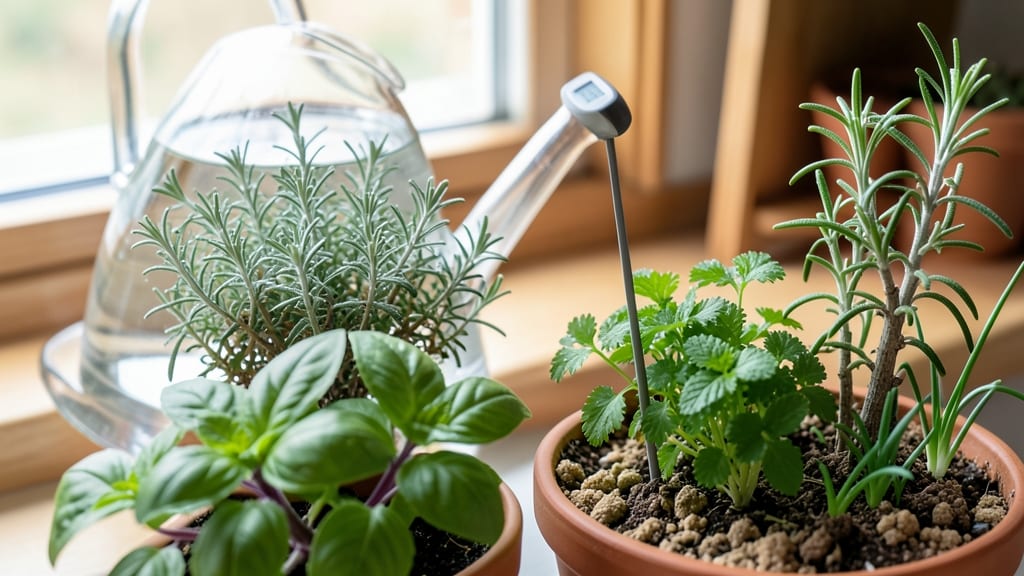
How Often to Water Indoor Herbs: The Exact Schedule By Plant Type

How To

How Often to Water Indoor Herbs: The Exact Schedule By Plant Type

Watering herbs indoors every 3 to 5 days keeps them thriving year-round, but the real trick is reading your plants—not just the calendar.

Struggling to keep your indoor herbs alive? Overwatering or underwatering can turn your kitchen garden into a sad, wilted mess—here’s the exact watering schedule to keep basil, mint, parsley, and more thriving all year.

Most herbs hate soggy soil but won’t survive drought, either. The key is checking soil moisture with your finger—damp but not wet is the sweet spot. Rosemary and thyme play it tougher, while basil and cilantro demand more frequent drinks.

Below, I break down the perfect watering rhythm for each herb, how to spot over- or under-watering, and seasonal tweaks to keep your 🌿 greenhouse thriving without the guesswork.

💧 Frequency
Every 3-5 days Every 3-5 days
🌿 Water Need
Medium Keep soil consistently moist but not soggy
🌅 Best Time
Morning Before 10 AM
🥛 Amount
Deep soak until water runs out of drainage holes ~150-150-250ml

Indoor herb watering schedule by plant type (with soil moisture guide)

Watering your indoor herbs correctly is the difference between lush, flavorful plants and sad, wilted stems. Unlike outdoor herbs, indoor varieties rely entirely on you for moisture control. The key? Understanding each herb's unique needs—some like their soil bone-dry between waterings, while others prefer consistently damp conditions.

Let's break down the perfect watering schedule for 12+ common indoor herbs, plus how to test soil moisture like a pro.

First, grab your finger or a moisture meter—this is your secret weapon. Stick your finger 1 inch deep into the soil. If it feels dry, it's time to water.

If it's damp, wait another day. Seasonal changes also matter: summer heat means more frequent watering, while winter slows growth and reduces moisture needs. Pro tip: Water in the morning to let excess moisture evaporate during the day, preventing root rot.

Here’s the breakdown you’ve been waiting for—exact watering frequencies for your favorite herbs, plus soil moisture preferences and seasonal adjustments.

Herb Water Frequency Soil Moisture Test Seasonal Adjustments Notes
Basil Every 2-3 days Top 1" dry Summer: Daily; Winter: Every 5 days Hates soggy soil; prune regularly
Mint Every 3-4 days Top 1" moist Summer: Every 2 days; Winter: Weekly Aggressive roots; use large pot
Rosemary Every 7-10 days Top 2" dry Summer: Every 5 days; Winter: Biweekly Drought-tolerant; avoid overwatering
Thyme Every 5-7 days Top 1.5" dry Summer: Weekly; Winter: Every 10 days Prefers dry conditions; well-draining soil
Parsley Every 3-4 days Top 1" moist Summer: Every 2 days; Winter: Weekly Biennial; keep soil consistently moist
Cilantro Every 2-3 days Top 1" dry Summer: Daily; Winter: Every 5 days Bolts in heat; harvest frequently
Oregano Every 7-10 days Top 2" dry Summer: Every 5 days; Winter: Biweekly Drought-resistant; prune to encourage bushiness
Chives Every 4-5 days Top 1" moist Summer: Every 3 days; Winter: Weekly Cold-hardy; regrows after cutting

5 Signs you’re watering your herbs wrong (and how to fix it)

Your indoor herbs are sending you SOS signals—but you might be ignoring them. Yellow leaves, brown tips, or mushy stems aren’t just random bad luck. These are classic signs your watering routine is off.

The good news? Fixing it is easier than you think. Let’s decode the most common mistakes and how to revive your plants before it’s too late.

First, let’s tackle the biggest myth: “Herbs need lots of water”. Most indoor herbs actually prefer consistent moisture—not soggy soil. Overwatering is the #1 killer of potted herbs, causing root rot and fungal diseases.

But underwatering? That leads to crispy, brittle leaves and stunted growth. The key is finding the goldilocks zone—just right for each herb type.

How Often to Water Indoor Herbs

Pros of Proper Watering
  • Healthy, vibrant leaves
  • Strong root growth
  • Prevents pests & mold
  • Consistent harvests
Cons of Wrong Watering
  • Yellow, wilting leaves
  • Root rot or drought stress
  • Fungal infections
  • Stunted or no growth
Do This:
  • Water in morning (avoid night watering)
  • Use well-draining soil (cactus mix works)
  • Check soil 1 inch deep before watering
  • Water until drainage holes release excess
Avoid This:
  • Letting soil stay soggy for days
  • Using tap water with chlorine (let sit 24 hrs)
  • Watering on a strict schedule (check soil first!)
  • Ignoring seasonal changes (more water in summer)

Here’s the deal: basil and cilantro love moisture, while rosemary and thyme prefer drier soil. If your basil has yellow leaves, you’re likely overwatering. For rosemary, brown tips usually mean it’s thirsty. Let’s break down the top 5 signs and fixes for each herb type.

Sign #1: Yellow leaves (especially lower ones). This is your plant’s way of saying, “I’m drowning!” Overwatered herbs develop yellowing leaves because their roots can’t breathe. The fix?

Let the top 1 inch of soil dry out between waterings. For basil and parsley, this means watering every 2-3 days in summer, but every 5-7 days in winter.

Sign #2: Brown, crispy tips. This is the underwatering red flag. Herbs like oregano and thyme show stress this way. Increase humidity by placing pots on a pebble tray or grouping herbs together.

Water deeply until it runs out the drainage holes, then wait until the soil feels dry 1 inch down before watering again.

Sign #3: Mushy stems or black spots. This is root rot, a fungal infection from overwatering. If you see this, stop watering immediately and repot the herb in fresh, dry soil.

Trim any mushy roots with sterilized scissors and let the plant recover in a bright, dry spot for a week before watering lightly.

Sign #4: Wilting leaves that don’t perk up after watering. This could mean overwatering (roots can’t absorb water) or underwatering (roots are too dry). Check the soil: if it’s soggy, let it dry out.

If it’s bone-dry, soak the pot thoroughly. For drought-loving herbs like rosemary, wilting is normal—just water when the soil is completely dry.

Sign #5: White or gray fuzzy mold on soil. This is powdery mildew, caused by excess moisture and poor airflow. Remove the top layer of soil and sterilize the pot with a 1:10 bleach-water mix.

Increase airflow by spacing plants apart and avoid overhead watering. For mint and parsley, which love humidity, use a fan to circulate air gently.

★★★★★4.9(14 reviews)
Categories How To