
Container Gardens
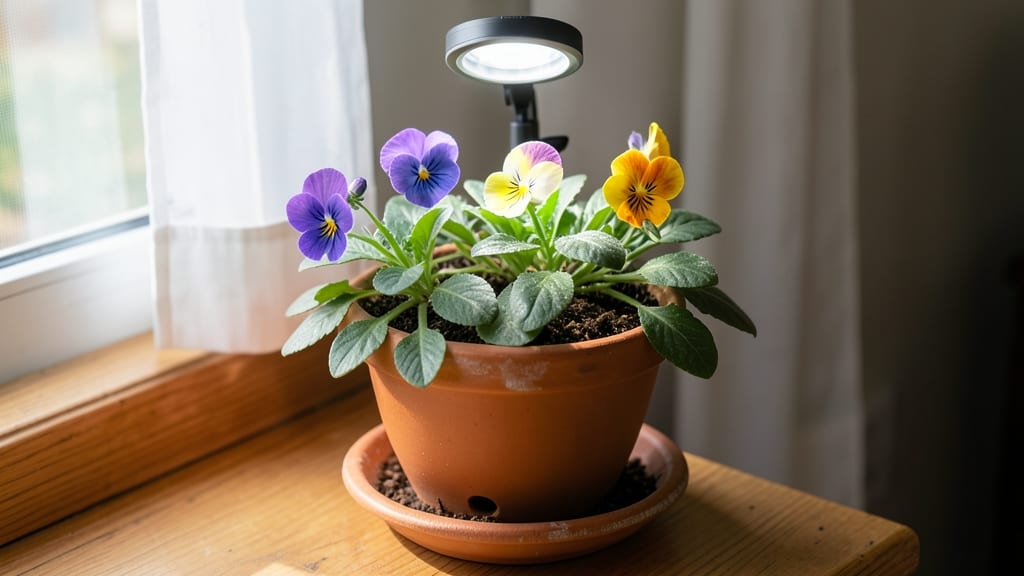
You can grow pansies indoors successfully by providing bright, indirect light for 6-8 hours daily, moderate humidity levels, and well-draining soil. Opt for compact varieties like 'Cool Wave' or 'Soraya,' rotate containers weekly to prevent leggy growth, and keep temperatures steady between 60-70°F for optimal results.
Indoor pansy growth hinges on replicating their natural light preferences—these cool-season flowers thrive under blue-rich light, which promotes vibrant blooms. 🌿 A south-facing window or LED grow lights (12-16 inches above plants) work best, while north-facing windows may require supplemental lighting.
Watch for signs like stretched stems or pale leaves, which signal insufficient light exposure. Compact varieties are ideal for indoor spaces since they handle lower light better than sprawling types.
For containers, prioritize pots with drainage holes and a mix that combines potting soil with perlite or sand to prevent waterlogging. Water when the top inch feels dry, and use a balanced fertilizer (like 10-10-10) every 4-6 weeks during active growth.
The key is consistency—pansies are forgiving but reward attentive care with cheerful blooms year-round.
💡 In This Article
- Indoor Light Requirements for Pansy Growth
- Caring for Pansies in Containers: Soil, Water, and Fertilizer Tips
Indoor light requirements for pansy growth
Pansies rely heavily on blue light wavelengths (400-500nm) to trigger flowering, which is why their blooms often appear more vibrant under natural daylight. These flowers originate from temperate climates where they receive 6-8 hours of bright, indirect sunlight during their natural growing season (fall to spring).
In indoor settings, a south-facing window provides the closest match, delivering 3,000-5,000 lux of light intensity—ideal for pansy growth. 💡 For north-facing windows or darker spaces, supplemental LED grow lights (with a 6500K color temperature) placed 12-16 inches above the plants can replicate this spectrum effectively.
The light spectrum directly impacts pansy development: blue light promotes compact growth and flower production, while red light (600-700nm) encourages stem elongation. Without sufficient blue light, pansies exhibit etiolation—stems stretch toward light sources, leaves become pale, and blooms appear sparse or fail to develop entirely.
This is why artificial grow lights with a balanced blue-to-red ratio (around 70:30) work better than standard white bulbs, which lack the necessary blue spectrum for flowering.
Rotating your pansy pots quarter-turns weekly ensures even light exposure, preventing lopsided growth. Compact varieties like 'Cool Wave' or 'Soraya' handle lower light conditions better than sprawling types, making them perfect for indoor cultivation.
These varieties also produce larger, more vibrant blooms under optimal light, with colors ranging from deep purples to sunny yellows—perfect for adding seasonal cheer to indoor spaces. 🌼
Signs of light deficiency in pansies include elongated stems (reaching for light), sparse foliage, and buds that fail to open. If you notice these symptoms, move your plants closer to the light source or increase supplemental lighting duration.
Remember, pansies are cool-season plants, so they naturally slow growth in warm conditions—this is why maintaining 60-70°F temperatures alongside proper lighting is crucial for consistent blooming.
For those without ideal window access, full-spectrum LED grow lights (like those from companies such as Spectrum or Mars Hydro) can provide 12-14 hours of light daily while using minimal energy. These lights mimic natural sunlight's spectrum, including the blue wavelengths pansies need to thrive.
The investment pays off with healthier plants and prolonged flowering, often resulting in blooms that last 6-8 weeks with proper care.