
Plants
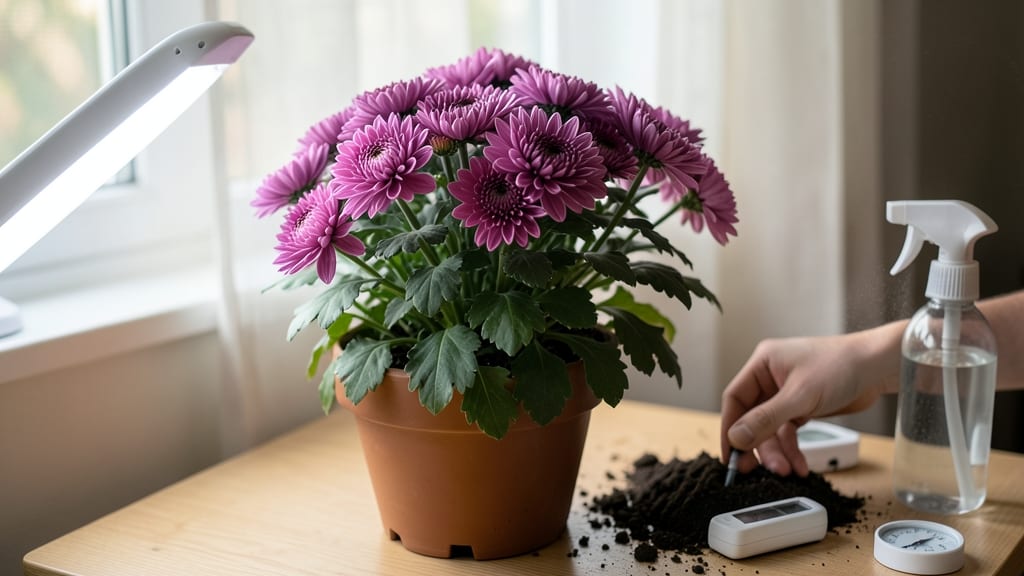
Can mums live indoors? Yes, but they need bright, indirect light and careful attention to thrive long-term. These plants prefer cooler outdoor conditions and annual dormancy to rebloom, though container-grown varieties adapt better with consistent light, humidity, and moisture control.
Indoor mums can survive but often become leggy or fail to bloom without proper light—think of them as sun-worshippers in disguise. 💛 The key is replicating their natural habitat: place them near south-facing windows or use grow lights for 6-8 hours daily.
Without enough light, their leaves stretch toward any available source, and you'll be left with sad, sparse foliage instead of vibrant blooms. Even with good light, indoor mums need a cool winter rest period (around 50-60°F) to trigger reblooming, which many homeowners overlook.
Container-grown mums handle indoor life better than garden varieties because their roots stay compact, but they still demand well-draining soil and careful watering—never let them sit in soggy soil. A humidity tray or occasional misting helps mimic outdoor moisture levels, while regular pruning keeps them bushy.
The trade-off? Indoor mums often bloom less prolifically than outdoor plants, but with the right conditions, you can enjoy their cheerful faces year-round.
💡 In This Article
- Indoor Light Requirements for Mums: Balancing Survival and Blooming
- Year-Round Indoor Mum Care: Watering, Soil, and Dormancy Tricks
Indoor light requirements for mums: balancing survival and blooming
Mums (chrysanthemums) are sunlight powerhouses, needing at least 6 hours of bright, indirect light daily to photosynthesize properly. Their leaves contain high levels of chlorophyll that convert light into energy, but indoor windows often provide only 10-30% of outdoor sunlight intensity.
Without sufficient light, mums enter survival mode, producing long, weak stems (called "legginess") as they stretch toward any available light source. This happens because the plant prioritizes reaching light over producing flowers or dense foliage.
The science behind this is fascinating: mums are short-day plants, meaning they bloom in response to decreasing daylight hours (typically 12 hours of light or less). Indoors, most homes provide 14-16 hours of artificial light, which prevents this natural trigger.
Even with good light, indoor mums often skip blooming entirely unless you replicate their outdoor seasonal cues. Grow lights with a 5000-6500K color temperature (cool white/blue spectrum) mimic natural sunlight and can supplement weak windows. Place lights 6-12 inches above the plant for 12-14 hours daily to maintain health.
Natural light wins when possible—south-facing windows provide the most consistent light, while east or west windows offer 3-5 hours of strong morning/evening sun. North-facing windows are the worst for mums, delivering only 1-2 hours of faint light daily.
Artificial options like LED grow lights or full-spectrum bulbs cost $20-$50 but can make the difference between a thriving plant and a sad, leggy specimen. The key is consistency: sudden light changes cause stress, leading to yellowing leaves or bud drop.
Low-light conditions trigger another problem: reduced chlorophyll production. When mums don't get enough light, their leaves turn pale or develop a dull green cast, and the plant becomes more susceptible to pests like spider mites (which thrive in dry, shaded environments). The solution?
Rotate your mum quarter-turns weekly so all sides receive even light exposure. This prevents uneven growth and keeps the plant compact. For container mums, a reflective surface (like a white wall or aluminum foil) behind the pot can bounce 20-30% more light onto the plant.
Here's what happens when you get the light right: your mum will develop dark green, glossy leaves and sturdy stems. The foliage stays dense, and in ideal conditions, you might even coax a few blooms indoors—though they'll likely be smaller than outdoor varieties.
The trade-off is worth it for the vibrant foliage alone. For the best results, combine bright light with cool indoor temperatures (60-65°F) during the day and 55-60°F at night to mimic their outdoor seasonal patterns.
Pro tip: If your mum starts developing long, bare stems with sparse leaves, it's a clear sign of light deprivation. At this point, you can prune back the leggy growth to 4-6 inches above the soil and place the plant under stronger light.
New growth will emerge denser and more compact. This technique works because mums are resilient—they'll focus energy on producing fresh foliage rather than trying to reach distant light sources.