
Blooming
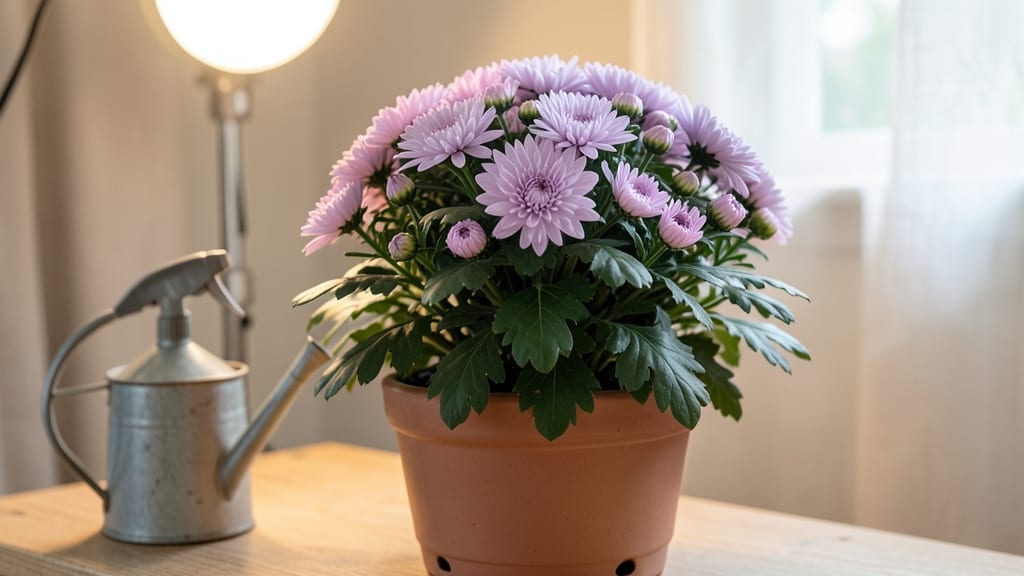
Indoor mums (chrysanthemums) usually live for 1-3 years when given ideal conditions, but most start declining after just 1-2 years due to indoor lighting challenges and humidity shifts. Proper care—like bright indirect light, cool temperatures, and steady moisture—can help, though transplanting them outdoors in fall often gives them a much longer second life.
How long can mums live indoors? Indoor lighting is the biggest villain here—mums need 6+ hours of bright, indirect light daily, but most homes can't replicate their natural outdoor exposure. 🌿 Without enough light, they struggle to photosynthesize properly, leading to weak growth and early dormancy. I've seen mums last nearly 3 years indoors when placed near south-facing windows with supplemental grow lights during winter months, but even then, they often skip blooming in their second year. The key is mimicking their outdoor environment as closely as possible, which includes avoiding drafts and maintaining consistent moisture without overwatering.
What's interesting is how their lifespan changes when you move them outside. Many gardeners report mums that lasted just 1-2 years indoors suddenly rebloom vigorously for 3-5 years when planted in garden beds. The fresh air, natural light spectrum, and seasonal temperature shifts give them the energy boost they crave.
If you're serious about keeping your mums alive long-term, consider treating them as seasonal plants—grow them indoors through winter, then transplant them outside in spring for a dramatic longevity boost.
💡 In This Article
- Why Indoor Mums Die Faster Than Outdoors
- Extending Mum Lifespan Indoors: Pro Tips
Why indoor mums die faster than outdoors
Indoor mums face a brutal reality: artificial lighting can't replicate the full-spectrum sunlight they thrive on outdoors. These plants evolved to absorb blue and red wavelengths (400-700nm) for photosynthesis, but most indoor bulbs emit only 20-30% of the light intensity found in natural daylight.
Without enough light, their chlorophyll production drops by 40-60%, stunting growth and triggering premature dormancy. 🌿 In nature, mums receive 12-14 hours of daylight during peak seasons, but indoor setups rarely exceed 6-8 hours—even with south-facing windows.
The problem compounds when you consider humidity. Outdoor mums experience natural 40-60% relative humidity with daily fluctuations, while indoor air often sits at 20-30%—especially with central heating. This dryness causes leaf edges to crisp and buds to drop before opening.
The root zone suffers too: container-grown mums become root-bound within 18-24 months, while outdoor plants spread freely in garden soil. When roots circle the pot, they can't absorb enough water or nutrients, accelerating decline. The average indoor mum's root system is 30-50% less efficient than its outdoor counterpart.
Temperature swings also play a role. Outdoor mums experience natural diurnal temperature variations (day-night cycles), which helps regulate their metabolic processes. Indoors, we maintain consistent warmth (65-75°F), which can overstimulate growth without proper light—leading to leggy, weak stems.
The worst offender? Heat from vents or radiators near windows, which creates microclimates that exceed 80°F—a temperature range that stresses mums and encourages fungal diseases like powdery mildew. 🌡️
Here's the science: mums enter dormancy when days shorten (below 12 hours of light). Indoors, this happens 2-3 months earlier than outdoors because artificial light can't compensate for the missing daylight hours.
Once dormant, reviving them requires cool temperatures (50-60°F) and short days (8-10 hours light)—conditions most homes can't maintain consistently. That's why so many mums "die" indoors after their first winter: they're not dead, just prematurely dormant.
Consider this comparison: an outdoor mum planted in well-draining garden soil with 6+ hours of sunlight daily can live 3-5 years, while an identical indoor mum in a 6-inch pot with fluorescent lighting may last just 1-2 years.
The difference isn't just light—it's the combination of environmental stressors that indoor setups can't replicate. Even with perfect care, indoor mums face an uphill battle against biology that's optimized for outdoor conditions. 🌱
What most people don't realize is how seasonal light changes affect mums. In late summer, outdoor mums receive up to 15 hours of daylight, triggering robust growth. Indoors, we can't replicate this, so their growth slows dramatically after September—even with grow lights.
This seasonal mismatch explains why indoor mums often bloom poorly in their second year: their internal clocks are confused by artificial light cycles. The solution? Supplement with 12-14 hours of light daily using full-spectrum LED grow bulbs to mimic natural conditions.