
How To
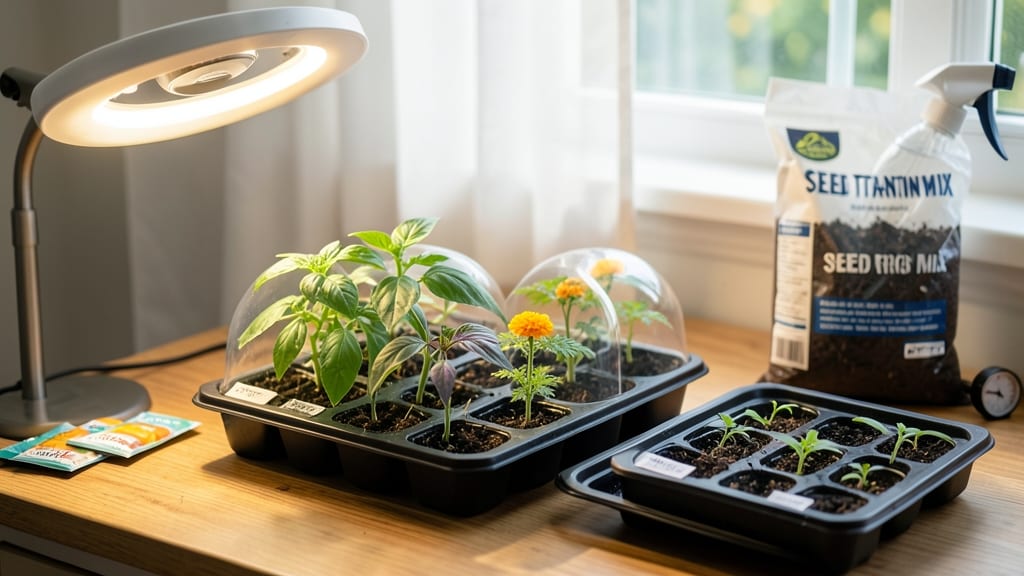
Starting seeds indoors at the right time ensures strong, healthy transplants ready for your garden 🌱 — and missing that window means weak seedlings or wasted effort.
Picture this: you’ve got trays lined up, soil ready, and seeds waiting—only to realize two months later that your tomatoes are still puny when it’s time to plant.
Timing your General Indoor Seed Starting isn’t just about calendar dates; it’s about matching your plants’ maturity timelines to your last frost date.
Most gardeners in USDA Zone 6a start seeds indoors between January and March, but the exact moment depends on whether you’re growing cool-season crops like lettuce or warm-season favorites like peppers. A simple miscalculation can leave you with seedlings that outgrow their containers or bolt before they’re ready.
In this guide, I’ll break down the exact plant-specific timing you need—from calculating start dates to avoiding common pitfalls—so your seedlings thrive and your garden flourishes.
How to calculate your plant-specific indoor seed-starting dates
Getting your indoor seed-starting dates right is the foundation of a successful garden. Miss the window, and you’ll either have overgrown seedlings crowding your space or underdeveloped plants struggling to survive outdoors. The key?
A simple but precise calculation using your last frost date, seed packet guidelines, and plant maturity timelines. Let’s break it down step by step, so you can start seeds at the perfect time for your climate and plants.
First, locate your average last frost date—this is the critical benchmark for most gardeners. In USDA Zone 6a (like many northern regions), this typically falls around April 15.
If you’re in a different zone, check the USDA Plant Hardiness Zone Map or ask your local cooperative extension service for precise dates. This date tells you when it’s safe to transplant seedlings outdoors without risking frost damage.
Next, grab your seed packets—they’re packed with essential info. Look for the days to maturity (e.g., "60 days to harvest") and the recommended indoor start time (often labeled as "Start indoors 6-8 weeks before last frost").
For example, if your last frost is April 15 and you’re growing tomatoes that take 80 days to mature, you’ll want to start seeds indoors 8 weeks before April 15, landing you in early February. This ensures seedlings are robust and ready to transplant by late May.
Here’s where it gets personal: regional adjustments matter. If you’re in a warmer climate (Zone 8a+), your last frost might be as late as March 15, shifting your start dates to January or even late December for cool-season crops like lettuce or spinach.
Conversely, in colder zones (Zone 4a), you might start peppers or eggplants as late as March 1 to avoid leggy, weak seedlings before the last frost.
| Plant Type | Days to Maturity | Weeks Before Last Frost | Ideal Start Month (Zone 6a) | Notes |
|---|---|---|---|---|
| Cool-Season Veggies (lettuce, spinach, kale) | 30-60 days | 4-6 weeks | March | Can tolerate light frost; start later if needed. |
| Warm-Season Veggies (tomatoes, peppers, basil) | 60-90 days | 8-10 weeks | February-March | Wait until soil warms (50°F+) to transplant. |
| Herbs (basil, cilantro, parsley) | 30-70 days | 6-8 weeks | February-March | Basil needs warm soil; wait until late spring. |
| Flowers (marigolds, zinnias, petunias) | 45-90 days | 6-10 weeks | February-April | Annuals need consistent warmth; adjust for blooming time. |
| Root Crops (carrots, beets, radishes) | 30-70 days | 4-6 weeks | March-April | Direct sow outdoors for best results; indoor starts work for slow germinators. |
Don’t overlook the seed packet’s specific instructions. Some plants, like carrots or radishes, are better direct-sown outdoors, while others (like tomatoes or broccoli) thrive when started indoors.
If a packet says "Start indoors 10-12 weeks before last frost," trust it—those timelines are based on grower trials and account for seedling vulnerabilities like legginess or slow growth.
For herbs and flowers, timing can be even more nuanced. Basil, for instance, bolts (goes to seed) in cold weather, so start it indoors 4-6 weeks before your last frost and transplant only after soil temperatures reach 55°F+.
Meanwhile, marigolds can handle cooler temps, so you might start them 8-10 weeks out for early blooms. Always cross-reference your local climate data with seed packet advice to fine-tune your schedule.
Pro tip: Use a seed-starting calendar or spreadsheet to track your plants. List each variety, its maturity days, your last frost date, and the ideal start window. Add reminders for hardening off (acclimating seedlings to outdoor conditions) 7-10 days before transplanting.
Tools like Johnny’s Selected Seeds’ Seed-Starting Calculator or Burpee’s Planting Guide can automate this process and adjust for your ZIP code.
Finally, account for light and space constraints. If you’re using a south-facing window, you might need to start seeds earlier to compensate for weaker natural light. Supplement with a grow light (12-16 hours/day) to prevent
Critical mistakes that ruin seed-starting timing (and how to avoid them)
Getting your seed-starting timing wrong can turn your indoor garden into a disappointment—especially when seedlings outgrow their containers or bolt too early. The most common timing mistakes often stem from ignoring seed packet instructions or misjudging local frost dates.
For example, starting tomatoes too early in January might leave you with overcrowded seedlings by spring, while waiting until March could mean missing the optimal transplant window.
Another frequent error is assuming all plants follow the same schedule. Cool-season crops like lettuce and spinach can handle early starts, but warm-season plants like peppers and eggplants need precise timing to avoid heat stress.
Even experienced gardeners sometimes overlook how light deprivation can stretch seedlings into weak, leggy stems—making them vulnerable to disease once outdoors.
Here’s the hard truth: One week off in your timing can mean the difference between robust transplants and a failed garden. Let’s fix that with these expert adjustments to avoid common pitfalls.
⚠️ Timing Mistake Alert: The 6-8 Week Rule Isn’t One-Size-Fits-All
Most seed packets suggest starting seeds 6-8 weeks before your last frost date, but this is a general guideline, not a rule. For instance:
- Tomatoes and peppers need 8-10 weeks indoors due to their long maturity.
- Lettuce and spinach can start 4-6 weeks early and even handle light frost.
- Basil and cucumbers prefer direct sowing and shouldn’t be started indoors at all.
Pro Tip: Adjust your start date based on days to maturity (listed on seed packets) minus your frost-free growing season. For example, if your last frost is April 15 and your season lasts 120 days, start tomatoes March 1-15 (120 - 90 days = 30, then add buffer).
Ignoring light requirements is another timing killer. Seedlings stretched toward a weak window light won’t survive transplanting. Without 12-16 hours of light daily, they develop weak stems and pale leaves—a classic sign of etiolation.
Even if you start on time, poor light conditions can undo all your efforts. Solution? Use grow lights or rotate trays near a south-facing window every few days for even exposure.
Don’t forget to account for hardening off time—typically 7-10 days before transplanting. Skipping this step shocks seedlings, causing wilting or stunted growth. Gradually expose them to outdoor conditions (wind, sun, temperature fluctuations) to toughen them up.
For example, start hardening off tomato seedlings in late April if your last frost is mid-May, even if they’re ready to transplant earlier.
Finally, resist the urge to crowd seedlings to save space. Overpacked trays lead to root competition, stunted growth, and disease. Thin seedlings or use individual cells in trays to give roots room to develop.
For instance, basil seedlings should be spaced 2-3 inches apart—any closer, and you’ll sacrifice vigor for density.
By avoiding these timing traps—precise start dates, adequate light, proper hardening off, and spacious containers—you’ll ensure seedlings strong enough to thrive in your garden. The key is planning ahead and treating each plant type as unique. 🌱