
Flowers
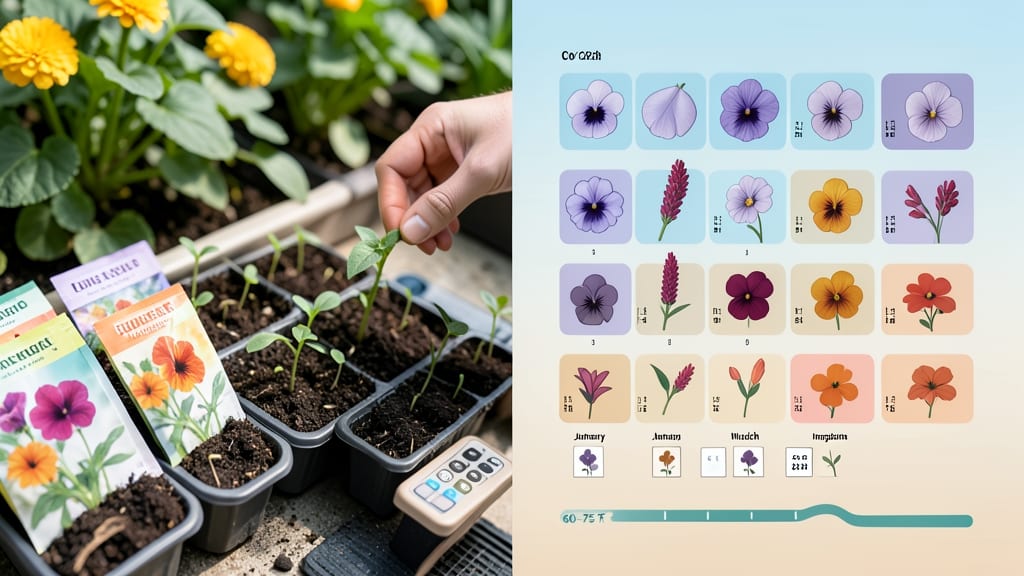
Starting flower seeds indoors at the right time means the difference between a vibrant summer garden and a sad, leggy mess 🌸 — and this chart gives you the exact weeks before frost for every type.
Picture this: you’ve got your seed trays ready, the soil is fluffy, and you’re eager to see those first sprouts. But if you start too early, your seedlings will stretch and flop; too late, and you’ll miss the bloom window entirely.
That’s why timing is everything, and a little planning now saves you from frustration later.
Most gardeners in Zone 6a can begin in early February for cool-season flowers like pansies, while heat-lovers like marigolds wait until late March. This guide breaks down the schedule by plant type, so you never guess again.
Inside, you’ll find a color-coded chart with frost-date adjustments, care tips to keep seedlings strong, and how to tweak the timing for early or late springs. No more second-guessing—just a foolproof plan for blooms that last.
Indoor flower seed starting chart by frost date and plant type
Starting flower seeds indoors at the right time ensures vibrant blooms all season long. The key is calculating weeks before your last frost date—too early and seedlings get leggy, too late and you miss the growing window.
This chart covers annuals, perennials, and tender flowers with adjustments for USDA hardiness zones 3-10, so you can tailor timing to your climate.
For example, zinnias and marigolds (heat-loving annuals) need 6-8 weeks indoors before transplanting, while coneflowers (perennials) can start 8-10 weeks early to establish strong roots. Tender flowers like petunias require 10-12 weeks due to their slower growth.
Always check your local frost dates—they vary by 1-3 weeks even within the same zone.
Use this chart as your seed-starting roadmap. Bookmark it, print it, or save it to your phone—because once you miss the window, you’ll be scrambling for six-packs at the garden center.
Below, I’ve organized flowers by type and frost-date timing, with notes on light needs, hardening off, and zone adjustments.
Pro Tip: Set a reminder 4-6 weeks before your target start date to gather supplies like seed-starting mix, trays, and grow lights. Most seeds need warmth (70-75°F) and humidity to germinate, so preheat your seedling area if needed.
| Flower Type | Weeks Before Last Frost | USDA Zones | Notes | Light Needs |
|---|---|---|---|---|
| Annuals (Heat-Lovers) | 6-8 weeks | 5-10 | Marigolds, Zinnias, Sunflowers | Full sun (14+ hrs/day) |
| Annuals (Cool-Season) | 8-10 weeks | 3-8 | Snapdragons, Sweet Alyssum, Pansies | Partial shade (6-8 hrs) |
| Perennials | 8-12 weeks | 4-9 | Coneflowers, Lavender, Black-Eyed Susan | Full sun (8+ hrs/day) |
| Tender Flowers | 10-12 weeks | 7-10 | Petunias, Geraniums, Begonias | Bright light (12+ hrs/day) |
| Bulb Flowers | 12-16 weeks | 5-9 | Tulips, Dahlias, Gladiolus | Full sun to partial shade |
Adjust the weeks before frost by 1-2 weeks earlier if you’re in USDA zones 3-5 (shorter growing seasons) or 1-2 weeks later for zones 8-10 (longer springs).
For example, in Zone 4, start zinnias 8 weeks before frost (around late February), while in Zone 9, you can wait until early March.
Once seeds sprout, provide 14-16 hours of light daily using a grow light or south-facing window. Without enough light, seedlings become leggy and weak, making them prone to damping off. Harden off seedlings 7-10 days before transplanting by gradually exposing them to outdoor conditions.
For high-altitude gardens (above 5,000 ft), add 2 extra weeks to the indoor starting time—cooler temperatures slow germination. Coastal areas with mild winters can delay starting by 1-2 weeks, as frost dates are less predictable. Always monitor your local weather forecasts for unexpected late frosts.
After transplanting, mulch around the base of plants to retain moisture and regulate soil temperature. This is especially critical for tender flowers like
How to adjust your seed starting schedule by hardiness Zone
Adjusting your flower seed starting schedule by hardiness zone ensures your seedlings thrive outdoors at the right time. The USDA Plant Hardiness Zone Map is your first tool—each zone has unique last frost dates that dictate when to begin.
For example, Zone 5 may have a last frost in mid-May, while Zone 8 could see frost-free conditions by mid-March.
Start by locating your USDA zone using the interactive map on the USDA website. Once you know your zone, check local historical frost data from your county extension office or weather service. These dates can vary ±7-10 days from the USDA averages, especially in high-altitude or coastal climates.
⚠️ callout-warning ⚠️
Even if your Zone 6 chart says "start petunias 8 weeks before last frost," a late spring could push that date 2 weeks later. Use these adjustment rules:
- Early springs? Delay starting by 1-2 weeks and monitor soil temps.
- Late springs? Start seeds 2-3 weeks earlier and use heat mats to speed germination.
- High-altitude zones? Add 1 extra week to starting times—cooler nights slow growth.
- Coastal zones? Subtract 1 week—warmer microclimates allow earlier planting.
Pro Tip: Track your local frost dates for 3 years to create a custom schedule.
For annual flowers like zinnias or marigolds, which mature in 60-70 days, count backward from your last frost date. If your zone’s average is April 15 but you’ve had late frosts in May, adjust your starting window to February 15 instead of March 1.
Use a seedling heat mat to compensate for cooler indoor temps.
Perennials like coneflowers or lavender need extra time—start them 10-12 weeks before last frost because they establish slower. In Zone 4, this might mean mid-January, while Zone 7 gardeners can wait until late February. Always check the seed packet for days-to-maturity guidelines.
High-altitude gardens (e.g., Denver, CO or Salt Lake City, UT) experience shorter growing seasons due to cooler temps. Add 1-2 extra weeks to starting times—your 60-day petunia may need 70 days to bloom outdoors.
Coastal areas (e.g., San Francisco, CA) can start seeds 1-2 weeks earlier thanks to milder winters.
Finally, use a gardening journal to log your adjustments yearly. Note which flowers bolted (too early) or failed to thrive (too late) and tweak your schedule. With practice, you’ll master the art of zone-specific seed starting—leading to bigger blooms and healthier plants! 🌸