Size
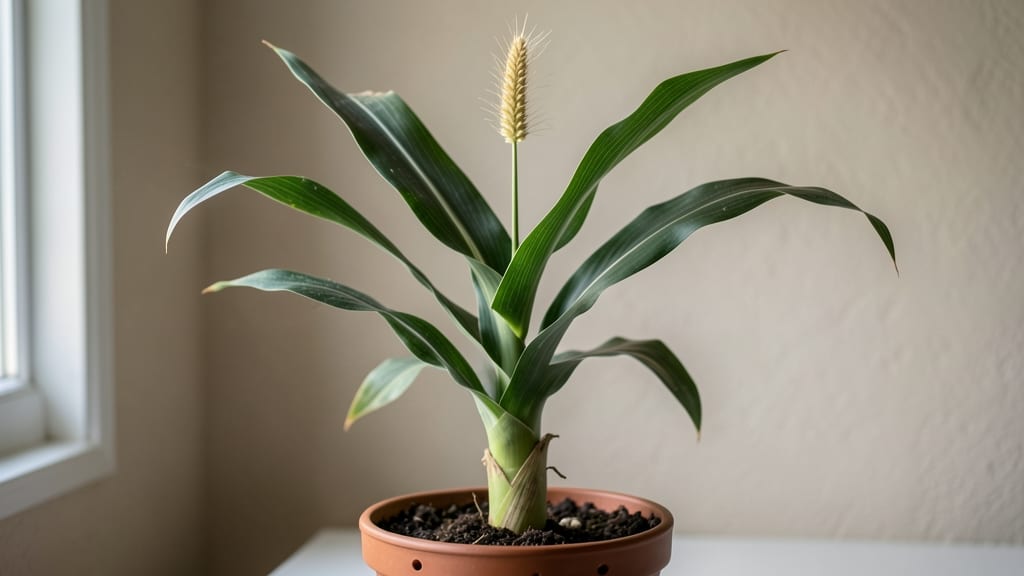
Growing a tall indoor corn plant that reaches for the ceiling isn't about real corn—it's about the dramatic, airy look of ornamental grasses and towering tropicals. 🌿 I've filled my living room with plants that mimic corn's height and texture, like the Dracaena fragrans 'Massangeana' (corn plant) or the Miscanthus sinensis grass, both of which thrive indoors with the right care.
The secret isn't complicated: it's light, space, and occasional pruning to keep them growing upward instead of leggy.
You'll need a 6- to 8-foot-tall container (or a sturdy floor pot) with drainage, well-draining potting mix, and a spot near a south- or west-facing window—or a grow light if natural light is limited.
Water when the top inch of soil feels dry, but avoid soggy roots, which can cause rot. These plants love humidity, so a pebble tray with water nearby helps them mimic their outdoor habitat. With proper care, they'll grow 3-6 feet tall indoors, creating a stunning vertical focal point.
Pruning is where the magic happens—literally. When your plant gets too tall or top-heavy, trim the top 2-3 inches to encourage bushier growth. You'll see new shoots sprout from the sides, filling out the plant and keeping it stable.
The result? A lush, towering centerpiece that looks like it belongs in a greenhouse, not just your living room. Plus, the air-purifying benefits make it a win-win for your space.
Works for any room with enough ceiling height, from modern lofts to cozy apartments. If you're worried about maintenance, don't be—these plants are foolproof once you get the basics right.
Just give them light, space, and a little occasional pruning, and they'll reward you with year-round height and drama. Ready to grow your own indoor skyscraper?
📚 In This Guide
- What you need
- Instructions
- Tips and common mistakes
- Wrapping up and next steps
What you need
- ● Tall indoor corn plant: Choose a healthy, mature specimen (4–6 ft tall) with sturdy stems and lush foliage.
- ● Large container: A 18–24-inch diameter pot with drainage holes (ceramic or fabric preferred).
- ● High-quality potting mix: A well-draining blend (e.g., 50% cactus/succulent mix + 50% perlite/pumice).
- ● Pruning shears: Sharp, sterilized shears (for precision cuts).
- ○ Rooting hormone: Optional but helpful for propagation (powder or gel form).
- ● Support stake or trellis: A 6–8 ft bamboo stake or decorative lattice for stability.
- ● Watering can: With a narrow spout for deep watering.
- ● Spray bottle: For misting leaves (especially in dry climates).
- ● Slow-release fertilizer: Balanced (10-10-10) for gradual nutrient release.
- ● Grow lights: LED or fluorescent (12–14 hrs/day) if natural light is limited.
- ● Decorative pot sleeve: To hide the container and add style.
- ● Humidity tray: A pebble tray with water to boost moisture.
Step-by-Step instructions for cultivating a towering indoor corn plant
Here's how to coax your corn plant into reaching its full dramatic height indoors.
🪴 Step 1: Select the Right Variety and Container
Choose a dwarf or variegated corn plant variety specifically bred for indoor growing—these stay manageable while still delivering that striking vertical presence. The Dracaena fragrans 'Massangeana' (corn plant) is the classic choice, but varieties like 'Lemon Lime' or 'Warneckei' add colorful accents. I always opt for a 12-14 inch diameter pot with drainage holes to accommodate those long, graceful stems.
Fill the pot with a well-draining peat-perlite mix (equal parts) to prevent root rot—the last thing you want is a leggy plant struggling with soggy soil. Press the mix gently to remove air pockets, then water thoroughly until moisture runs from the drainage holes. Let it drain completely before planting, as corn plants hate wet feet.
☀️ Step 2: Position for Optimal Light and Height
Place your corn plant within 3-6 feet of a south or west-facing window where it can bask in bright, indirect light for at least 6-8 hours daily. Direct sunlight will scorch those beautiful striped leaves, so I always use a sheer curtain to diffuse harsh afternoon rays. If natural light is insufficient, supplement with a full-spectrum LED grow light positioned 18-24 inches above the plant.
Rotate the pot a quarter turn weekly so the plant grows upright rather than leaning toward the light source. You'll notice the stems naturally straighten and the leaves develop evenly. This is especially important for indoor plants—they grow toward whatever light they can find, which often means lopsided growth if left unchecked.
💧 Step 3: Master the Watering Balance
Water your corn plant when the top 2-3 inches of soil feel dry to touch, typically every 7-10 days depending on your home's humidity. I test by sticking my finger in—the soil should feel slightly dry but not bone-dry. Overwatering is the #1 killer of indoor corn plants, leading to yellowing leaves and root rot. Always water until moisture drains from the bottom, then empty the saucer to prevent the roots from sitting in water.
Mist the leaves occasionally to recreate the tropical humidity these plants love, especially in winter when indoor air gets dry. You'll see the leaves perk up and maintain their vibrant colors when humidity stays above 40%. For extra humidity, place the pot on a tray filled with pebbles and water—just make sure the pot isn't sitting directly in the water.
✂️ Step 4: Prune for Height and Fullness
Pruning is what transforms a corn plant from ordinary to spectacular. Start by removing any yellow or brown leaves at the base—they drain energy from the plant. Then, to encourage bushier growth, trim back the longest stems by one-third just above a leaf node. This forces the plant to send out new shoots from those nodes, creating a fuller, more dramatic appearance.
For height control, pinch off the top 2-3 inches of new growth when stems reach 18-24 inches tall. This prevents the plant from becoming top-heavy and encourages lateral branching. I always use clean, sharp pruning shears to make clean cuts—never tear the stems, as this invites disease. After pruning, give the plant a light fertilizer application to support new growth.
🌿 Step 5: Fertilize for Towering Growth
Feed your corn plant every 4-6 weeks during the growing season (spring through fall) with a balanced liquid fertilizer (10-10-10 or 20-20-20). I dilute it to half-strength to avoid burning the roots—corn plants are sensitive to salt buildup from over-fertilizing. In winter, reduce feeding to every 8-12 weeks as growth naturally slows.
Watch for signs of nutrient deficiencies—yellowing leaves between veins indicate iron deficiency, while purple stems signal phosphorus needs. If you notice these, switch to a chelated iron supplement or a fertilizer with higher phosphorus content. Always water the plant thoroughly before fertilizing to prevent root burn from concentrated nutrients.
Tips & tricks for cultivating a towering indoor corn plant
These small adjustments will help your corn plant reach its full dramatic potential without the guesswork.
Lighting Strategy: The 6-8 hours of bright, indirect light in Step 2 is non-negotiable for height. If you notice your plant leaning toward one side, it's not getting enough light on the opposite side. I've found that supplementing with a grow light for just 2 extra hours in the morning or evening can make a dramatic difference in stem straightness and leaf vibrancy. Place it 18-24 inches above—closer than that can scorch those beautiful striped leaves, while farther away won't provide enough intensity.
Root Health Secret: In Step 1, that initial thorough watering isn't just about settling the soil—it's your chance to check drainage. If water pools in the saucer after 10 minutes, your pot might need better drainage holes or a more porous mix. I've seen corn plants develop root rot within weeks when kept in soil that doesn't dry properly between waterings. The key is that peat-perlite mix—don't be tempted to add more peat than perlite, as that can compact and reduce aeration.
Pruning Precision: When you're trimming those longest stems by one-third in Step 4, here's what I've learned: Always cut just above a leaf node where new growth emerges. If you cut too close to the node, you might damage the growth point. I use a small mirror to check my angle—this ensures clean cuts that heal properly. And here's a pro move: After pruning, wipe the shears with rubbing alcohol between cuts to prevent spreading any potential pathogens from one stem to another.
Fertilizer Timing: The 4-6 week feeding schedule in Step 5 works perfectly, but timing matters just as much as the product. I've found that feeding right after watering (when the soil is moist) helps prevent root burn. Also, if you notice the leaves developing brown tips after fertilizing, it's often a sign of salt buildup. To fix this, flush the soil by watering thoroughly until water runs from the bottom for about 15 minutes—this helps remove excess salts without disturbing the roots.
Pro Tips for Tall Indoor Corn Plant
- These small adjustments will help your corn plant reach its full dramatic potential without the guesswork.
- Lighting Strategy: The 6-8 hours of bright, indirect light in Step 2 is non-negotiable for height. If you notice your...
- Root Health Secret: In Step 1, that initial thorough watering isn't just about settling the soil—it's your chance to ...
Frequently asked questions
Got questions about growing a tall indoor corn plant?
You’re not alone! Below, we’ve tackled the most common queries to help you cultivate a lush, towering beauty without the fuss.
How tall can an indoor corn plant (like Dracaena fragrans or Yucca) realistically grow?
With proper care, many indoor corn plants can reach 6–10 feet tall indoors—though growth slows significantly compared to outdoor varieties. Pruning regularly (every 1–2 years) keeps them manageable while encouraging bushier growth. Just ensure your space has high ceilings or a tall shelf to accommodate their height!
How long does it take for an indoor corn plant to reach maturity?
Patience is key! Most indoor corn plants grow 6–12 inches per year, so a 6-foot specimen could take 5–10 years to mature. Faster growth happens with bright, indirect light and consistent watering (but never soggy soil). Use a growth chart to track progress!
Why is my indoor corn plant’s growth stunted or leggy?
Leggy or slow growth usually signals light deprivation or overwatering. Move it near a south- or west-facing window for 6+ hours of light daily. If roots are waterlogged, let the top 1–2 inches of soil dry out between waterings. Yellow leaves? That’s a red flag—adjust your care routine ASAP!
When and how should I prune my tall indoor corn plant?
Prune in early spring (before new growth) to shape, control height, or propagate. Use sterilized shears to cut just above a leaf node. For Dracaena, trim 1/3 of the stalk to encourage branching. For Yucca, prune dead or brown fronds at the base. Always sterilize tools to prevent disease!
What are the best alternatives to corn plants for indoor height without the maintenance?
If corn plants seem too high-maintenance, try these low-fuss tallies:
- Snake Plant (Sansevieria): Thrives in low light, grows 2–4 feet, and needs water every 2–3 weeks.
- Parlor Palm (Chamaedorea elegans): Reaches 3–6 feet and loves humidity (great for bathrooms!).
- Kentia Palm (Howea forsteriana): Elegant, slow-growing (6–10 feet), and pet-friendly.
Wrapping up and next steps
Growing a tall indoor corn plant is all about balancing patience, precision, and a little creative flair! With the right pruning techniques and care, you can transform your space into a lush, vertical garden that’s as stunning as it is functional. 🌱✨
Now that you’re armed with the know-how, why not take the next step? Experiment with different pruning styles, try your hand at training vines, or even share your progress with fellow plant enthusiasts. Your green thumb is ready—let your indoor jungle thrive!