
Pests
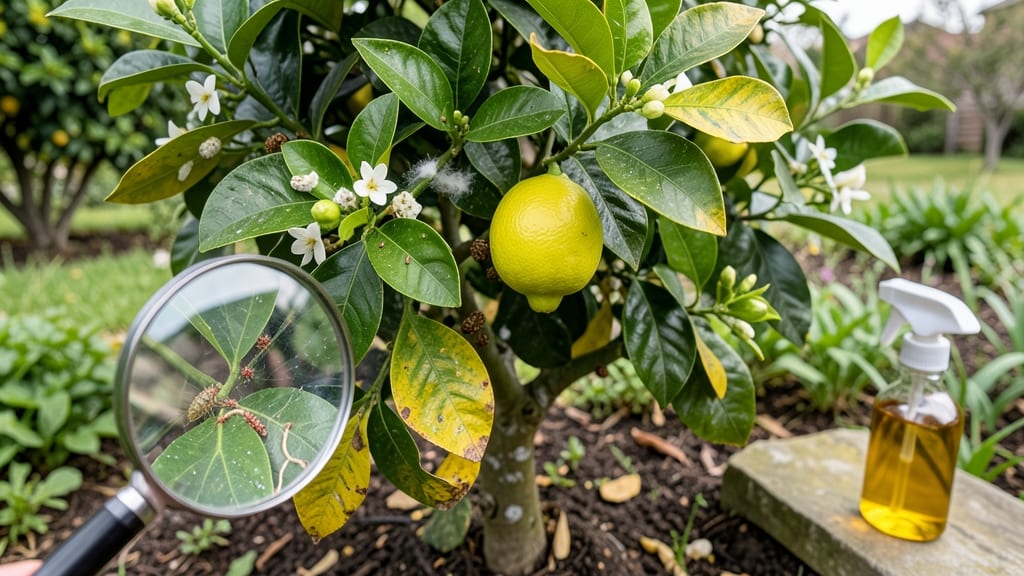
Your citrus tree’s curled leaves aren’t just a cosmetic issue—they’re a distress signal from indoor citrus tree pests like spider mites or scale insects. 🌿 I’ve battled these tiny invaders on my Meyer lemon, and the key to saving your tree lies in early action before the damage spreads to the roots.
The worst offenders—mealybugs, aphids, and spider mites—thrive in the dry indoor air we give citrus trees. You’ll spot them as sticky residue on leaves (honeydew), tiny white cottony masses, or fine webbing between branches.
The good news? Organic solutions like neem oil or insecticidal soap work just as well as harsh chemicals—if you apply them correctly.
With the right treatment, your tree can bounce back in 2-4 weeks, regrowing fresh, glossy leaves and even producing more fruit. The secret is consistency: check undersides of leaves weekly, isolate infested trees, and boost humidity to make your citrus less appealing to pests.
Works for Meyer lemons, calamondins, and even dwarf citrus—no matter how severe the infestation looks at first. Let’s turn those curled leaves into lush, pest-free foliage again.
Root Causes Of Citrus Tree Infestations
Indoor citrus trees—like Citrus limon (lemon), Citrus sinensis (orange), or Citrus reticulata (mandarin)—are surprisingly vulnerable to pests despite their indoor environment. While you might assume your home is a controlled, pest-free zone, several factors can attract or encourage infestations.
Understanding these triggers is the first step to prevention and targeted treatment.
Citrus trees thrive in specific conditions, and when these are disrupted, they become stressed—making them prime targets for pests. Here’s how environmental mismanagement invites trouble:
- Low Humidity:
Indoor air, especially in winter with heating systems, often drops below the ideal 40-60% humidity range for citrus. Dry air weakens the tree’s natural defenses, making it more susceptible to spider mites (tiny arachnids that thrive in arid conditions) and scale insects, which feed on sap from stressed leaves.
Why it matters: Spider mites, for example, multiply rapidly when humidity falls below 30%, creating fine webbing on leaves—a classic sign of infestation.
- Temperature Fluctuations:
Citrus trees prefer stable temperatures between 60–75°F (15–24°C). Sudden drafts from AC vents, heaters, or open windows can shock the tree, reducing its resilience. Pests like mealybugs and whiteflies are drawn to trees under stress because their weakened sap flow is easier to exploit.
Why it matters: A tree struggling to regulate its internal water and nutrient transport becomes a buffet for sap-sucking insects.
- Overcrowding:
Placing your citrus tree too close to walls, other plants, or furniture restricts airflow. Stagnant air traps moisture and dust, creating a microclimate that fosters fungus gnats (which breed in damp soil) and thrips (which hide in dense foliage).
Why it matters: Poor ventilation also slows down the evaporation of water from leaves, prolonging dampness—a key trigger for root rot and secondary pest infestations.
💡 Pro Tip: Use a hygrometer to monitor humidity and a thermometer to track temperature near your tree. Adjust with a humidifier or space heater as needed to keep conditions stable.
Just like humans, citrus trees need the right balance of nutrients to stay healthy. When their diet is off, they become easy prey for pests. Here’s how nutrition plays a role:
- Over-Fertilization:
While citrus trees love nutrients, too much fertilizer—especially high in nitrogen—can burn roots and leaves, creating entry points for pests. Excess salts from synthetic fertilizers also disrupt the tree’s ability to absorb water, leading to aphid and scale insect infestations.
Why it matters: Aphids are attracted to new, tender growth stimulated by over-fertilization, and scale insects latch onto weakened stems.
- Deficiencies in Key Nutrients:
Lack of magnesium (a symptom of yellowing between leaf veins, called chlorosis) or iron weakens the tree’s cellular structure. Pests like citrus leaf miners (larvae that tunnel through leaves) target these vulnerable areas because the leaves are softer and easier to penetrate.
Why it matters: A nutrient-deficient tree produces lower-quality sap, making it a less nutritious (but still appealing) meal for sap-suckers.
- Improper Watering:
Both overwatering (leading to root rot and attracting fungus gnats) and underwatering (causing dry, brittle leaves that attract spider mites) create ideal conditions for pests. Overly wet soil also encourages root weevils, whose larvae feed on roots, further stressing the tree.
Why it matters: Healthy roots and leaves have natural defenses (like waxy cuticles and antimicrobial compounds) that deter pests. Stress weakens these barriers.
📊 Data Point: Studies show that citrus trees with balanced NPK (nitrogen, phosphorus, potassium) ratios and micronutrients like zinc and manganese are 70% less likely to suffer from severe pest damage (University of Florida IFAS Extension).
Even with the best care, human habits can inadvertently introduce pests to your indoor citrus tree. Here’s how:
- Bringing Infested Plants or Soil Indoors:
Pests like mealybugs or whiteflies often hitchhike on new plants, soil, or even gardening tools. If you repot your citrus tree or introduce a new houseplant nearby, you risk transferring eggs or adults.
Why it matters: Mealybugs, for instance, can survive for weeks without food, waiting for a suitable host like your citrus tree.
- Using Contaminated Water:
Water from outdoor faucets, rain barrels, or even tap water in some areas may contain thrips or aphid eggs. If you’re watering your tree with untreated water, you’re essentially inviting pests to your home.
Why it matters: A single aphid can reproduce asexually, giving birth to 50–100 nymphs in a month under ideal conditions.
- Ignoring Quarantine Protocols:
If you’ve recently traveled or received a citrus tree as a gift, pests like citrus psyllids (which spread huanglongbing, or citrus greening disease) can be introduced. Failing to inspect and quarantine new plants for 2–4 weeks risks spreading infestations.
Why it matters: Some pests, like psyllids, are nearly invisible to the naked eye but can devastate a tree’s health within weeks.
✨ Prevention Hack: Always rinse new plants under running water for 30 seconds before bringing them indoors, and use a fine mesh screen over outdoor water sources to filter out hitchhiking pests.
In nature, citrus trees coexist with predators that keep pest populations in check. Indoors, this balance is often disrupted:
- Lack of Beneficial Insects:
Outdoors, ladybugs, lacewings, and parasitic wasps prey on pests like aphids and mites. Indoors, these natural allies are absent, allowing pest populations to explode unchecked.
Why it matters: A single ladybug can eat 5,000 aphids in its lifetime—but without them, your tree is defenseless.
- Monoculture Planting:
Growing only citrus trees indoors creates a monoculture, where pests can feast on a single, unvaried food source without competition. Diversifying your indoor garden with pest-repellent plants like basil, lavender, or marigolds can disrupt this cycle.
Why it matters:
Quick Fixes for Citrus Tree Woes
Citrus trees are resilient, but pests like aphids, scale insects, or spider mites can turn your indoor oasis into a leaf-curling disaster. The good news? With the right approach, you can reverse the damage and keep your tree thriving—without harsh chemicals.
Below, we break down targeted solutions for common citrus pests, organized by cause, plus prevention tips to keep your tree pest-free long-term.
---
Signs: White, brown, or black bumps on leaves/stems; sticky honeydew residue.
How to Treat It: 1. 🍳 Scrape Them Off - Use a soft toothbrush dipped in rubbing alcohol (70% isopropyl) to gently scrub off scale insects. Focus on stems and undersides of leaves. - Pro Tip: 💡 Do this in the sink or outdoors to avoid alcohol fumes indoors.
2. 👨🍳 Soap Spray Attack - Mix 1 tbsp mild liquid soap (like Castile) + 1 quart water in a spray bottle.
Test on a small leaf first—if no damage after 24 hours, spray all infested areas thoroughly. - Repeat every 5–7 days until gone (scale insects have a waxy shell, so patience is key).
3. 🌡️ Heat Treatment (For Stubborn Cases) - Place the tree near a sunny window for a few hours—scale insects hate heat and may drop off. Combine with scraping for best results.
Prevention: - 🎯 Inspect new plants before bringing them indoors (quarantine for 2 weeks). - 🌿 Wipe leaves monthly with a damp cloth to remove eggs or early signs.
---
Signs: Fine webbing on leaves; yellow stippling (tiny dots) on leaf surfaces.
How to Treat It: 1. 💦 Blast Them Away - Spray leaves with water (a hose nozzle on gentle setting) to knock off mites and webs. Do this daily for 3 days to disrupt their lifecycle.
2. 🍵 Neem Oil Spray - Mix 1 tsp neem oil + 1 tsp mild soap + 1 quart water. Spray both sides of leaves at dusk (neem oil can burn leaves in direct sunlight). - Reapply every 7–10 days for 3 weeks.
3. 🕸️ Introduce Predators (If Possible) - Release predatory mites (like Phytoseiulus persimilis)—they only eat spider mites and are safe for your tree. Buy online from garden centers.
Prevention: - ✨ Increase humidity (mites thrive in dry air)—use a pebble tray or humidifier. - 🌿 Prune yellowing leaves immediately to remove hiding spots.
---
Signs: Clusters of tiny green/black bugs on new growth; curled or sticky leaves.
How to Treat It: 1. 🔪 Squish and Rinse - Crush aphids with your fingers (gross but effective!) or blast them off with water. - Follow up with a soapy water spray (same recipe as above).
2. 🍋 Citrus Peel Spray (Natural Repellent) - Simmer citrus peels (orange, lemon) in water for 20 mins, strain, and spray on leaves. Aphids hate the scent and will leave.
3. 🐞 Ladybugs to the Rescue - Buy ladybug eggs or adults from garden stores—they devour aphids and won’t harm your tree.
Prevention: - 🌱 Avoid over-fertilizing (aphids love tender new growth). - 🍃 Grow companion plants like basil or marigolds nearby (their scent repels aphids).
---
Signs: White, fluffy cotton-like clusters in leaf axils or stems.
How to Treat It: 1. 🧼 Soap and Alcohol Drench - Dip a cotton swab in 70% rubbing alcohol + a drop of soap, then dab each mealybug cluster. They’ll dissolve in seconds! - For heavy infestations, submerge the pot in soapy water for 10 minutes (let soil dry afterward).
2. 🍋 Hydrogen Peroxide Spray - Mix 1 tbsp 3% hydrogen peroxide + 1 quart water. Spray infested areas—it dries out their waxy coating.
3. 🌿 Systemic Neem Oil Soil Drench - Mix 1 tbsp neem oil + 1 tsp soap + 1 gallon water, then pour around the base of the plant. Mealybugs will absorb it through their roots.
Prevention: - 🔍 Check new plants under leaves and in crevices before introducing them indoors. - 🌡️ Keep temps consistent—mealybugs love sudden heat changes.
---
To keep pests away for good, follow these easy habits: - 🌿 Wipe leaves weekly with a damp microfiber cloth (removes eggs and dust). - 🍃 Rotate your tree monthly so all sides get even light (pests hide in shaded spots). - 🚫 Avoid overwatering (soggy soil attracts fungus gnats, which bring pests). - 🍋 Use citrus peels or coffee grounds as natural mulch—they repel many pests. - 🐞 Encourage beneficial insects like lacewings or parasitic wasps (they hunt pests naturally).
Remember: Patience is key—some pests take 4–6 weeks to fully eradicate. But with these organic, plant-safe methods, your citrus tree will bounce back stronger than ever! 🍋✨
Frequently asked questions
1How do I know if my citrus tree has pests before I see the bugs?
Watch for these early warning signs: leaf curling, sticky residue on leaves (honeydew), yellowing or browning patches, or fine webbing between branches. Spider mites and aphids often leave these traces before you spot the pests themselves. Check leaf undersides and new growth first.
2Can I use neem oil on my citrus tree if it's fruiting?
Yes, but with caution! Neem oil is safe for citrus trees even when they're bearing fruit, but avoid spraying directly on ripe fruit—it can leave a bitter taste. For fruiting trees, focus applications on leaves and stems, and harvest fruit 24 hours after treatment to be safe.
3Why do my citrus pests keep coming back after treatment?
Pests often return because you missed eggs or nymphs hiding in crevices. Treatments like neem oil or soap sprays need 3-4 applications spaced 7 days apart to break their lifecycle. Also check for new infestations from nearby plants or contaminated water.
4What's the fastest way to get rid of mealybugs on my indoor citrus?
For immediate results, use a cotton swab dipped in 70% rubbing alcohol to dab each mealybug cluster. Follow up with a soapy water spray (1 tbsp mild soap per quart of water) and repeat every 3 days until gone. This kills adults and disrupts their reproduction cycle.
5Can I use the same pest control methods on all my houseplants?
Most organic methods (neem oil, soapy water, rubbing alcohol) are safe for many houseplants, but always test first on a small leaf area. Some plants like succulents or ferns may be sensitive to soap residues. For citrus-specific pests, focus on leaf surfaces and stems rather than soil treatments.