
Propagation
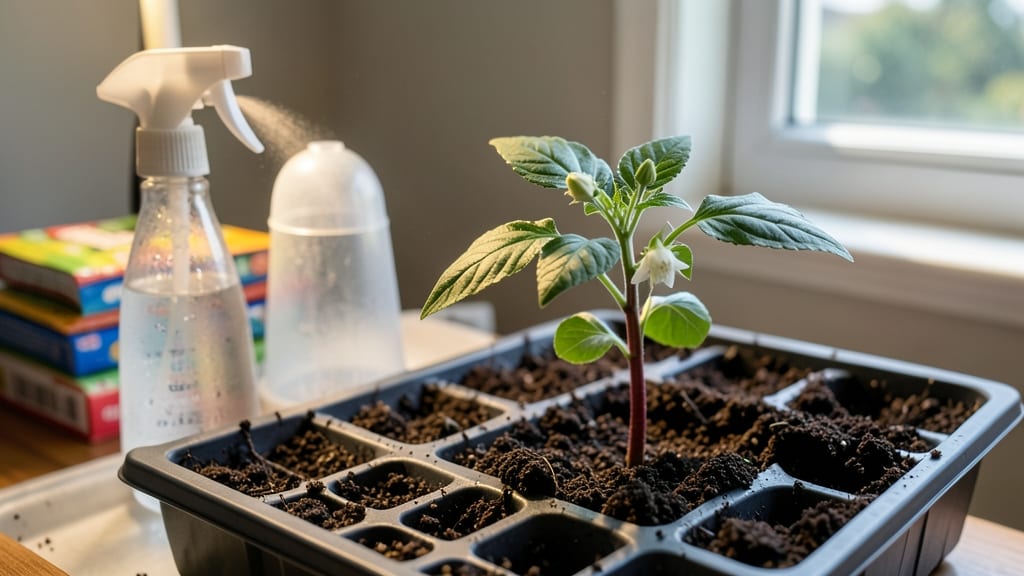
Starting pepper seeds indoors gives you a head start on the season—jumping from tiny seeds to foot-tall plants ready for transplanting by summer. 🌱 I’ve turned my basement into a pepper nursery, and the difference in harvest size is night-and-day compared to store-bought seedlings.
The secret? Timing, warmth, and patience—no fancy equipment required.
You’ll need just five simple supplies: seed-starting mix, small containers (like egg cartons or seed trays), a heat mat or warm spot, a grow light, and patience.
Most peppers need 8-10 weeks indoors before they’re ready to move outside, so start them 10-12 weeks before your last frost date. The trick is keeping soil warm (70-85°F) and moist but not soggy—pepper seeds hate cold, damp conditions.
Once sprouted, your seedlings will grow fast—expect true leaves in about 10 days and stocky stems in 4-6 weeks. They’ll need 12-16 hours of light daily (a cheap LED grow light works perfectly) and fertilizer every 2-3 weeks once they sprout.
The biggest mistake? Overwatering or letting them get leggy from poor light. Prune the leggy stems early to encourage bushier growth.
By the time you transplant, your peppers will be thriving, not struggling to catch up. The payoff? Bigger yields, more disease resistance, and varieties you’d never find at garden centers. Ready to grow your own? Let’s get those seeds started!
📚 In This Guide
- What you need
- Instructions
- Tips and common mistakes
- Wrapping up and next steps
What you need
- ● Pepper seeds: Choose your favorite variety—hot, sweet, or heirloom! Aim for 10-20 seeds if you’re testing multiple types or 5-10 seeds for a single variety.
- ● Seed-starting trays or pots: Use biodegradable pots (2-3 inches deep) or seed trays with cell inserts (for better drainage). You’ll need enough to hold each seed individually.
- ● Seed-starting mix: A lightweight, sterile mix (like a 50/50 blend of peat moss and perlite or a pre-mixed seed-starting soil). Avoid garden soil—it’s too dense and may harbor diseases.
- ● Grow lights or a sunny windowsill: Pepper seeds need 12-16 hours of light daily. A full-spectrum LED grow light (12-18 inches above seedlings) is ideal, but a south-facing window can work in a pinch.
- ○ Heat mat (optional but helpful): Pepper seeds germinate best in warm soil (75-85°F). A seedling heat mat ensures consistent warmth if your home runs cooler.
- ● Spray bottle with water: For gentle hydration—avoid overwatering!
- ● Plastic wrap or humidity dome: Keeps moisture in while seeds germinate (remove once sprouts appear).
- ● Plant labels: Small flags or popsicle sticks to track varieties.
- ● Fertilizer (low-dose): A balanced, water-soluble fertilizer (5-5-5 or 10-10-10) diluted to half-strength for seedlings after 2-3 weeks.
- ● Fan: A small oscillating fan on low strengthens seedlings by simulating wind.
- ● Thermometer/hygrometer: Monitors soil and air temperature/humidity for optimal conditions.
- ● Tweezers: For delicate seed placement in small pots.
Step-by-step instructions for starting pepper seeds indoors
Here's how to get a head start on your peppers—strong, healthy plants ready for transplanting.
🌱 Step 1: Prepare Containers and Seed Starting Mix
Use 4-inch deep containers or cells for each seed—peppers hate being crowded, and you'll need 4 plants total. I recommend biodegradable pots so you can transplant without disturbing roots. Fill them with a sterile seed-starting mix (not garden soil—it's too dense and can harbor diseases). Moisten the mix until it holds together when squeezed but doesn't drip water.
Press the soil down lightly so the surface is firm but not packed. You want air pockets gone but the mix loose enough for tender roots to push through. Tap the container on the table once or twice to settle everything evenly. Label each pot with the pepper variety and date—after a few weeks, identical green sprouts will all start to look the same.
🌱 Step 2: Plant Seeds at the Right Depth and Cover
Plant 1-2 seeds per cell at a depth of about ¼ inch—roughly the diameter of the seed itself. Sowing too deep delays germination because the seedling exhausts its energy before reaching light. Cover lightly with a sprinkle of additional mix, just enough to hide the seeds but not bury them deeply.
Mist the surface gently with a spray bottle until evenly moist. A heavy watering can will dislodge the seeds and bury them too deep. I like to tap the seed packet gently to release one seed at a time—planting too many in one hole leads to weak, crowded seedlings. If you planted two seeds, thin to the strongest one once they sprout.
💧 Step 3: Provide Warmth and Moisture for Germination
Cover the trays with a clear humidity dome or plastic wrap to retain warmth and moisture. Peppers germinate fastest at 75-85°F, so a seedling heat mat keeps the soil 10°F warmer than ambient and dramatically improves germination speed. Expect sprouts in 10-14 days, though some varieties can take up to 21 days—don't give up if they don't appear immediately.
Check daily but resist the urge to water. The dome traps enough moisture that the soil stays evenly damp without intervention. Once 50% of seeds have sprouted, remove the dome immediately—trapped humidity around new seedlings invites damping-off disease, which will collapse stems overnight. Keep the soil surface slightly damp but not glistening.
☀️ Step 4: Move to Bright Light Immediately
The instant seedlings break through the soil, they need 14-16 hours of light daily. A south-facing window rarely provides enough intensity, so I use a full-spectrum LED grow light positioned 2-4 inches above the plants. Raise it as they grow to maintain that gap. Without sufficient light, seedlings stretch desperately upward (called "leggy") and never recover proper strength.
You'll see leggy growth as thin, pale stems with leaves spaced far apart. Strong seedlings have thick stems, deep green color, and compact spacing between leaves. If your seedlings look leggy, move the light closer or increase light exposure. Rotate the pots a quarter turn daily so plants grow upright instead of leaning toward the light.
⏰ Step 5: Harden Off Before Transplanting Outdoors
Two weeks before your last frost date, start hardening off the seedlings by placing them outside in a sheltered, shaded spot for 1-2 hours the first day. Gradually increase outdoor time by 1 hour daily over 10-14 days, slowly introducing more sun and wind. This prepares them for the garden and prevents transplant shock.
Skipping this step burns leaves, breaks stems, and shocks plants severely. Once seedlings tolerate a full day outside without wilting, they're ready for the garden. Transplant on an overcast afternoon to reduce transplant shock and water deeply at the base. Peppers thrive in warm soil, so wait until the soil temperature reaches at least 60°F before planting outdoors.
Tips & tricks for perfect pepper seed starting
Here's what nobody tells you about getting those first sprouts right—these tricks save time and frustration.
Container Size Matters: Those 4-inch deep containers aren't just arbitrary—they give pepper roots room to establish before transplanting. If you use shallower pots, roots will circle and get tangled when you try to move them outdoors. I've seen gardeners use 6-packs for peppers, and while it works, you'll need to transplant twice, which stresses the plants. For the 4 plants you'll need, use individual cells or small pots to avoid this extra step entirely.
Germination Temperature Secret: The 75-85°F range isn't just ideal—it's critical. If your home stays cooler, place your seed trays on a seedling heat mat (they're cheap and plug into outlets) to maintain that warmth. I once waited 28 days for germination because I skipped this step in a cool basement—don't make my mistake! The 10°F warmer soil temperature from the heat mat makes all the difference in speeding up those first sprouts.
Light Exposure Hack: Those 14-16 hours of light aren't negotiable for peppers. If you're using a grow light, position it just 2-4 inches above the seedlings at first, then raise it as they grow. Here's the thing: peppers grow toward light like nothing else. I've seen them lean so dramatically they nearly fall over. Rotate your trays a quarter turn daily so they grow straight up instead of reaching for the light source. This creates sturdy plants ready for transplanting.
Harden Off Gradually: The 1-2 hour outdoor exposure on day one might seem short, but it's intentional. Peppers are tropical plants that get shocked easily. I learned this the hard way when I rushed seedlings outside for 6 hours on day one—they wilted completely. Start small and increase by just 1 hour daily. By day 14, they'll be ready for full sun exposure. This slow adaptation prevents transplant shock that can kill your plants before they even get to the garden.
Pro Tips for Start Pepper Seeds Indoors
- Here's what nobody tells you about getting those first sprouts right—these tricks save time and frustration.
- Container Size Matters: Those 4-inch deep containers aren't just arbitrary—they give pepper roots room to establish before transplanting.
- Germination Temperature Secret: The 75-85°F range isn't just ideal—it's critical.
Frequently asked questions
Got questions about starting pepper seeds indoors? You’re not alone! Here are answers to the most common concerns to help you grow confidently.
When is the best time to start pepper seeds indoors?
Start seeds 8–12 weeks before your last frost date. For most regions, this means February or early March. Peppers need warmth to germinate—waiting too long risks stunted growth before transplanting. Check your local frost dates for precision!
What if my seeds don’t germinate?
Patience is key! Pepper seeds need consistent warmth (75–85°F) to sprout. If they’re slow, try:
- A seedling heat mat
- Covering the tray with plastic wrap
- Keeping soil moist (not soggy)
How much light do pepper seedlings need?
Seedlings crave 12–16 hours of light daily. Use a grow light if natural light is weak. Place lights 2–4 inches above seedlings and adjust as they grow. Leggy seedlings? They’re begging for more light—act fast!
Can I use regular potting soil for pepper seeds?
Nope! Pepper seeds need light, sterile seed-starting mix to prevent damping-off disease. Mix in perlite or vermiculite (20%) for drainage. Avoid garden soil—it’s too dense and may harbor pathogens.
What if I miss the indoor-starting window?
Don’t panic! You can still try:
- Direct sow outdoors (after soil warms to 60°F+)
- Buy transplants from a nursery (choose compact varieties)
- Extend the season with row covers or a greenhouse
Wrapping up and next steps
Starting pepper seeds indoors is a rewarding way to jumpstart your growing season and ensure a bountiful harvest!
With the right tools, patience, and a little care, you’ll be well on your way to nurturing healthy seedlings ready for transplanting. Now that you’ve got the know-how, it’s time to roll up your sleeves and give it a try—your future garden will thank you! 🌱✨
Ready to take the next step? Grab those seeds, set up your seed-starting station, and watch your green thumb grow! For extra confidence, check out our seedling care guide to keep your peppers thriving from day one.