Propagation
Growing basil from seed indoors lets you enjoy fresh leaves year-round without the grocery store price tag. ✨ My first attempt was a disaster—overwatered seedlings and leggy stems—but now I’ve perfected a system that produces vibrant green plants in just 3 weeks.
The key is matching light, heat, and moisture to what basil craves in its Mediterranean homeland.
You’ll need three simple supplies: a shallow tray or small pots, seed-starting mix, and a warm spot near a sunny window. Basil seeds are tiny, so sprinkle them lightly on damp soil and press them in—no need to bury them deep.
Keep the soil consistently moist (not soggy) and cover the tray with plastic wrap to trap humidity until sprouts appear in 5-10 days.
By week 3, you’ll be pinching back the top leaves to encourage bushier growth, and the fragrant aroma will fill your kitchen. The first harvest comes in just 4-6 weeks, and with proper care, your plants will keep producing for months.
No more wilted store-bought herbs—just fresh basil at your fingertips.
This method works for any sunny windowsill or grow light setup, even in small apartments. The only real challenge is keeping the stems sturdy as they grow—here’s how to avoid the common pitfalls that turn basil into a floppy mess.
📚 In This Guide
- What you need
- Instructions
- Tips and common mistakes
- Wrapping up and next steps
What you need
- ● Basil seeds: 5–10 seeds (non-GMO, organic preferred for best flavor).
- ● Seed-starting mix: 1–2 cups of sterile, well-draining potting soil (avoid garden soil—it’s too dense!).
- ● Containers: 1–2 small pots (4–6 inches wide) or
- ● 1 long seed tray with cells (for multiple plants).
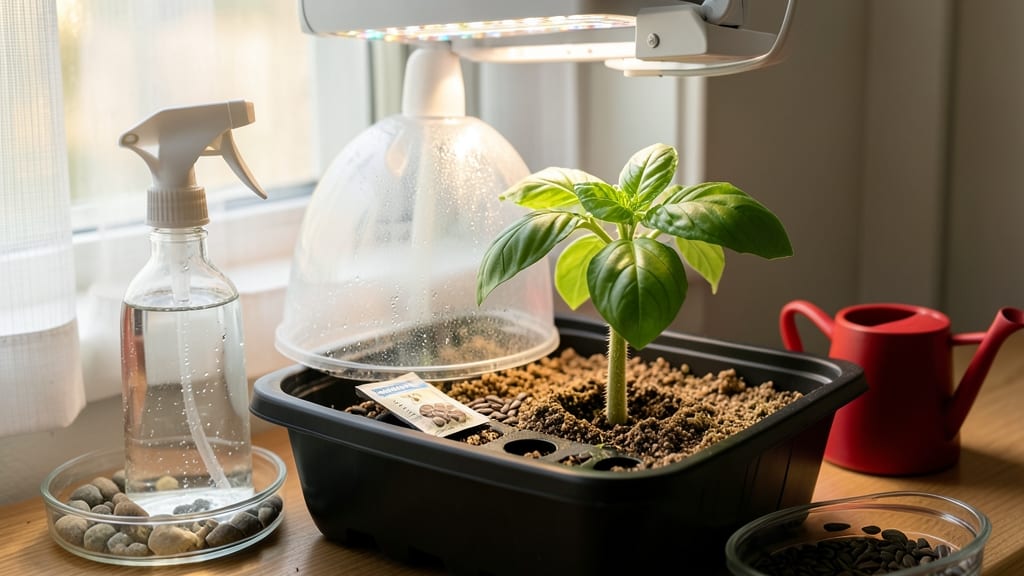
- ● Watering can or spray bottle: With a fine mist setting to avoid disturbing seeds.
- ○ Clear plastic dome or plastic wrap: To create a mini greenhouse (optional but helpful for humidity).
- ● Grow lights or sunny windowsill: A south-facing window (6+ hours of sunlight daily) or a LED grow light (12–16 hours/day).
- ● Fertilizer: Balanced liquid fertilizer (5-5-5 or 10-10-10, diluted to half-strength).
- ● Seedling heat mat (keeps soil warm for faster germination, ~70–75°F).
- ● Humidity tray (a shallow tray with pebbles + water to boost moisture).
- ● Tweezers (for delicate seed handling).
- ● Pruning shears (for harvesting and trimming mature plants).
- ● pH testing kit (ideal soil pH: 6.0–7.0 for basil).
Step-by-step instructions for growing basil from seed indoors
Here's how to turn tiny seeds into thriving basil plants in just three weeks—no greenhouse needed.
🌱 Step 1: Prepare Seed Starting Containers and Soil
Use 4-inch diameter pots or a seed tray with cells at least 2 inches deep—basil roots need room to expand quickly. Fill each container with a sterile seed-starting mix (never garden soil) and moisten it until damp but not soggy. Press the mix down lightly with your fingers so it's firm enough to support seedlings but still loose enough for roots to penetrate.
I like to make small indentations with my finger about ¼ inch deep—this prevents seeds from floating away when you water. The key here is creating a consistent environment where moisture and warmth stay balanced. Basil seeds are tiny, so I use a toothpick to place just 1-2 seeds per cell—overcrowding leads to weak, leggy plants later.
💧 Step 2: Germinate Under Warmth and Humidity
Cover the pots with a clear plastic dome or plastic wrap to trap warmth and moisture—basil seeds germinate best at 70-75°F. Place them in a warm spot, like on top of your refrigerator or near a sunny window (but not in direct light yet). Keep the soil consistently moist by misting lightly every 1-2 days—you'll know it's right when the surface feels damp but doesn't pool.
Germination takes 7-14 days, but don't be tempted to water heavily once seeds sprout. The dome creates enough humidity that seedlings can't dry out. Once you see tiny green sprouts breaking through the soil, remove the dome immediately—trapped moisture now invites damping-off, a fungal disease that collapses stems overnight.
☀️ Step 3: Provide Bright, Indirect Light Immediately
The moment those first true leaves appear (the second set after the initial cotyledons), move your basil to the brightest window you have—south-facing is ideal. Basil needs 6-8 hours of direct light daily, but avoid harsh midday sun which can scorch tender leaves. If your window isn't sunny enough, supplement with a grow light placed 4-6 inches above the plants for 12-14 hours daily.
You'll know your light is perfect when seedlings grow compact and dark green rather than stretching tall and pale. Rotate pots a quarter turn daily so plants grow straight toward the light. Leggy seedlings mean your light is too far away—move it closer immediately. Basil grows fast once it gets proper light, so expect 3-4 true leaves within 2-3 weeks after germination.
🪴 Step 4: Thin and Transplant for Stronger Growth
When seedlings reach 2 inches tall with 3-4 true leaves, thin to the strongest plant per cell by snipping the weaker one at the soil line with clean scissors. This prevents competition for nutrients. If you started multiple seeds per cell, transplant the extras into separate 4-inch pots with fresh seed-starting mix, burying them to the same depth they were growing before.
After transplanting, water gently at the base to avoid disturbing roots. Basil hates root disturbance, so handle seedlings by their leaves rather than stems. Place them back in bright light and watch for new growth within 3-5 days. This is when basil really starts to show its potential—you'll see the classic aromatic leaves developing.
Tips & tricks for sunny windowsill basil success
Here's what nobody tells you about growing basil from seed indoors—these tricks will help you avoid common pitfalls and get the best results.
Soil Preparation Secret: Before planting your basil seeds, sterilize your containers by rinsing them with a 1:9 bleach-to-water solution, then thoroughly rinsing with clean water. This prevents damping-off disease from the start. I also like to sprinkle a thin layer of perlite or vermiculite on top of the seed-starting mix—this improves drainage and prevents the tiny seeds from floating away when you water. The goal is to mimic the airy, well-draining conditions basil loves in Mediterranean climates.
Germination Temperature Tip: If your home stays below 70°F, create a warm spot using a seedling heat mat or place pots on top of your refrigerator. Basil seeds need consistent warmth to germinate reliably. Pro tip: I place a small thermometer near the pots to monitor temperature—anything below 65°F will delay germination significantly. Once you see those first sprouts, remove the dome immediately to prevent fungal growth, which thrives in the humid conditions created by the plastic cover.
Lighting Strategy: For that critical 6-8 hours of direct light, position your basil near an east-facing window first—morning sun is gentler than harsh afternoon rays. If you're using a grow light, LED bulbs with a full spectrum (including red and blue wavelengths) work best. I've found that placing the light just 3-4 inches above the seedlings actually works better than the 4-6 inch recommendation—closer light prevents leggy growth while still providing enough intensity. Rotate your pots daily to prevent uneven growth toward the light source.
Transplanting Technique: When thinning seedlings, use clean, sharp scissors to snip at soil level rather than pulling stems. This minimizes root disturbance and prevents disease entry points. For transplanted seedlings, water gently at the base rather than overhead—this prevents soil from splashing onto leaves, which can cause fungal infections. After transplanting, place pots in bright, indirect light for 24 hours before returning them to full sun exposure to help them recover from the stress.
Pro Tips for Grow Basil From Seed Indoors
- Here's what nobody tells you about growing basil from seed indoors—these tricks will help you avoid common pitfalls and get the best results.
- Soil Preparation Secret: Before planting your basil seeds, sterilize your containers by rinsing them with a 1:9 bleach-to-water solution, then thoroughly rinsing with clean water.
- Germination Temperature Tip: If your home stays below 70°F, create a warm spot using a seedling heat mat or place pots on top of your refrigerator.
Frequently asked questions
Growing basil from seed indoors is rewarding, but beginners often have questions along the way. Here are answers to some of the most common concerns to help you succeed!
How long does it take for basil seeds to germinate?
Basil seeds typically sprout in 7–14 days under ideal conditions. Keep the soil warm (around 70–75°F) and moist, and place the tray in bright, indirect light. If you don’t see sprouts within two weeks, gently press the seeds into the soil again—they might need better contact.
Can I grow basil indoors without a grow light?
Yes, but it requires a south-facing window with at least 6–8 hours of direct sunlight daily. If your windowsill is dim, supplement with a LED grow light 12–16 hours a day. Without enough light, basil will grow leggy and weak, reducing flavor and yield.
Why are my basil seedlings wilting or turning yellow?
Wilting or yellowing leaves usually signal overwatering or poor drainage. Let the top inch of soil dry out between waterings, and ensure pots have drainage holes. Yellow leaves can also mean nutrient deficiency—use a balanced liquid fertilizer (like 10-10-10) every 2–3 weeks once seedlings are established.
How do I prevent pests like aphids or spider mites?
Indoor basil is less prone to pests, but inspect leaves regularly. If you spot aphids or mites, spray with a mix of 1 tsp neem oil + 1 quart water or wipe leaves with soapy water. Keep humidity moderate (40–60%) and avoid overcrowding plants to deter infestations.
Can I grow basil from store-bought seeds or do I need special ones?
Store-bought basil seeds (like Genovese or Sweet Basil) work perfectly! Just ensure they’re fresh (check the seed packet date). Avoid seeds older than 1–2 years, as germination rates drop. Organic seeds are optional but may appeal to eco-conscious gardeners.
Wrapping up and next steps
Growing basil from seed indoors is a rewarding journey that brings fresh, fragrant herbs right to your kitchen—no green thumb required! 🌱 With the right setup, patience, and care, you’ll enjoy a thriving basil plant in just three weeks.
Whether you’re a beginner or a seasoned gardener, this method proves that indoor gardening is totally doable—and the taste of homegrown basil in your cooking will make it all worth it.
Now that you’re armed with the know-how, take the first step today! Start with your seeds, and soon you’ll be harvesting lush, flavorful leaves for pesto, salads, or teas. Happy growing—your future meals will thank you! 🍃