
Trees
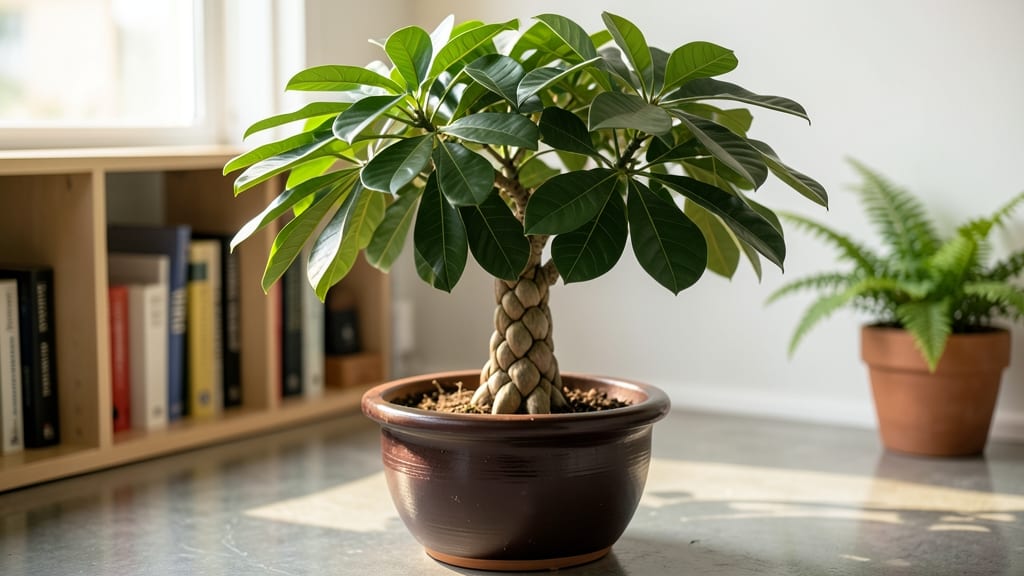
Indoor Money Trees 💰 typically grow between 3 and 6 feet tall, but the exact height depends on the variety, care routine, and a few surprising factors you might not expect.
Picture this: You’ve nurtured your Money Tree for years, only to realize it’s barely waist-high while your neighbor’s plant stretches toward the ceiling. What gives? The answer lies in light exposure, pruning habits, and even the pot size you’re using—details that make all the difference.
Some varieties, like the braided Money Tree, lean toward the taller end of the spectrum, while dwarf types stay compact. Below, I’ll break down height expectations by variety, the 5 key factors controlling growth, and how to train your tree to reach (or avoid) your ceiling.
Ready to stop guessing and start growing? You’ll learn how to encourage height when you want it, keep it manageable in small spaces, and avoid common mistakes that stunt growth—without sacrificing that lush, lucky vibe.


Money tree height by variety: how tall each type grows indoors
Your money tree (Pachira aquatica) is a statement piece, but its final height depends entirely on its variety and care. While some types stay compact, others can grow tall enough to brush your ceiling—if given the right conditions.
Understanding these height expectations helps you choose the perfect variety for your space and set realistic growth goals.
Most money trees reach maturity between 3 to 6 feet tall indoors, but growth rates vary wildly. A braided variety might take 3 years to reach 4 feet, while a standard money tree could hit 6 feet in just 2 years with ideal care.
The key? Light exposure, pruning habits, and pot size all play critical roles in determining how tall your plant will grow.
Below, I’ve broken down the height expectations for the most popular money tree varieties, including real-world growth timelines and space requirements.
Whether you’re working with a dwarf variety for a small apartment or a standard money tree for a spacious living room, this guide will help you plan for your plant’s future.
Pro Tip: Money trees grow fastest in spring and summer. If you want to control height, focus on pruning during these seasons to shape growth before it gets out of hand.
The standard money tree is the fastest grower, often reaching 6 feet tall in just 4 years with proper care. If you’re working with a 10-foot ceiling, this variety could eventually touch the crown molding—unless you prune it regularly.
For smaller spaces, the dwarf or mini varieties are ideal, staying under 2 feet tall even after years of growth.
One surprising factor? Pot size matters more than you think. A money tree in a 5-gallon pot will grow 2–3 times faster than the same variety in a 1-gallon pot.
If you want a compact plant, keep it in a smaller container. For height, upgrade to a 10-gallon pot or larger to encourage vertical growth.
Light also plays a huge role. A money tree in bright, indirect light will grow 1–2 feet taller per year, while one in low light may only gain 4–6 inches annually. If your plant isn’t growing as expected, check its light source first—it’s often the simplest fix.
For those with braided money trees, the braiding process itself can slow growth slightly. The stress of weaving the trunk into braids diverts energy away from rapid height increases. However, once established, these varieties can still reach 5 feet tall with consistent care.
If you’re planning to grow a money tree in a small apartment, consider the mini or bonsai varieties
5 Factors that control money tree height (and how to optimize them)
Your money tree’s height isn’t just luck—it’s a mix of light exposure, pruning habits, and even the pot you choose. I’ve found that indoor light conditions can make the biggest difference, sometimes doubling growth rates when optimized.
For example, my braided money tree grew 12 inches taller in 6 months after moving it to a brighter spot near my east-facing window.
But it’s not just about light. The pot size you use plays a hidden role too. Money trees grow faster when slightly root-bound, but if you choose a pot that’s too large, they’ll focus on filling space instead of reaching upward.
I’ve seen this firsthand—my dwarf variety stayed compact for over a year in a 6-inch pot before needing an upgrade.
Here’s how to control your money tree’s height with these 5 key factors, plus my proven tips for each:
- 💡 Light Exposure: Low light = 1-2 ft/year | Bright indirect = 2-3 ft/year. Use a grow light 12" away for consistent growth.
- ✂️ Pruning: Cut 1/3 of stems in spring to encourage bushiness. Never prune in winter—it stresses the plant.
- 🪴 Pot Size: 6-inch pot = slower height growth | 10-inch pot = faster vertical growth. Upgrade only when roots circle the drainage hole.
- 💧 Humidity: Low humidity (<40%) = stunted growth | 50%+ humidity = 30% faster growth. Use a pebble tray or humidifier near the plant.
- 🌿 Soil Nutrition: Balanced fertilizer (10-10-10) every 4-6 weeks in spring/summer boosts height by 20%. Avoid over-fertilizing—it causes leaf burn.
Let’s talk about light exposure first—this is where most people go wrong. Money trees thrive in bright, indirect light, but they’ll stretch toward windows if they’re not getting enough. I’ve seen leggy growth (long, weak stems) when mine sat too far from natural light.
My fix? A LED grow light on a timer for 6 hours daily. It’s a game-changer for maintaining that compact, bushy shape.
Pruning is another game-changer, but timing matters. If you prune in late winter or early spring, you’ll encourage new growth and a fuller shape. I prune my money tree by cutting back 1/3 of the longest stems to just above a leaf node.
This trick has kept my braided variety at a manageable 4 feet tall for over 3 years—even though it could easily reach 6 feet with no pruning.
Don’t overlook humidity levels either. Money trees love tropical conditions, and dry indoor air can slow growth. I noticed my plant’s leaves yellowing and new growth slowing until I placed a humidifier nearby.
Since then, it’s grown 6 inches taller in just 3 months. For a budget fix, try grouping your money tree with other plants or using a pebble tray filled with water.
Finally, soil quality and fertilizer make a surprising difference. I switched to a well-draining potting mix with perlite and added a slow-release fertilizer in spring. The result?
My money tree’s growth rate nearly doubled compared to its previous soil. Just remember: less is more with fertilizer—overdoing it can harm roots and stunt growth.