
How To
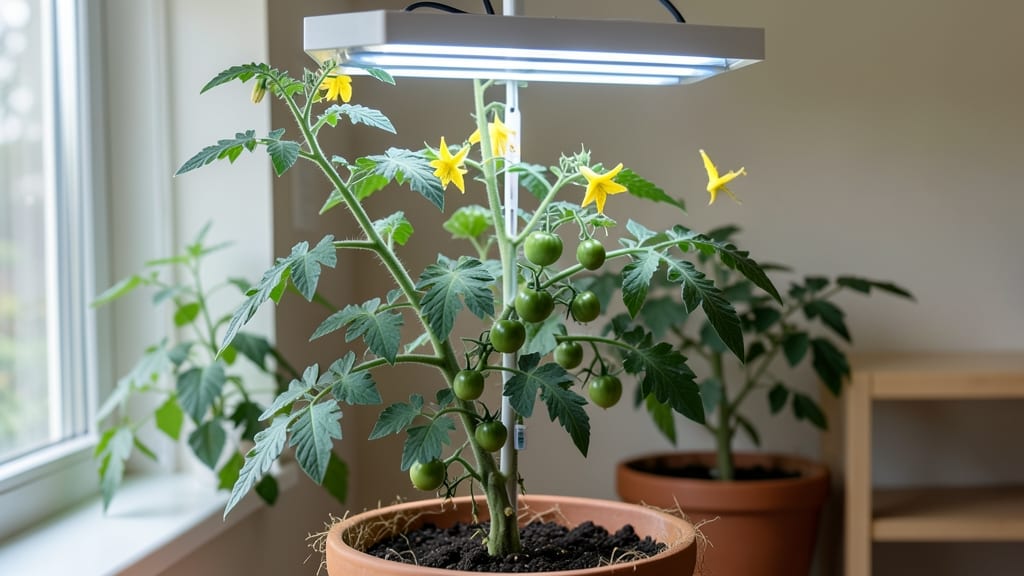
Tomato plants need 12–16 hours of bright light indoors 🍅 to thrive, and a south-facing window can deliver it—if you position them right.
Picture this: you’ve nurtured your seedlings for weeks, only to watch them stretch toward the window like starving puppies, leaves pale and leggy. That’s the classic sign of light starvation, and it happens to even the most eager indoor gardeners.
Light isn’t just about hours—it’s about intensity. A south-facing window can work, but only if your tomatoes get direct sunlight for at least 6 hours daily. Without it, you’ll end up with small, flavorless fruit (or worse, none at all).
Below, I’ll show you how to turn that window into a tomato powerhouse, including when to add grow lights and how to spot the warning signs before it’s too late.


Minimum light requirements for indoor tomato plants: hours and intensity breakdown
Indoor tomato plants demand 12–16 hours of bright light daily—far more than most houseplants. Without this, your plants will stretch toward light, produce fewer fruits, and develop weak stems. The key isn't just hours, but light intensity, measured in lumens and spectrum quality.
Natural sunlight through a south-facing window provides the best spectrum, while artificial grow lights must replicate this balance.
Tomatoes need 6–8 hours of direct sunlight outdoors, but indoors, the light is less intense. This means you'll need to compensate with longer exposure times. A south-facing window offers the most consistent light, especially in winter when sunlight is weaker.
Without proper light, your tomatoes will grow tall and leggy with small leaves—a classic sign of light deprivation.
Here’s how to measure and meet your tomato’s light needs:
A south-facing window is ideal because it captures the most sunlight throughout the day. In winter, when sunlight is weaker, your tomatoes may need supplemental grow lights to maintain the required intensity.
Place your plants within 12 inches of the window to maximize exposure. If using grow lights, position them 6–12 inches above the plant and use a timer for 14–16 hours daily.
Light intensity matters just as much as duration. A south-facing window provides about 5,000 lumens per square meter, while a north-facing window offers only 2,000–3,000 lumens. If your window doesn’t provide enough light, LED grow lights with a full spectrum (400–700 nm) are the best solution.
These lights mimic natural sunlight and can deliver 10,000+ lumens, ensuring your tomatoes thrive.
Watch for signs of light deficiency, such as stretched stems, yellowing leaves, or small, sparse fruits. These are clear indicators that your tomatoes aren’t getting enough light. Adjust their position or add grow lights immediately to prevent further stress.
A south-facing window is your best bet for natural light, but even then, you may need to rotate your plants weekly to ensure even growth.
For determinate varieties (like 'Roma' or 'Celebrity'), 12 hours of light is often sufficient, but indeterminate varieties (like 'Beefsteak' or 'Brandywine') demand 14–16 hours to produce heavy yields.
If you’re growing indeterminate tomatoes indoors, prioritize grow lights or a south-facing window to meet their higher light requirements. Without it, you’ll sacrifice fruit production and plant health.
Measure your light conditions with a light meter (available for ~$20) to ensure your tomatoes receive the right intensity. If your window provides less than 5,000 lumens, supplement with grow lights.
Place the meter at plant height to get accurate readings. This small investment can save you from struggling with underperforming plants all season.
Pro tip: Reflective surfaces, like white walls or aluminum foil, can bounce extra light onto your plants, increasing their exposure by up to 30%. Pair this with a south-facing window or grow lights, and your tomatoes will thrive even in low-light spaces.
Rotate your plants every few days to ensure all sides receive equal light, preventing lopsided growth.
Remember, light is the foundation of indoor tomato success. Without it, even the best soil and fertilizer won’t save your plants. Whether you rely on a south-facing window or grow lights, prioritize 12–16 hours of bright light daily to grow juicy, flavorful tomatoes indoors. 🌱☀️
South-facing window optimization: 5 proven strategies to maximize light for tomatoes
A south-facing window provides the brightest natural light indoors, but even these spots can fall short for light-hungry tomato plants. Without optimization, your plants may grow lanky, produce fewer fruits, or fail to ripen. The key lies in strategic adjustments that boost light exposure and compensate for seasonal changes.
Tomatoes thrive with 12-16 hours of direct light daily, but south-facing windows often deliver only 4-6 hours of peak sunlight. The solution? Combine window positioning, reflective surfaces, and seasonal tracking to stretch your plant's light budget.
Let's explore five actionable strategies to transform your window into a tomato powerhouse.
How Much Light Does a Tomato Plant Need Indoors?
- 🌱 Minimum: 6 hours of direct sun
- 🌿 Ideal: 12-16 hours of bright light
- ☀️ South window: 4-6 hours peak sun (winter)
- ✂️ Grow lights: 14-16 hours supplemental
- 📏 Distance: 6-12 inches from window
Note: Winter light drops to 2-4 hours in northern climates—supplement immediately.
First, rotate your plants weekly to prevent leaning toward the light. Tomatoes grow toward their light source, creating uneven growth and weak stems. Place your pot on a swiveling plant stand or turn it 90 degrees every 3-4 days.
This ensures all sides receive equal light exposure, promoting balanced bush growth and better fruit production.
For winter light deficits, add reflective surfaces like white walls, aluminum foil, or mirrored panels behind your plants. These bounce 20-30% more light onto your tomatoes without extra equipment. Position a full-length mirror at a 45-degree angle behind your plant to maximize reflected sunlight during short winter days.
Consider seasonal light tracking by adjusting your plant's position monthly. In summer, move it 1-2 feet back from the window to prevent leaf scorch from intense afternoon sun.
In winter, bring it within 6 inches of the glass to capture every possible ray. This dynamic approach mimics outdoor growing conditions and prevents light-related stress.
Finally, use companion plants strategically to enhance light penetration. Place low-growing herbs like basil or thyme in front of your tomatoes to create a light-filtering canopy. These plants break up harsh light while preventing heat buildup near the soil.
For taller companions, choose dwarf varieties that won't block your tomatoes' access to the window.
With these five strategies, your south-facing window can provide near-optimal growing conditions for tomatoes year-round. Combine them with proper watering and fertilization, and you'll be harvesting homegrown tomatoes even in the darkest winter months. 🌱