Size
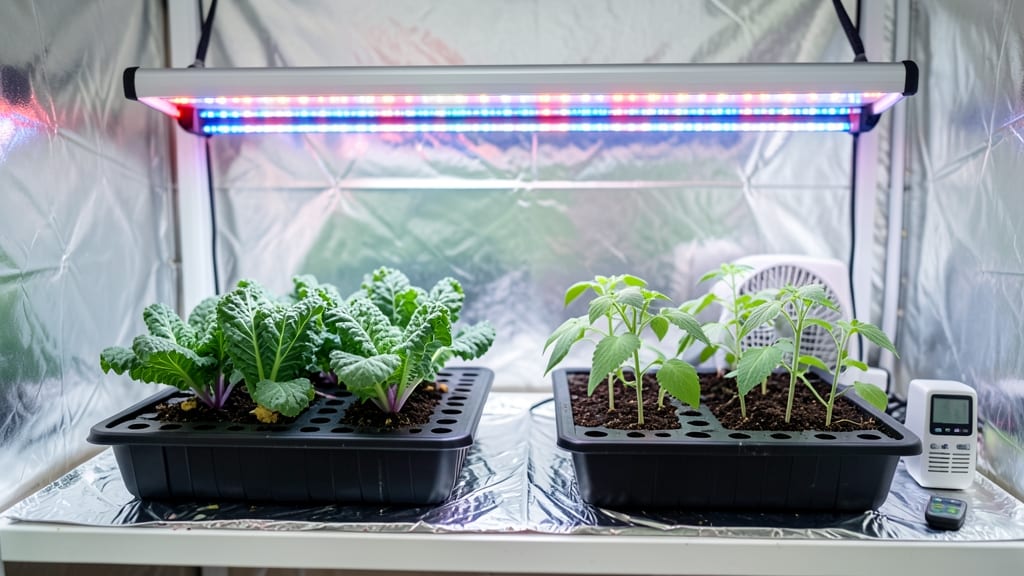
Growing vegetables indoors with the right grow lights for an indoor vegetable garden means fast, healthy harvests even in winter. 🌱 I learned the hard way that cheap lights leave plants leggy and pale—until I upgraded to a proper setup that mimics summer sun.
The right spectrum and intensity make all the difference between sad seedlings and thriving plants.
You’ll need a 12-16 inch light fixture (depending on plant height), 12-16 hours of light daily, and a spectrum covering blue (6200K) for growth and red (3000K) for fruiting.
LED panels are energy-efficient and last years, but avoid cheap bulbs—they can’t replicate sunlight’s full range. Position lights 6-12 inches above plants and adjust as they grow.
With the right setup, you’ll see bold green leaves in 2 weeks and fruit production in 6-8 weeks—faster than outdoor starts. The key is consistency: keep lights on a timer, rotate plants weekly, and watch them stretch toward the light like sun-worshippers. No more weak stems or stunted growth.
This works for herbs, greens, and even tomatoes in small spaces. Just avoid common mistakes like overwatering (LEDs dry soil faster) and forgetting to raise lights as plants mature. Your indoor garden will outperform neighbors’ outdoor plots—honestly, it’s shocking how much difference the right light makes.
📚 In This Guide
- What you need
- Instructions
- Tips and common mistakes
- Wrapping up and next steps
What you need
- ● Full-spectrum LED grow lights: 2–4 lights (depending on garden size; e.g., 30W–100W per 2–3 sq ft of space).
- ● Look for 12-hour daylight spectrum (e.g., 660nm red + 450nm blue + white light for balance).
- ● Grow light fixture or adjustable mounting system: Height-adjustable (12–24" above plants).
- ● Reflective surfaces (aluminum or Mylar) to maximize light efficiency.
- ● Growing containers: 5–10 gallon pots (with drainage holes) per plant.
- ○ Self-watering systems (optional but recommended for consistency).
- ● High-quality potting mix: Lightweight, well-draining blend (e.g., 60% peat moss, 20% perlite, 20% compost).
- ● Timer for lights: 12–16 hours of light per day (adjustable for plant type).
- ● Seeds or seedlings: Fast-growing veggies (e.g., lettuce, herbs, microgreens, cherry tomatoes).
- ● Basic tools: Pruners, spray bottle (for humidity), and a small hand trowel.
- ● CO2 supplement: Small generator or liquid CO2 for leafy greens.
- ● Thermometer/hygrometer: Monitor temperature (65–75°F) and humidity (40–70%).
- ● Reflective walls or Mylar sheets: Boost light distribution in corners.
- ● Smart grow lights: Wi-Fi-enabled for remote control (e.g., Philips Hue or Mars Hydro).
- ● Nutrient solutions: Hydroponic or organic fertilizers (e.g., fish emulsion).
Step-by-Step guide to setting up full-spectrum LED grow lights for indoor vegetables
Here's how I set up my LED grow lights for fast, healthy vegetable growth—no guesswork, just results.
💡 Step 1: Choose the Right Full-Spectrum LED Grow Light
Look for an LED grow light with a full-spectrum design (covering 400-700nm wavelengths) and a minimum of 3000-4000 kelvin color temperature. I recommend a suspension-style light with adjustable height for flexibility. For a 4-plant setup, a 24-36 inch wide light bar provides even coverage without gaps.
Check the photosynthetic photon flux (PPF) rating—100-200 µmol/s/m² is ideal for leafy greens, while 200-300 µmol/s/m² works better for fruiting plants like tomatoes. Avoid cheap lights with low PPF; they’ll leave your plants weak and stretched.
☀️ Step 2: Position Lights at the Correct Height and Angle
Start with the light 12-18 inches above your plants, then adjust based on growth. Most full-spectrum LEDs emit light downward, so angle them 45 degrees if covering multiple sides of a grow area. I use a simple hook-and-chain system to raise or lower the light as plants grow.
Watch for etiolation—when stems stretch and leaves grow pale. If you see this, lower the light by 2 inches. Strong, healthy plants will have thick stems and dark green leaves with no gaps between nodes. Avoid touching the light to plants—2-3 inches of clearance prevents heat stress.
🌱 Step 3: Set the Light Schedule for Optimal Growth
Vegetables need 14-16 hours of light daily for fast, healthy growth. Use a smart plug or timer to automate this—consistency is key. I set mine to 6 AM to 8 PM (14 hours) for leafy greens and 16 hours for fruiting plants like peppers and tomatoes.
If your light has adjustable spectra, use more blue (400-500nm) in early growth stages to promote compact, bushy plants. Switch to more red (600-700nm) when flowers form to encourage fruit production. Most full-spectrum LEDs auto-adjust, but checking the settings ensures you’re hitting the right balance.
💧 Step 4: Monitor and Adjust for Fast, Healthy Results
Check your plants daily for signs of light stress—yellowing leaves or burn spots mean the light is too close or intense. If this happens, raise the light by 3-4 inches and reduce runtime by 1-2 hours. Weak, leggy growth means it’s too far away—lower it until leaves are bright green and dense.
Rotate your plants quarter-turn weekly to prevent uneven growth toward the light. I also clean the LED panels monthly with a soft cloth—dust buildup blocks light and reduces efficiency. A little maintenance keeps your setup running at peak performance for fast, healthy harvests.
⏰ Step 5: Troubleshoot Common Issues for Long-Term Success
If your plants grow slow or weak, increase light intensity by moving the fixture closer or upgrading to a higher PPF model. Brown tips on leaves usually mean overwatering or low humidity—adjust your watering routine and consider a small humidifier near the grow area.
For flowering plants, if buds drop off, they’re not getting enough red spectrum light. Switch to a red-dominant LED or extend the light cycle to 16+ hours. Keep notes on what works—your plants will tell you exactly what they need if you pay attention to their cues.
Tips & tricks for perfect full-spectrum LED vegetable grow light setup
Here's what I learned after setting up my own system—and how to avoid the mistakes I made.
Light Spectrum Precision: Most full-spectrum LEDs automatically adjust blue-to-red ratios, but if yours doesn't, pay special attention to Step 3's spectrum adjustments. For seedling stages, aim for 70% blue (400-500nm) to prevent leggy growth. Once plants reach the vegetative stage, shift to 60% red (600-700nm) for optimal photosynthesis. I keep a small spectrum analyzer app on my phone to verify settings—it's worth the $5 to avoid wasted growth cycles.
Height Adjustment System: The hook-and-chain method I use in Step 2 works perfectly, but if you're dealing with taller plants, consider adding a second adjustable bracket for dual-height coverage. For example, keep basil and lettuce at 12 inches while raising tomatoes to 18 inches. This prevents over-lighting delicate greens while still providing sufficient intensity for fruiting plants. Just remember to maintain that 2-3 inch clearance rule to avoid heat stress.
Daily Monitoring Shortcut: Instead of checking each plant individually, I developed a simple color-coded system: dark green leaves mean perfect light, light green means too far, and yellow/brown tips mean too close or too intense. Take a quick photo of your plants every few days—you'll spot patterns faster than with visual inspections alone. This visual tracking helps you adjust the 14-16 hour schedule more precisely without overcorrecting.
Equipment Upgrade: While the basic setup works well, investing in a digital PAR meter (around $100) gives you real-time light intensity readings at plant level. This helps verify your 100-300 µmol/s/m² targets without guesswork. I place it at the plant canopy level during the 6 AM to 8 PM window to ensure consistent light delivery. The data pays for itself by preventing light stress and maximizing growth rates.
Pro Tips for Grow Lights For Indoor Vegetable Garden
- Here's what I learned after setting up my own system—and how to avoid the mistakes I made.
- Light Spectrum Precision: Most full-spectrum LEDs automatically adjust blue-to-red ratios, but if yours doesn't, pay ...
- Height Adjustment System: The hook-and-chain method I use in Step 2 works perfectly, but if you're dealing with talle...
Frequently asked questions
Got questions about setting up grow lights for your indoor vegetable garden? You’re not alone! Here are some of the most common concerns—and their answers—to help you grow like a pro.
What’s the best type of grow light for indoor vegetables?
Full-spectrum LED grow lights are the gold standard for indoor veggie gardens. They mimic sunlight across the blue (6000K–6600K) and red (2700K–3000K) spectrums, which are critical for photosynthesis and flowering. Avoid cheap fluorescent or incandescent bulbs—they won’t deliver the same results!
How high should grow lights be above my plants?
Keep lights 12–24 inches above your plants, depending on wattage. Higher wattage (e.g., 1000W+) can stay farther (24"), while lower wattage (e.g., 200W) should be closer (12"). Adjust as plants grow—maintain 18–30 inches for mature foliage to prevent leaf burn.
How many hours of light do indoor veggies need daily?
Most vegetables thrive with 12–16 hours of light per day. Leafy greens (like spinach or kale) do well with 12–14 hours, while fruiting plants (tomatoes, peppers) need 14–16 hours to encourage blooming. Use a timer to automate cycles and keep consistency!
Can I use natural sunlight instead of grow lights?
Natural sunlight is ideal, but it’s inconsistent—especially in small spaces or climates with short days. If you’re supplementing, place grow lights close to a sunny window (but not touching) to avoid overheating. For full control, grow lights are the best bet for year-round harvests!
Why are my plants stretching or turning yellow under grow lights?
This is called etiolation, usually caused by insufficient light intensity or too much distance from the bulb. Check your light’s PPFD (photosynthetic photon flux density)—aim for 300–800 µmol/m²/s. If your setup is weak, upgrade to a higher-wattage LED or move lights closer.
Are there any low-cost alternatives to full-spectrum LEDs?
Yes! If budget is tight, try:
- DIY spectrum combos: Pair a cool white LED bulb (5000K–6500K) for greens with a red LED clip light (660nm) for flowering.
- Reflective materials: Use aluminum foil or Mylar behind cheap bulbs to bounce light upward.
- Secondhand LEDs: Check local hardware stores or online marketplaces for used grow lights at a fraction of the cost.
Wrapping up and next steps
Growing your own veggies indoors with the right grow lights for indoor vegetable gardens isn’t just rewarding—it’s a game-changer! 🌱 With a full-spectrum LED setup, you’ll enjoy faster growth, healthier plants, and year-round harvests, no matter your space size.
Whether you’re a beginner or a seasoned gardener, this setup makes fresh produce accessible and exciting.
Ready to dive in? Start small—pick one or two veggies to test your setup, monitor their progress, and expand as you gain confidence. Soon, you’ll be feasting on homegrown goodness, all thanks to your newfound indoor gardening superpowers! 💪