
Container Gardens
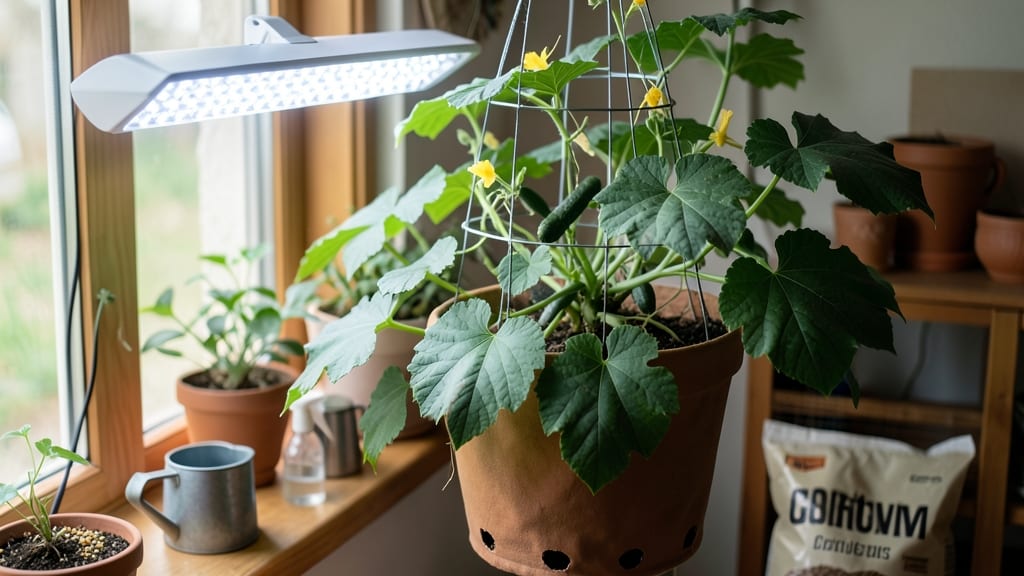
You can grow cucumbers indoors using space-saving varieties that require minimal sunlight (6-8 hours daily) and vertical support systems like trellises. Compact types such as 'Bush Champion' or 'Spacemaster' produce well in containers with nutrient-rich, well-draining soil and consistent watering.
Indoor cucumber gardening thrives when you choose the right compact varieties designed for limited spaces. 🌱 These plants need bright light—either from a south-facing window or supplemental grow lights—to prevent leggy growth and ensure proper fruit development.
I've found that maintaining temperatures between 70-85°F and keeping humidity levels above 50% helps mimic their outdoor growing conditions. The key is creating a microclimate that supports healthy vines and abundant harvests, even in small apartments.
For best results, opt for dwarf or bush varieties that stay under 3 feet tall, making them perfect for countertop or hanging gardens. These types produce smaller fruits but yield consistently when given proper care.
I recommend starting with 2-3 plants in 5-gallon containers to give roots enough room while keeping the setup manageable. Vertical gardening not only saves space but also improves airflow, reducing the risk of fungal issues that plague many indoor gardens.
💡 In This Article
- Best Indoor Cucumber Varieties for Limited Space
- Light and Environmental Needs for Indoor Cucumber Growth
Best indoor cucumber varieties for limited space
Indoor cucumber success starts with selecting the right variety. Compact types like 'Bush Champion' grow only 2-3 feet tall and produce 3-5 inch fruits perfect for snacking. These bush varieties eliminate the need for sprawling vines, making them ideal for 5-gallon containers or hanging pots.
The key difference from traditional vining types is their genetic dwarfing trait, which restricts vine length while maintaining fruit production—similar to how 'Patio' tomato varieties work but with cucumber's rapid growth cycle.
For even smaller spaces, consider 'Spacemaster' or 'Diva' varieties that produce 10-12 inch fruits while staying under 2 feet tall. These types have been bred specifically for container growing, with shorter internodes (the distance between leaves) that create a more compact plant structure.
The trade-off is slightly smaller fruits, but the space savings makes them perfect for windowsill gardens. 🌱 What most people don't realize is that these compact varieties often have thicker stems and leaves that help them better utilize limited light conditions.
Container size matters more than you might think. Roots need room to spread—5-gallon containers work well for single plants, but larger 7-10 gallon pots give roots more oxygen and water retention.
I've found that using fabric grow bags (instead of plastic) improves drainage and prevents root circling, which is common when roots hit container walls. The soil mix should be 60% potting soil, 30% perlite, and 10% compost to ensure proper aeration and moisture balance.
Vertical growth techniques maximize your space. Install a 3-foot tall trellis or cage in your container to guide vines upward. This not only saves space but also improves airflow around the plant, reducing humidity levels near the foliage—critical for preventing powdery mildew.
The vines will naturally climb the support, and you'll get fruits within 50-60 days of planting, compared to 60-75 days for outdoor varieties. This faster maturation is due to their compact growth habit that focuses energy on fruit production rather than vine expansion.
Yield potential surprises many beginners. While outdoor cucumbers can produce 10-20 pounds per plant, indoor compact varieties typically yield 3-8 pounds per plant—but with higher quality. The fruits develop more slowly in controlled environments, allowing them to reach peak sweetness and crispness.
I've harvested 12-15 cucumbers from a single 'Bush Champion' plant in a 7-gallon container over a 6-week period, proving that space doesn't have to limit your harvest.
One advanced technique worth mentioning is pruning. For bush varieties, remove the first few leaves at the base to encourage stronger stem development. For vining types in containers, pinch off the main vine tip after 4-5 leaves to promote lateral branching.
This creates a bushier plant that produces more fruit clusters. The science behind this is simple: by reducing apical dominance (the plant's natural tendency to grow upward), you redirect energy to side shoots that bear fruit.