
Container Gardens
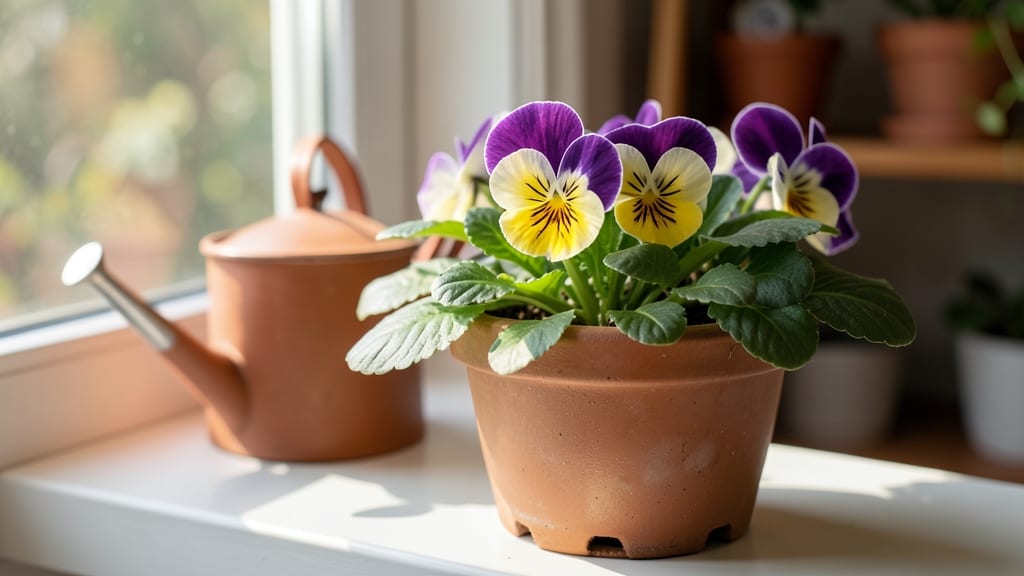
Pansies can grow indoors with the right conditions: bright, indirect light for 6+ hours daily, cool temperatures (55–70°F), and well-draining soil in a pot with drainage holes. Avoid direct sun or drafts to prevent wilting or leggy growth.
Indoor pansy care starts with understanding their natural preferences. These hardy flowers thrive in cooler climates, so maintaining 55–70°F temperatures helps them stay vibrant. 🌸 The key to success is replicating their outdoor environment—bright, indirect light mimics natural sunlight without the harshness of direct rays.
I've found that east- or west-facing windows work best, while north-facing windows may require supplemental grow lights to prevent weak, elongated stems. Proper drainage is equally critical; using pots with holes prevents root rot, which is a common issue when moisture sits too long.
When selecting containers, choose ones with at least 6-inch diameter to accommodate root growth. A well-draining potting mix—like a blend of peat moss, perlite, and compost—keeps roots healthy while allowing excess water to escape.
Watering should be consistent but not excessive; let the top inch of soil dry out between waterings to avoid soggy conditions. Humidity also plays a role—if your home is dry, misting leaves occasionally or placing a tray of water nearby can help maintain the moisture levels pansies prefer.
💡 In This Article
- Indoor Light Requirements for Pansies
- Caring for Pansies Indoors: Soil, Water, and Temperature Tips
Indoor light requirements for pansies
Pansies thrive on 12-16 hours of light daily, but indoors, you'll need to replicate this with a mix of natural and artificial sources. The ideal light spectrum for pansies falls between 400-700 nanometers—think blue and red wavelengths that drive photosynthesis.
Natural sunlight through windows provides this naturally, but south-facing windows can deliver too much direct UV radiation, causing leaf scorch. East or west windows offer gentler, indirect light that mimics outdoor conditions better, especially in cooler months when sunlight is less intense.
Artificial grow lights become essential when natural light falls short. LED grow lights with a 6500K color temperature (cool white) are perfect for pansies, providing the full spectrum they need. Place lights 6-12 inches above the plants and keep them on for 12-14 hours daily to prevent leggy growth.
I've noticed that pansies under grow lights develop darker foliage and brighter blooms compared to those struggling with weak window light. For example, a 15-watt LED bulb can effectively cover a 12-inch pot when positioned correctly.
The light intensity matters just as much as duration. Pansies need moderate to high light levels—around 3,000-5,000 lux—to prevent weak stems and sparse flowering. If you see your pansies stretching toward the light source (a condition called etiolation), they're not getting enough.
Adjust the light distance or add a stronger bulb. 💡 A simple test: If you can read a book comfortably under the light, it’s likely too dim for pansies. Rotate the pot quarter-turns weekly to ensure even growth and prevent lopsided plants.
Seasonal adjustments are key too. During winter, when daylight hours shrink, supplement with grow lights to maintain 12+ hours of light. In summer, filter harsh afternoon sun with sheer curtains to avoid leaf burn.
Pansies grown under these conditions will reward you with vibrant, long-lasting blooms—often lasting 2-3 weeks per flower—instead of the weak, pale blooms that result from insufficient light.
Another pro tip: Place your pansies near a bright white LED bulb (like those used in kitchen task lighting) for 2-3 hours in the evening if natural light is insufficient. This mimics the extended daylight pansies experience outdoors, especially in spring and fall when they naturally bloom.
The result? Healthier plants that flower more prolifically indoors than you might expect! 🌿