
Container Gardens
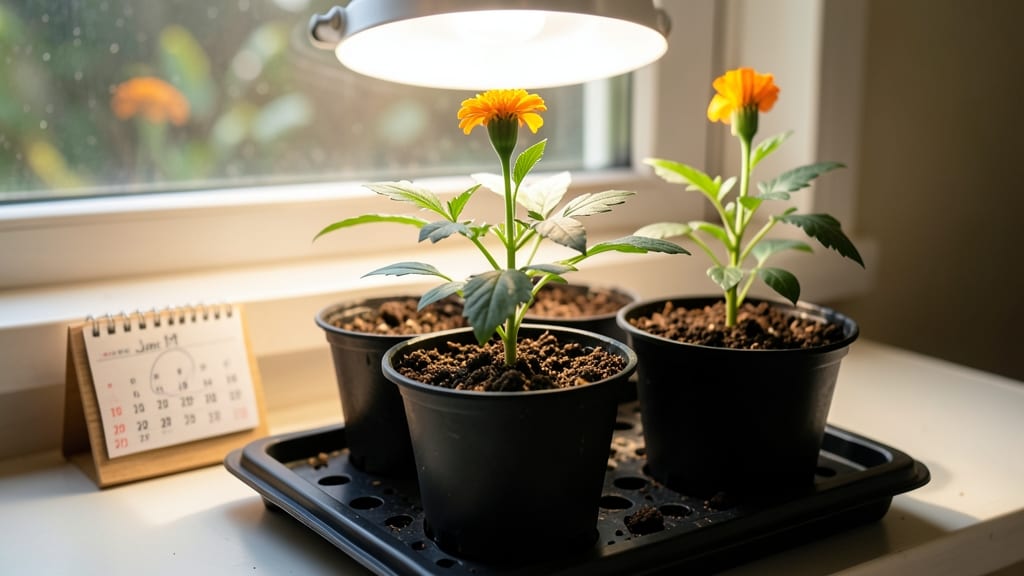
To start marigolds indoors for fast, vibrant blooms, begin 6–8 weeks before your last frost date—typically in early March for most of the U.S.
You’ve probably planted marigolds before and wondered why some years they burst into color while others barely bud. The answer? Timing. Miss this window, and you’ll end up with leggy seedlings or, worse, no flowers at all. But get it right, and you’ll have bright, pest-repelling 🌼 by summer.
Marigolds aren’t just pretty—they’re garden workhorses that deter pests and attract pollinators. Whether you’re growing French, African, or Signet varieties, the key is knowing when to start seeds indoors to align with your local frost dates.
In USDA Zone 6a, that means late February to early March for most gardeners.
In this guide, I’ll walk you through the exact formula to calculate your start date, how to adjust for different marigold types, and pro tips to avoid common seedling mistakes. By the end, you’ll know exactly when to plant for blooms that outshine the rest.
How to calculate your perfect marigold indoor start date using frost dates
Timing your marigold seeds indoors isn’t rocket science—but it does require knowing your last frost date and adjusting for your local climate zone. Marigolds need 8-10 weeks of indoor growth before transplanting outdoors.
Start too early, and you’ll deal with leggy seedlings; too late, and your blooms arrive after summer’s peak. Let’s break down the formula to nail your exact start date.
First, find your average last frost date for your area. For USDA Zone 6a (like much of the Midwest), this is typically April 15. Subtract 8-10 weeks from this date to land on your ideal indoor start window.
For example, April 15 minus 8 weeks equals February 15. This gives you a 6-week buffer for slower-growing varieties or cooler indoor conditions.
But here’s the catch: African marigolds (tall, bold blooms) often need the full 10 weeks, while French marigolds (compact, early bloomers) can thrive with just 6-7 weeks.
Your local climate zone also matters—warmer zones (like Zone 10) may start as late as March 1, while colder zones (Zone 4) might need to begin by February 1.
🌱 Pro Tip: Check your local cooperative extension service for precise frost dates—these can vary by 1-2 weeks even within the same zone. For instance, Denver’s last frost is often April 20, while nearby Colorado Springs might be May 5.
| Climate Zone | Last Frost Date | Indoor Start Window (8-10 Weeks) | Adjustments for Early/Late Bloomers |
|---|---|---|---|
| Zone 3-4 (Cold) | May 1 | February 28 - March 15 | Start African marigolds by Feb 15; French can wait until March 1. |
| Zone 5-6 (Midwest) | April 15 | February 15 - March 1 | Use grow lights if starting early to prevent legginess. |
| Zone 7-8 (South) | March 15 | January 15 - February 1 | Signet marigolds can start as late as Feb 15. |
| Zone 9-10 (Warm) | February 1 | December 1 - January 15 | Consider direct sowing in early spring instead. |
If you’re in a warmer microclimate (like a city with heat islands), you might push your start date 1-2 weeks later. Conversely, high-altitude areas (like Denver) may need to start 2 weeks earlier due to cooler soil temperatures.
Always err on the side of earlier starts if you’re unsure—marigolds are forgiving once outdoors.
For container gardens, account for slower soil warming in pots. Place seed trays on a heat mat (70-75°F) to speed up germination. If your indoor space is cool (below 65°F), extend your seedling time to 10-12 weeks to compensate.
This is especially critical for African marigolds, which are slower to mature.
Once you’ve calculated your start date, mark it on your garden calendar and set reminders for key milestones: germination (5-7 days), first true leaves (2 weeks), and hardening off (7-10 days before transplant).
Pro gardeners often start a second batch 2 weeks later to stagger blooms all summer.
🌼 Remember: Marigolds are heat-loving plants, so don’t rush them. A well-timed indoor start ensures they’ll be blooming by June, just as pollinators like bees and butterflies are most active. With this formula, you’ll avoid the heartbreak of late-season blooms and enjoy vibrant, pest-repelling flowers all summer long.
Marigold variety-specific start timing: French vs. African vs. Signet marigolds
Not all marigolds are created equal—and their start times shouldn’t be either! French marigolds, African marigolds, and Signet marigolds each have unique growth habits that demand variety-specific timing.
French marigolds, with their compact stature and early blooms, can handle cooler starts, while African marigolds—tall and bold—need a longer indoor head start to reach their full potential. Signet marigolds, the dwarf powerhouses, strike a balance but still require precision.
Your USDA zone and local frost dates are your first clues. For Zone 6a (like many mid-Atlantic regions), French marigolds often bloom faster, while African varieties may need an extra 2-3 weeks indoors to compensate for their slower early growth.
Heat tolerance also plays a role: African marigolds thrive in warmer conditions once established, but they’re picky about cool starts.
For shorter growing seasons (like Zones 4-5), push African marigolds to 12-14 weeks indoors—they’re worth the wait for their showstopping blooms.
In longer seasons (Zones 7-8), you can direct-sow French and Signet varieties after your last frost, but African marigolds still benefit from a 6-8 week indoor start for early color.
Pro tip: Use a heat mat for African marigolds to speed germination—they’re finicky about soil temperatures below 70°F. French marigolds, meanwhile, germinate faster in cooler conditions, making them ideal for early starts in unheated greenhouses.
Signet marigolds are the most forgiving, but don’t rush them—they reward patience with months of continuous blooms.
Adjust your timing if you’re using grow lights. Seedlings under lights mature faster, so you can start African marigolds 1-2 weeks later than the table suggests. For natural light, stick to the earlier windows to avoid leggy, weak stems.
And remember: harden off all varieties for 7-10 days before transplanting, regardless of when you start.
Why does this matter? French marigolds might bloom by June in Zone 6a, while African varieties hit their peak in July-August. Signet marigolds? They’ll keep you in flowers until first frost if given the right start.
Plan your timing, and you’ll have a nonstop marigold show all summer long. 🌼