
Light Requirements
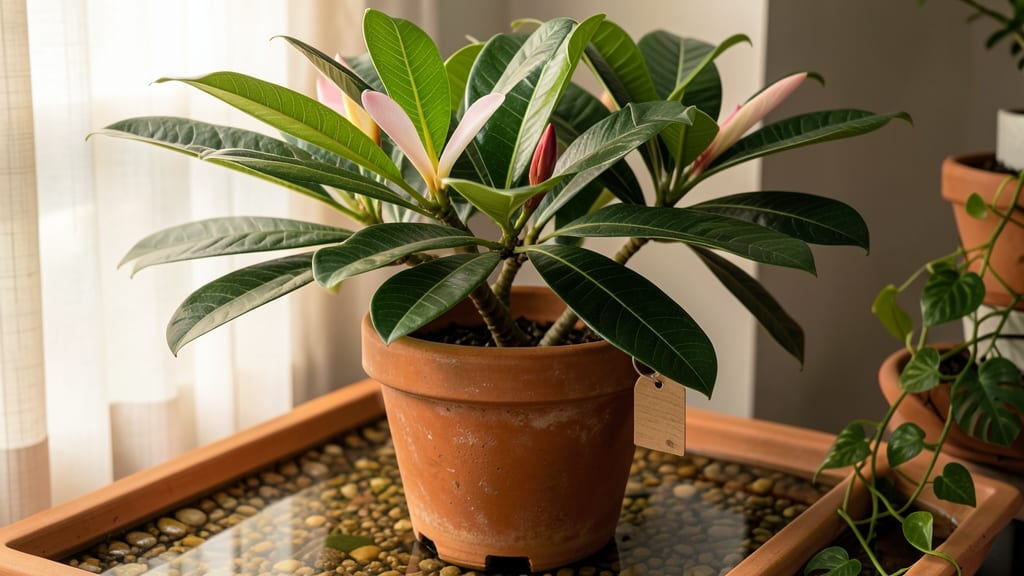
You can grow plumeria indoors, but it requires replicating their tropical environment: these sun-loving plants demand bright, direct light for at least six hours daily, humidity levels above 60%, and temperatures between 70-85°F. Position them near south-facing windows or use grow lights, and maintain consistent moisture while ensuring well-draining soil. Regular misting and seasonal adjustments are key to success.
Growing plumeria indoors is absolutely doable with the right setup, though they're finicky about their needs. 🌿 These tropical beauties originate from warm climates where they bask in full sun, so recreating those conditions is essential.
I've found that placing them near a south-facing window with supplemental grow lights during shorter winter days makes a huge difference in their health and flowering potential.
The challenge lies in balancing their need for warmth and humidity without creating a damp, mold-prone environment—most growers solve this with pebble trays or small humidifiers near the plants.
What really sets plumeria apart is their sensitivity to light quality. Unlike many houseplants that tolerate lower light, plumeria will stretch dramatically toward any available light source, a condition called etiolation, which weakens the stems.
I recommend rotating your plant weekly to ensure even growth and checking for pale yellow leaves, which is often the first sign they're not getting enough sunlight.
The good news is that once you establish the right conditions, you'll be rewarded with those iconic fragrant blooms that make all the effort worthwhile.
💡 In This Article
- Indoor Plumeria Light Requirements and Adaptations
- Optimal Indoor Plumeria Care Routine for Beginners
Indoor plumeria light requirements and adaptations
Plumeria plants evolved in tropical regions where they receive intense, direct sunlight for 10-12 hours daily. Indoors, they struggle because most household lighting provides only 10-20% of the full-spectrum sunlight they need for photosynthesis.
The key issue is the lack of blue light wavelengths (400-500nm), which plumeria require for proper growth and flowering.
Without sufficient blue light, plants exhibit elongated stems and sparse foliage—a clear sign of light deprivation. 🌞 This is why even south-facing windows may not provide enough light during winter months when sunlight is weaker.
To replicate tropical sunlight, grow lights become essential. LED grow lights with a 6500K color temperature (cool white) provide the necessary blue spectrum, while adding a small amount of red light (620-750nm) boosts flowering.
I recommend positioning lights 6-12 inches above the plant for 12-14 hours daily, mimicking natural daylight cycles. For example, a 20-watt LED grow bulb can effectively cover a 2-foot-tall plumeria when placed 8 inches above.
The light intensity should be strong enough to cast a visible shadow on the leaves—this ensures proper photosynthesis without burning the delicate foliage.
Natural light adaptation requires patience. When transitioning a plumeria from outdoors to indoors, gradually increase exposure over 2-3 weeks to avoid leaf scorch. Start with 2-3 hours of direct light daily, then slowly extend to 6+ hours.
Watch for leaf color changes: healthy plumeria leaves maintain a vibrant green, while insufficient light causes them to turn pale yellow or develop purple undersides.
The stems will also stretch excessively as the plant reaches for light, creating weak, leggy growth that's prone to breaking. 🌱 This stretching occurs because the plant's cells elongate in response to low light conditions, a survival mechanism that works in nature but creates structural problems indoors.
Seasonal light variations present another challenge. During winter months in northern climates, daylight hours drop below 9 hours, making it nearly impossible to meet plumeria's needs with natural light alone. This is when supplemental lighting becomes non-negotiable.
I've found that combining a south-facing window with a timer-controlled grow light (set to 14 hours on/10 hours off) produces the best results. The timer helps maintain consistent light exposure, which is crucial for plumeria as sudden light changes can shock the plant and cause bud drop.
Light quality affects more than just growth—it directly impacts flowering. Plumeria require specific light ratios to trigger blooming: approximately 12 hours of light followed by 12 hours of darkness. Too much artificial light at night can disrupt this cycle, preventing flower buds from forming.
This is why it's important to turn off grow lights during the plant's required rest period.
The contrast between bright daytime light and complete darkness at night mimics natural tropical conditions and signals the plant to produce flowers. 🌸 When conditions are right, you'll see flower buds form at the tips of branches, typically after 6-8 weeks of proper light exposure.