
How To
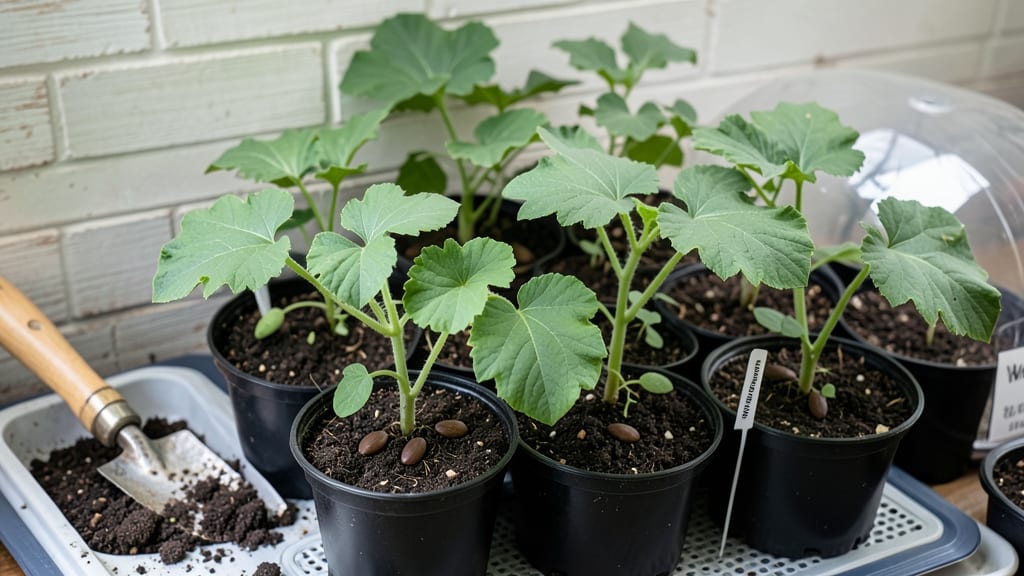
Starting watermelon seeds indoors 4-6 weeks before your last frost is the key to beating the heat and getting a jump on a bountiful harvest 🍉.
Timing your watermelon seeds indoors can mean the difference between a thriving vine and a late-season disappointment—especially when summer heat feels like a distant promise.
In USDA Zone 6a, that window typically lands in early March, but the math changes if you’re growing fast-maturing varieties or dealing with an unpredictable spring. Get it wrong, and you’ll end up with leggy seedlings or fruit that never ripens.
Below, I’ll break down how to calculate your exact start date, the ideal germination temps, and how to harden off seedlings for a smooth outdoor transition—so you’re not scrambling when the soil finally warms up.
Calculating your ideal start date using frost dates and watermelon growth stages
Determining the perfect time to start your watermelon seeds indoors depends on two key factors: your last frost date and the 4-6 week seedling development timeline.
Since watermelons thrive in warm soil (at least 70°F), getting them off to a strong start indoors ensures they’ll be ready to transplant just as summer arrives.
For gardeners in USDA zones 7-10, this typically means starting seeds in March or early April, but precise timing varies by location.
First, locate your average last frost date—this is the critical benchmark. For example, in USDA zone 8, the last frost often falls around March 15th, while in zone 10, you might not experience frost at all.
Use the USDA Plant Hardiness Zone Map or a local frost calculator (like the Old Farmer’s Almanac) to pinpoint your exact date. Once you have this, count backward 4-6 weeks to determine your indoor start window.
Watermelon seedlings need consistent warmth and light to grow strong. Starting too early (like in January or February) risks leggy, weak seedlings from stretching toward weak winter light, while starting too late (after mid-April) may leave your plants struggling to mature before frost.
The 4-6 week rule balances these risks, giving seedlings enough time to develop 2-4 true leaves and a sturdy root system before transplanting.
Here’s how to apply this to your garden: If your last frost is April 15th, count backward 6 weeks to arrive at March 1st as your ideal start date.
For faster-maturing varieties (like Sugar Baby or Black Diamond), you might start as late as mid-April, while heirlooms (like Moon and Stars) benefit from an earlier start by February 28th.
| USDA Zone | Last Frost Date | Indoor Start Window | Transplant Ready | Notes |
|---|---|---|---|---|
| 7 | April 1 | February 15 - March 1 | April 15 - April 30 | Use grow lights; soil must be 70°F+ |
| 8 | March 15 | February 1 - February 15 | March 30 - April 15 | Hardening off required; watch for pests |
| 9 | February 15 | January 15 - February 1 | March 15 - March 30 | Extend season with row covers |
| 10 | No frost | January 1 - January 15 | February 15 - March 1 | Direct sow possible; monitor soil temps |
*Adjust for early/late summers or variety maturity times.
Understanding the 3 key growth stages of watermelon seedlings helps refine your timing. First, germination (days 3-7) requires warmth (use a seedling heat mat if needed) and moisture.
Next, the true leaves stage (weeks 2-3) is when seedlings develop their second set of leaves—this is when you’ll need to thin seedlings to the strongest 2 per pot.
Finally, hardening off (weeks 4-5) prepares seedlings for outdoor conditions by gradually exposing them to wind, sun, and temperature fluctuations over 7-10 days.
Pro tip: Use a seedling journal to track your progress. Note the day you sow seeds, when germination occurs, and when true leaves appear. This helps you adjust future starts.
For example, if your seedlings took 10 days to germinate instead of the usual 5-7, you’ll know to start even earlier next year. Also, consider your local climate quirks—coastal areas may have later frosts, while inland zones can experience unexpected cold snaps.
For gardeners in USDA zones 7-10, the 4-6 week rule is your best friend, but don’t forget to account for soil temperature. Even if the air is warm, cold soil can stunt growth.
Use a soil thermometer to confirm the ground has reached 70°F before transplanting. In cooler zones, opt for black plastic mulch to warm the soil faster and give your watermelons a head start.
Finally, remember that variety matters. Fast-maturing varieties like Crenshaw or Yellow Doll can tolerate later
5 Critical factors that change your watermelon seed start time (beyond frost dates)
Frost dates are just the starting point—your watermelon seed start time actually depends on five key variables that most gardeners overlook. From seedless varieties that mature faster to container size limiting root growth, these factors can shift your ideal window by 2-4 weeks.
Let’s break down how each one affects your timing and how to adjust for your specific growing conditions.
First, consider your climate zone. In USDA zones 9-10, you might start seeds as early as February because frost isn’t a threat, while zones 6-7 often wait until mid-March.
But even within the same zone, early vs. late summers change the game—cool summers delay maturity, so you’ll need to start earlier to compensate.
Variety type is another game-changer. Seedless watermelons like Sugar Baby mature in 60-65 days, while heirlooms such as Moon and Stars take 85-90 days. This means seedless types can start 2-3 weeks later than heirlooms without risking a short season. Fast-maturing slicing varieties like Crimson Sweet also give you flexibility in late-summer planting for fall harvests.
Don’t underestimate container size either. Watermelon roots spread aggressively, and 5-gallon pots restrict growth, often delaying transplanting by 1-2 weeks. Opt for 7+ gallon containers to give roots room to establish—this can shave 10-14 days off your total indoor time.
If you’re using seedling trays, plan to transplant into larger pots 2 weeks before moving outdoors.
Light availability is often the wild card. While a south-facing window provides 6-8 hours of light, you’ll need grow lights to hit the 14+ hours/day watermelons crave. Grow lights can speed up seedling growth by 10-15%, letting you start 1-2 weeks later without sacrificing maturity. In cloudy or northern climates, supplemental light is non-negotiable.
Finally, soil temperature plays a sneaky role. Watermelon seeds need 75-90°F soil to germinate—if your home stays cool, a heat mat can cut 5-7 days off your start time.
Without one, seeds may take 10+ days to sprout, pushing your transplant window later. Pair this with warmth mats for faster, more predictable germination.
Pro tip: For late summers, choose fast-maturing varieties like Sugar Baby or Crimson Sweet and start seeds 6-8 weeks before your average first frost. Adjust for container size and light limitations—if you’re using small pots or weak light, start 2 weeks earlier to compensate. 🌱