Container Gardens
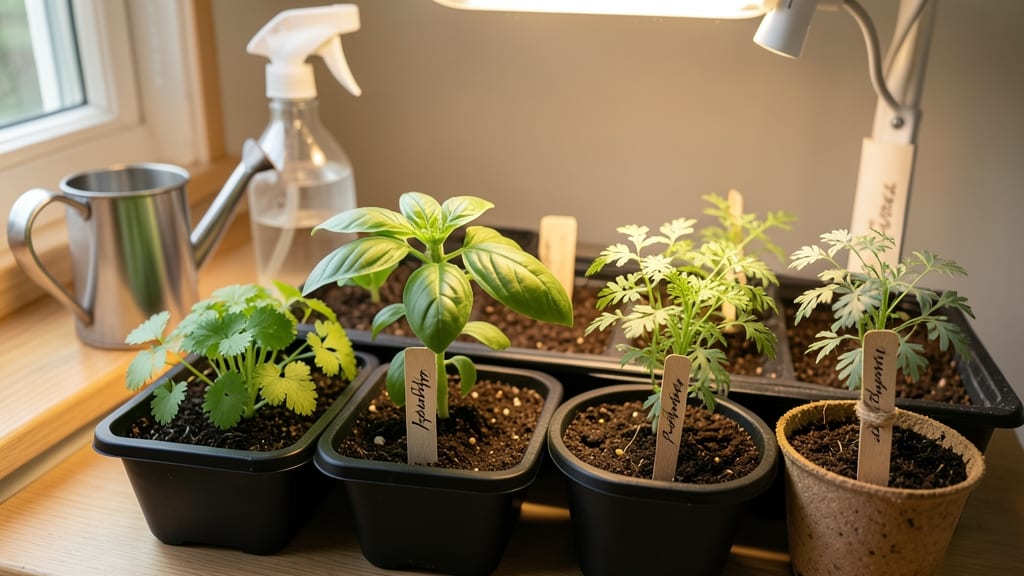
Starting herb seeds indoors about 6-8 weeks before your last frost date is the key to a thriving garden 🌿 — a window that turns weak seedlings into lush, ready-to-transplant plants.
Timing is everything when it comes to growing herbs indoors—start too early, and you’ll waste space; too late, and your garden will suffer. Follow this 8-week countdown to ensure your basil, cilantro, and parsley thrive once transplanted outdoors.
In USDA Zone 6a, that means kicking off your indoor herb garden in February or early March, when the clock starts ticking toward your last frost date of April 15.
But not all herbs grow at the same speed—basil bolts faster than parsley, and dill may not need indoor starts at all.
Below, I’ll break down how to calculate your perfect start date, which herbs actually need the head start, and how to avoid the most common mistakes that turn seedlings into sad, leggy shadows. Let’s get those seeds sprouting!
How to calculate your perfect start date for herb seeds indoors
Determining the right time to start herb seeds indoors can feel overwhelming, but it boils down to two key factors: your local last frost date and the growth timeline of your chosen herbs.
Most herbs need 6-8 weeks indoors before transplanting, but faster-growing varieties like cilantro may only need 4-6 weeks. Let's break this down step by step to avoid common mistakes like starting too early (wasted space) or too late (stunted growth).
The first step is finding your USDA Plant Hardiness Zone and average last frost date for your area. The USDA Zone Map divides the U.S. into 13 zones based on climate, and your local cooperative extension office can provide precise frost dates.
For example, in Zone 6a (like much of the Midwest), the last frost typically falls around April 15, so you’d start seeds in early to mid-February. Use the 8-week rule as your baseline, but adjust for herbs that mature faster or slower.
Next, check the seed packet for specific recommendations—some herbs like basil and parsley thrive with 8 weeks indoors, while dill or chives may only need 4-5 weeks. Pro tip: Write your target transplant date on your calendar and count backward.
For instance, if your last frost is May 1, aim to transplant by April 28, meaning you’d start seeds by March 1. This method ensures your seedlings are robust enough to handle outdoor conditions.
Here’s a quick reference to help you visualize the process:
| Herb Type | Indoor Growth Time | Start Date (Zone 6a) | Notes |
|---|---|---|---|
| Slow-Growing (Basil, Parsley, Sage) | 8 weeks | Early February | Needs warm soil (70°F+) |
| Medium-Growing (Chives, Thyme, Oregano) | 6 weeks | Mid-February | Tolerates cooler temps |
| Fast-Growing (Cilantro, Dill, Clover) | 4-5 weeks | Late February | Bolt-resistant varieties preferred |
| Biennials (Rosemary, Lavender) | 10-12 weeks | January | Slow starter; needs patience |
Once you’ve nailed down your start date, use a seed-starting kit with trays and a heat mat to maintain 70°F soil temperature—critical for germination. Place your setup near a south-facing window or under grow lights (12-16 hours/day) to prevent leggy seedlings.
Remember, herbs like basil and parsley crave warmth, while mint and chives can handle cooler indoor temps. Monitor your seedlings daily for signs of stress, like yellowing leaves or stunted growth, and adjust light or water as needed.
Don’t forget to harden off your seedlings 1-2 weeks before transplanting. This means gradually exposing them to outdoor conditions (start with 1 hour/day in partial shade, then increase). For example, if your last frost is April 15, begin hardening off on April 1.
This process strengthens stems and reduces transplant shock, ensuring your herbs thrive after moving outside. Use a small fan on low speed to mimic wind exposure, which also toughens seedlings.
For those in warmer climates (Zones 8-10), you might start seeds as late as March or even April, since frost is rare. However, always confirm your local frost dates—some areas have microclimates where frost occurs earlier or later than the average.
If you’re unsure, consult your local agricultural extension service or use a frost date calculator online. These tools factor in elevation, proximity to water, and other variables that affect frost timing.
Finally, keep a garden journal to track your start dates and outcomes. Note which herbs germinated fastest, which struggled with indoor conditions, and any adjustments you made. Over time, you’ll refine your timing and create a foolproof schedule tailored to your climate and space.
For instance, I learned that basil seeds in my Zone 7 garden germinate best when started in late January under grow lights, while cilantro does fine with a late February start. Your mileage may vary, so stay flexible!
With this 8-week countdown and a little planning, you’ll have lush, healthy herb seedlings ready to transplant just as the weather warms up. Happy growing! 🌱
Best herbs to start indoors vs. those that prefer direct sowing
Not all herbs thrive when started indoors—some prefer the direct warmth of outdoor soil. Basil, parsley, and chives are perfect for indoor starts because they need time to develop strong roots before facing outdoor conditions.
Meanwhile, dill, cilantro, and oregano often bolt or struggle when transplanted, making them better candidates for direct sowing. The key difference? Growth speed and transplant shock risk.
If you’re in USDA Zone 6a (like many gardeners), aim to start basil and parsley indoors 8 weeks before your last frost date (around mid-April in most regions).
These herbs take longer to mature and benefit from early protection. Chives, though hardier, still grow faster outdoors, so starting them indoors is optional unless you’re in a cooler climate.
Herbs like dill and cilantro germinate quickly and dislike root disturbance. Direct sowing them 2-3 weeks after your last frost ensures they establish roots without stress. Oregano is another herb that prefers outdoor conditions—it’s drought-tolerant and thrives when planted directly in well-draining soil.
✨ Indoor Starts: Pros & Cons ✨
PROS
- Controlled environment: Protects seedlings from pests and harsh weather.
- Early growth advantage: Basil and parsley mature faster with consistent warmth.
- Transplant shock reduction: Hardier seedlings adapt better to outdoor conditions.
CONS
- Space limitations: Requires grow lights or south-facing windows.
- Higher risk of leggy seedlings: Insufficient light causes weak stems.
- Overcrowding: Thin seedlings carefully to avoid competition.
For direct-sown herbs, focus on dill, cilantro, and oregano.
These herbs germinate in 5-10 days and prefer cooler soil temperatures. Dill, for example, grows 3-4 feet tall and bolts quickly if transplanted, while cilantro thrives in cooler weather but may go to seed in heat. Oregano, a perennial, spreads aggressively outdoors but struggles in containers.
To decide which method works best, consider your local climate and herb preferences. If you love fresh basil for pesto, starting it indoors is worth the effort. But if you’re growing cilantro for salads, direct sowing ensures a steady harvest without transplant stress.
Always check seed packet guidelines—they often specify whether an herb prefers indoor starts or outdoor planting.
Pro tip: Use seedling trays with drainage for indoor starts and well-prepared garden beds for direct sowing. Both methods require consistent moisture and proper spacing—just the tools you need for a thriving herb garden! 🌱