
Container Gardens
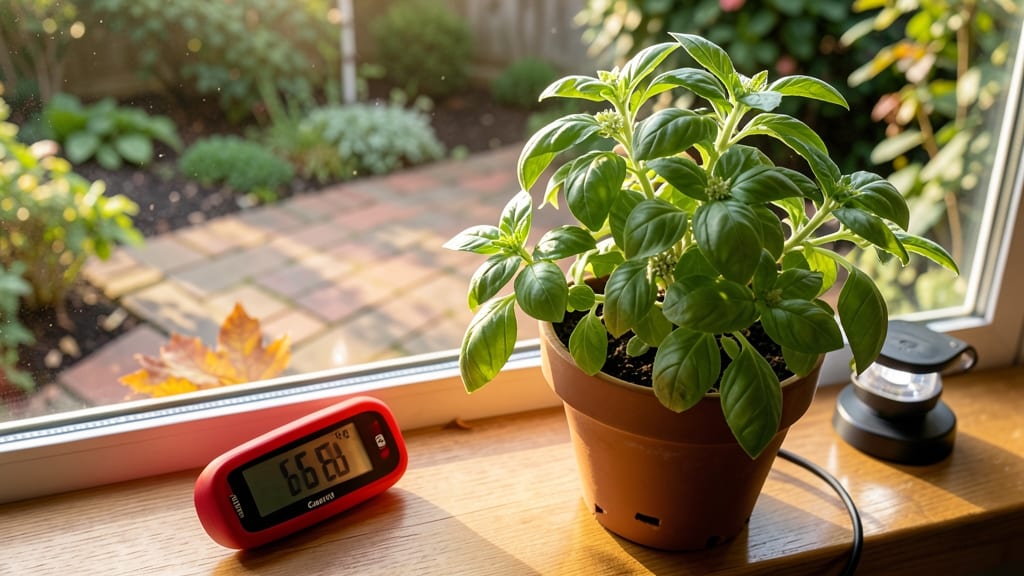
Bringing basil indoors at the right moment keeps its flavor bright and your harvests strong—wait until nighttime temperatures hit 50°F (10°C) to avoid stressing the plant.
Basil’s flavor can turn from sweet and aromatic to bitter and sad when left outside too long—knowing the exact temperature triggers to bring it indoors is the secret to keeping your pesto plants thriving all season.
Most gardeners miss the window because they focus on frost dates instead of nightly lows. A sudden dip below 45°F (7°C) signals it’s time to move, but rushing can shock the roots. I’ll show you how to time it perfectly for a smooth transition.
You’ll learn the three key temperature thresholds to watch, how to prep your basil for indoor life without losing leaves, and the lighting tricks that keep it growing strong—even when winter dims the daylight.
Basil’s exact temperature thresholds for indoor transition
Basil thrives in warmth but struggles when nighttime temperatures dip below 50°F (10°C). Understanding these exact temperature triggers ensures your plants transition indoors at the perfect moment—before flavor turns bitter and growth stalls.
I’ve grown basil for years in USDA Zone 6a, and these thresholds have saved my harvests time and again.
Your basil’s health hinges on nighttime lows, not daytime highs. Even if days stay warm, dropping temps at night signal it’s time to move indoors. For example, a 50°F (10°C) night might feel mild, but basil’s roots start stressing after just a few hours below this mark.
Ignore this, and you’ll notice yellowing leaves and stunted growth within days.
Here’s the critical breakdown: 45°F (7°C) is the danger zone—most basil varieties can’t recover from prolonged exposure. At 40°F (4°C), damage is irreversible, and your plant may not survive the transition. These thresholds vary slightly by variety, but Genovese and Sweet Basil are the most sensitive.
Regional climates shift these timelines dramatically. In warmer zones (8a+), you might wait until October for nighttime temps to drop below 50°F (10°C). But in cooler zones (5a or colder), basil may need indoor protection as early as late August.
Check your local National Weather Service for 7-day forecasts—this is your best tool for timing the move.
Use a digital thermometer placed near your plants to track nighttime temps accurately. I place mine at soil level, where roots experience the coldest conditions. If your thermometer reads 48°F (9°C) at night, start preparing for the transition.
Basil’s roots are far more sensitive than its leaves, and cold soil shuts down nutrient uptake instantly.
Hardening your basil 3–5 days before moving indoors reduces shock. Gradually reduce watering to prevent soggy roots, and place pots in partial shade during the day. This mimics the cooler, drier conditions indoors and helps plants adjust. Skipping this step often leads to leaf drop or fungal issues once inside.
Indoor basil thrives at 65–75°F (18–24°C) with 6+ hours of light daily. Without proper light, stems elongate (a condition called bolting), and leaves become sparse. Pair your transition with a grow light or south-facing window to maintain vigor.
I’ve seen basil bolt within 2 weeks indoors when light is insufficient—a common mistake even experienced gardeners make.
If your basil shows signs of stress—like yellowing leaves or stunted growth—don’t wait for the thermometer. Act immediately, even if temps haven’t hit your threshold yet.
Plants communicate distress before it’s visible to us, and basil’s bitter flavor is often the first warning sign. A quick indoor move can save your harvest.
Pro tip: Prune 1/3 of the plant before bringing it inside. This reduces stress and encourages bushier growth once indoors. Use clean, sharp scissors to avoid damaging stems. I also remove any flowering stems, as they signal the plant to focus on reproduction rather than leaf production.
With these temperature triggers and regional adjustments, your basil will transition smoothly into indoor life—ready to keep your kitchen stocked with fresh pesto all winter long. 🌿
How to prepare basil for indoor growth without shocking the plant
Transitioning your basil indoors too early or abruptly can trigger stress, leading to yellowing leaves and stunted growth. The key is a gradual hardening process that mimics outdoor conditions while preparing the plant for indoor life.
Start this process when nighttime temperatures consistently drop below 60°F (15°C)—this is your first warning sign that winter is approaching.
Before moving your basil indoors, ensure you’ve chosen the right indoor location. A south-facing window provides the best natural light, but even then, you’ll need supplemental grow lights to maintain the 6+ hours of sunlight basil craves.
Without enough light, your plant will stretch and weaken, a condition called etiolation, which is a common mistake many gardeners make during transitions.
Step-by-Step Basil Transition Guide
-
Week 1-2: Gradual Exposure
Move basil to a shaded porch or garage during the day (6-8 hours) while keeping it outside overnight. This hardens the plant slowly. -
Week 3: Short Indoor Stints
Bring pots inside for 2-3 hours daily near your brightest window. Monitor for wilting—if leaves droop, extend the outdoor time. -
Final Week: Full Transition
Once nighttime temps hit 50°F (10°C), move basil indoors permanently. Place under grow lights (12-16 hours/day) if natural light is insufficient. -
Post-Transition Care
Increase humidity with a pebble tray or humidifier (basil thrives at 50-60% humidity). Reduce watering slightly—indoor air is drier, so soil stays moist longer.
After transitioning, your basil will need consistent humidity to prevent crispy leaf edges. Place the pot on a tray of pebbles and water to create a natural humid microclimate. Avoid misting directly, as wet leaves can invite fungal diseases like powdery mildew.
If you notice new growth slowing or leaves yellowing, it’s a sign the plant needs more light or nutrients.
One of the biggest mistakes gardeners make is pruning too aggressively during transition. Instead of cutting back heavily, simply pinch off flowers and any yellowing leaves to redirect the plant’s energy.
This keeps your basil compact and productive throughout the winter months. A light fertilizer application (like a diluted 10-10-10 mix) every 4-6 weeks will also help maintain vigor.
If your basil starts to bolt (send up flower stalks) indoors, it’s a sign it’s struggling with the transition. Snip the flower stalks immediately and move the plant to a cooler spot (around 65°F/18°C) to delay flowering.
Bolting means the plant is prioritizing reproduction over leaf growth, which is the last thing you want for a pesto herb.
With the right preparation, your basil can thrive indoors for months, providing fresh leaves for cooking and aromatic joy long after the first frost.
The key is patience—rushing the process will shock the plant, while a slow, thoughtful transition ensures your herb remains healthy, flavorful, and productive all winter long. 🌿