
Container Gardens
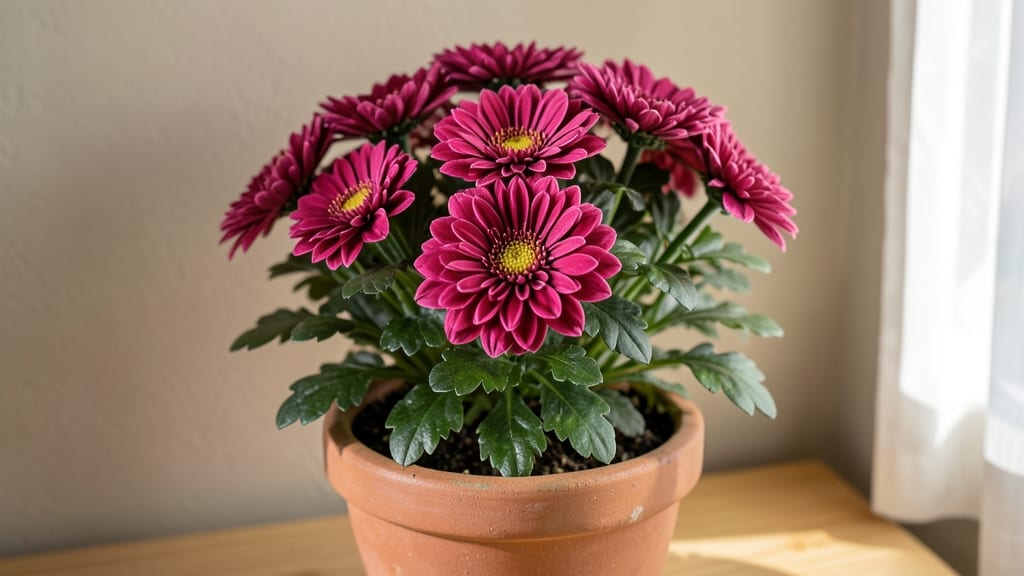
Mums (chrysanthemums) rarely do well indoors long-term because they demand bright light, cooler temperatures, and seasonal dormancy cycles that most homes can't replicate. While they might linger with south-facing windows, you'll likely see stunted growth, sparse blooms, or early decline without outdoor conditions.
Mums are outdoor plants at heart, craving 6+ hours of direct sunlight daily—something most indoor spaces can't provide. 🌿 Even with a sunny window, indoor heat (typically 70°F+) disrupts their natural flowering cycles, while artificial lights often fail to replicate the spectrum they need.
I've tried keeping them indoors for holidays, but without that seasonal dormancy period (cool nights and reduced water), they weaken fast. The key is managing expectations: treat them as temporary decor rather than long-term houseplants.
For the best chance of survival, choose compact varieties in 12-inch pots and place them near the brightest window. Supplement with a grow light (12–14 hours/day) if possible, and mimic dormancy in winter by reducing water and moving them to a cooler spot.
Watch for yellow leaves or leggy stems—these are red flags that your mum is struggling to adapt.
💡 In This Article
- Why Mums Struggle Indoors: Light and Temperature Needs
- Indoor Mum Care Hacks: Maximizing Survival and Blooms
Why mums struggle indoors: light and temperature needs
Mums (chrysanthemums) are hardwired for outdoor life, requiring 6-8 hours of direct sunlight daily—something most indoor spaces can't replicate. 🌞 The issue starts with light intensity: outdoor sunlight delivers 10,000-25,000 lux, while even south-facing windows typically provide only 5,000-10,000 lux.
This deficiency triggers a survival response called "etiolation," where stems elongate (becoming leggy) and leaves grow pale as the plant stretches toward any available light.
Temperature plays an equally critical role in their decline. Mums thrive outdoors in 50-65°F ranges, but indoor heating systems often maintain 70°F+ year-round. This warmth disrupts their natural flowering cycle, which requires cooler nights (below 60°F) to trigger bud formation.
Without this temperature shift, you'll see fewer blooms or none at all. The heat also accelerates moisture loss, forcing the plant to work harder just to stay hydrated.
Seasonal dormancy is the final missing piece. Outdoors, mums enter a rest period in winter with reduced water and cooler temperatures. Indoors, without this cycle, the plant continues growing weakly, depleting its energy reserves.
This leads to the classic indoor mum decline: yellowing leaves, sparse blooms, and eventual collapse after just a few months. 🌱 Even with perfect care, most indoor mums last only 4-6 weeks before showing significant stress.
Light spectrum matters too. Outdoor sunlight contains the full spectrum, including blue and red wavelengths that mums need for photosynthesis and flowering. Indoor fluorescent lights often lack these critical wavelengths, while LED grow lights (costing $20-$50) can replicate them more effectively.
The result? Plants grown under poor lighting may survive but won't bloom or grow vigorously.
Consider this comparison: A mum in a sunny outdoor garden might reach 2-3 feet tall with abundant blooms, while the same plant indoors with a south window might max out at 1 foot with only 10% of its normal flowers.
The difference isn't just aesthetics—it's a fundamental mismatch between the plant's needs and indoor conditions.